THE ADVENTURE COLLECTIVE® · Independent discovery and booking for outdoor travel

Learn to climb on the granite faces at Place St-Bernard in Mont-Tremblant with a certified guide. This 2.5-hour initiation course teaches knots, belay technique, and multiple climbs—ideal for families and first-timers.
Learn to climb on the granite faces at Place St-Bernard in Mont-Tremblant with a certified guide. This 2.5-hour initiation course teaches knots, belay technique, and multiple climbs—ideal for families and first-timers.
You arrive at Place St-Bernard with the village hum behind you and a vertical face rising at the foot of the ski runs. Granite flakes in warm browns and cool greys catch the light; the cliff seems to measure you as much as you measure it. Small groups clip into harnesses while a certified guide runs through knots and commands, voice clear against the rustle of conifers and the distant chatter of gondolas.
Verified experiences and guided adventures in the surrounding area.
Operated by The Tremblant Activity Centre · Mont-Tremblant, Quebec
You arrive at Place St-Bernard with the village hum behind you and a vertical face rising at the foot of the ski runs. Granite flakes in warm browns and cool greys catch the light; the cliff seems to measure you as much as you measure it. Small groups clip into harnesses while a certified guide runs through knots and commands, voice clear against the rustle of conifers and the distant chatter of gondolas.
This is an initiation course—designed for people who have never climbed outdoors. The setting is classic Laurentian granite, a product of ancient mountain-building and repeated glaciation that scraped and exposed hard, jointed rock. Tremblant’s resort history is rooted in winter sport—ski lifts and lodges—but the same slopes that funnel skiers now offer vertical lines for climbers learning to read handholds and trust anchors.
Local culture here is practical and outdoors-first: families who come for skiing in winter swap skis for climbing shoes and helmets in summer. Guides tend to be bilingual and safety-focused, blending technical instruction with regional context—the Laurentians’ modest elevations hide a surprising biodiversity and quiet histories of logging and lake communities.
The morning lesson covers basic knots, harness fit, and belay technique; then participants climb and are lowered multiple times to build confidence. Expect progressive coaching—your guide points out foot placements, shows how to shift weight, and watches as you belay a partner. The rock is forgiving of beginner mistakes but honest—smudges and small ledges require attention.
Practicalities: this is a 2.5-hour activity, limited to small groups. Minimum age is 5, with specific adult-presence rules for younger kids. Equipment is provided and guides will issue helmets, harnesses, and ropes; still, wear close-toed athletic shoes and pants to protect your knees. Bring water, sunscreen, and a light daypack. There’s a 113 kg (250 lb) weight cap and pregnant people cannot participate.
Timing matters—late morning and early evening offer the best light and cooler rock; avoid midday heat if you’re sensitive to sun. Parking at the resort can be tight during holidays, so allow extra time if you’re not staying on site. All sales are final for this operator, so plan accordingly.
For first-timers the course is a focused, hands-on introduction: you’ll finish having climbed several routes, performed belay duties, and learned safety protocols that let you return to rock with confidence. More than a single activity, it’s a compact gateway into Laurentian climbing culture—direct, social, and rooted in the practical joy of moving on stone.
moderate.
2–3 hours.
Moderate fitness—able to stand, squat, and perform short bursts of climbing while following instruction.
No—this is an introductory course designed for beginners; guides teach knots, belay, and basic technique.
Minimum age is 5; children under 11 must have a parent present for the entire activity.
Meet at Place St-Bernard on Tremblant resort at the foot of the ski runs; parking is limited during peak periods—allow extra time.
Yes—helmets, harnesses, and ropes are supplied; bring your own supportive shoes if possible.
Maximum weight is 113 kg (250 lb); pregnant people cannot participate and those with health concerns should consult the operator.
All sales are final—no refunds are offered for cancellations, so book only when your plans are firm.
The Mont-Tremblant resort developed around winter sports in the mid-20th century; the exposed Laurentian granite you climb is the result of ancient uplift and glacial sculpting.
Follow Leave No Trace principles—stay on designated approaches, avoid excess chalk, and pack out trash to protect the fragile understory around cliff bases.
The Tremblant Activity Centre operates guided outdoor trips and adventures with an emphasis on safety, stewardship, and memorable experiences.
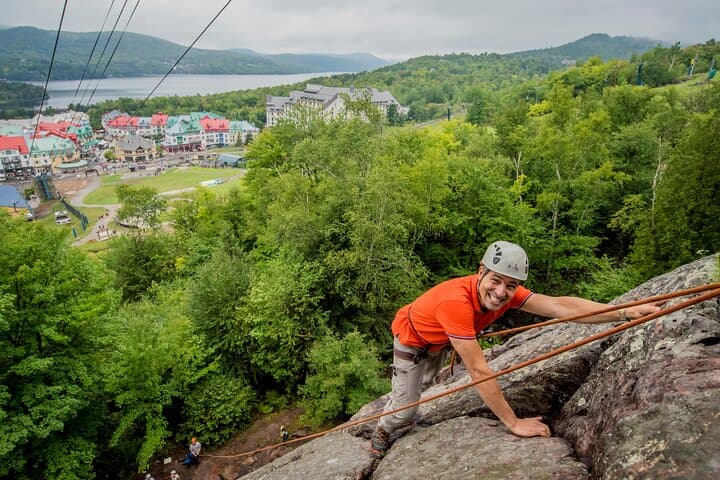
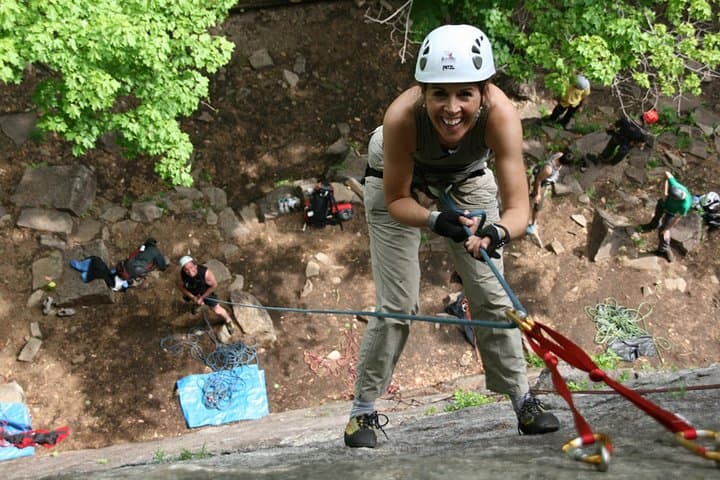
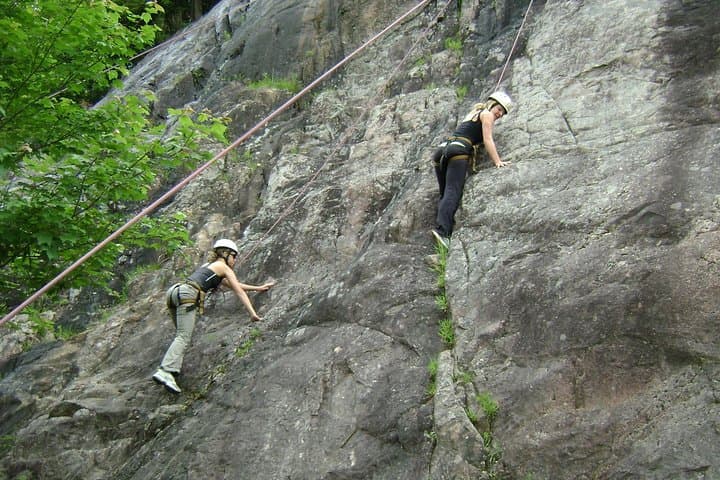
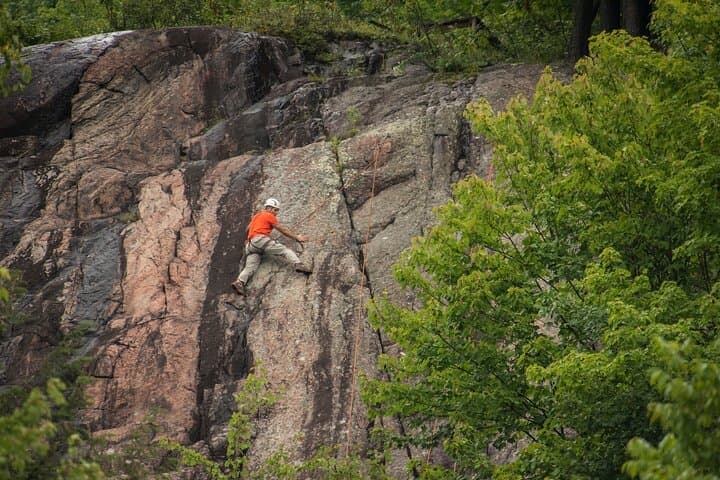
You arrive at Place St-Bernard with the village hum behind you and a vertical face rising at the foot of the ski runs. Granite flakes in warm browns and cool greys catch the light; the cliff seems to measure you as much as you measure it. Small groups clip into harnesses while a certified guide runs through knots and commands, voice clear against the rustle of conifers and the distant chatter of gondolas.
You arrive at Place St-Bernard with the village hum behind you and a vertical face rising at the foot of the ski runs. Granite flakes in warm browns and cool greys catch the light; the cliff seems to measure you as much as you measure it. Small groups clip into harnesses while a certified guide runs through knots and commands, voice clear against the rustle of conifers and the distant chatter of gondolas.
This is an initiation course—designed for people who have never climbed outdoors. The setting is classic Laurentian granite, a product of ancient mountain-building and repeated glaciation that scraped and exposed hard, jointed rock. Tremblant’s resort history is rooted in winter sport—ski lifts and lodges—but the same slopes that funnel skiers now offer vertical lines for climbers learning to read handholds and trust anchors.
Local culture here is practical and outdoors-first: families who come for skiing in winter swap skis for climbing shoes and helmets in summer. Guides tend to be bilingual and safety-focused, blending technical instruction with regional context—the Laurentians’ modest elevations hide a surprising biodiversity and quiet histories of logging and lake communities.
The morning lesson covers basic knots, harness fit, and belay technique; then participants climb and are lowered multiple times to build confidence. Expect progressive coaching—your guide points out foot placements, shows how to shift weight, and watches as you belay a partner. The rock is forgiving of beginner mistakes but honest—smudges and small ledges require attention.
Practicalities: this is a 2.5-hour activity, limited to small groups. Minimum age is 5, with specific adult-presence rules for younger kids. Equipment is provided and guides will issue helmets, harnesses, and ropes; still, wear close-toed athletic shoes and pants to protect your knees. Bring water, sunscreen, and a light daypack. There’s a 113 kg (250 lb) weight cap and pregnant people cannot participate.
Timing matters—late morning and early evening offer the best light and cooler rock; avoid midday heat if you’re sensitive to sun. Parking at the resort can be tight during holidays, so allow extra time if you’re not staying on site. All sales are final for this operator, so plan accordingly.
For first-timers the course is a focused, hands-on introduction: you’ll finish having climbed several routes, performed belay duties, and learned safety protocols that let you return to rock with confidence. More than a single activity, it’s a compact gateway into Laurentian climbing culture—direct, social, and rooted in the practical joy of moving on stone.