THE ADVENTURE COLLECTIVE® · Independent discovery and booking for outdoor travel

Scale the weathered sandstone that cradles Badami’s 6th-century cave temples with guided lessons tailored to all levels. This five-hour climbing experience blends safety drills, hands-on instruction and scenic routes overlooking Agastya Lake.
Scale the weathered sandstone that cradles Badami’s 6th-century cave temples with guided lessons tailored to all levels. This five-hour climbing experience blends safety drills, hands-on instruction and scenic routes overlooking Agastya Lake.
At first light the red sandstone of Badami drinks the sun and then spits it back in every warm hue—ochre, rust, honey. You meet your guide at the bus stand, then climb the stepped approach past a small temple until the town opens out beneath you: Agastya Lake mirror-flat, the cave temples carved into the cliff face across the valley. The rock here is honest—rough enough for confident holds, soft enough that the routes read like history: hand- and footholds sculpted by centuries of wind and water, now used by climbers learning to move with care.
Verified experiences and guided adventures in the surrounding area.
Operated by Rock Climbing Badami · Badami, Karnataka
At first light the red sandstone of Badami drinks the sun and then spits it back in every warm hue—ochre, rust, honey. You meet your guide at the bus stand, then climb the stepped approach past a small temple until the town opens out beneath you: Agastya Lake mirror-flat, the cave temples carved into the cliff face across the valley. The rock here is honest—rough enough for confident holds, soft enough that the routes read like history: hand- and footholds sculpted by centuries of wind and water, now used by climbers learning to move with care.
Badami’s cliffs are part geology lesson, part cultural backdrop. These are Badami sandstones, deposited and lithified in the Deccan basin millions of years ago and later carved by the early Chalukya kings into cave shrines in the 6th century. The same faces that sheltered temple carvers now host modern ropes and chalk bags. Local climbing began as a small community activity and has grown into guided lessons that respect archaeological sites and existing pilgrimage traffic—routes are chosen to avoid delicate carvings and temple ledges.
A session with a local instructor is part skills clinic, part guided outing. Expect rope-management drills, belaying practice, knot work, and supervised top-roping and short lead climbs depending on your level. The tone is deliberately practical: safety briefings, equipment fits, and repeated demos until movements feel instinctive. Guides here emphasize efficient footwork on slabby, friction-dependent surfaces; you’ll learn when to trust the shoe and when to commit with the hands.
Practically speaking, the meeting point is Badami Bus Stand, and tours typically run five hours—long enough for warm-ups, skill drills, and several climbs without rushing. Wear breathable layers, climb in rubber-soled shoes (rentals are often available), and carry at least 1–2 liters of water. Plan climbs in early morning or late afternoon to avoid the midday heat and to catch the cliffs in flattering light.
Local insights make a good day great: pause between climbs to walk the path above Cave 3 for a panoramic perspective, and save time afterward for a cooling swim in Agastya Lake or a short tuk-tuk ride to Pattadakal’s temple complex. Leave no trace: sandstone erodes easily, so scrub clean gear off the rock, avoid excessive bolting near heritage zones, and follow your guide’s route choices.
For travelers who want a technical but approachable taste of Indian climbing, Badami offers rock that talks back—sometimes stubborn, often rewarding, and always framed by history. With patient instruction and respect for the stone, a single day here can turn basic skills into steady competence and a lingering taste for more vertical travel in South India.
moderate.
5 hours.
Suitable for travelers with basic mobility and a willingness to practice—sessions require standing, scrambling, and short sustained effort.
No—guides teach basics from knots and belaying to top-roping and rappelling; instructors adapt to beginners and intermediate climbers.
Meet at Badami Bus Stand; tours are approximately five hours long, including instruction and guided climbs.
Yes—most operators provide ropes, harnesses, helmets, belay devices and often climbing shoe rentals; check specifics during booking.
Climbing sectors are on the same sandstone escarpments as the cave temples but routes are selected to avoid heritage carvings and busy pilgrimage areas.
Yes—lessons are offered for a range of ages, but participants should be able to follow safety instructions and move comfortably on rock.
Tours may be canceled for rain (sandstone becomes slippery and unsafe); you’ll receive a refund if you cancel at least 24 hours prior per the operator policy.
Badami was a Chalukya capital in the 6th–8th centuries; the same sandstone cliffs house both cave temples and modern climbing routes.
Sandstone erodes quickly—avoid excessive chalk use on historic faces, stick to guide‑approved lines, and pack out all trash to preserve rock and temple settings.
Rock Climbing Badami operates guided outdoor trips and adventures with an emphasis on safety, stewardship, and memorable experiences.
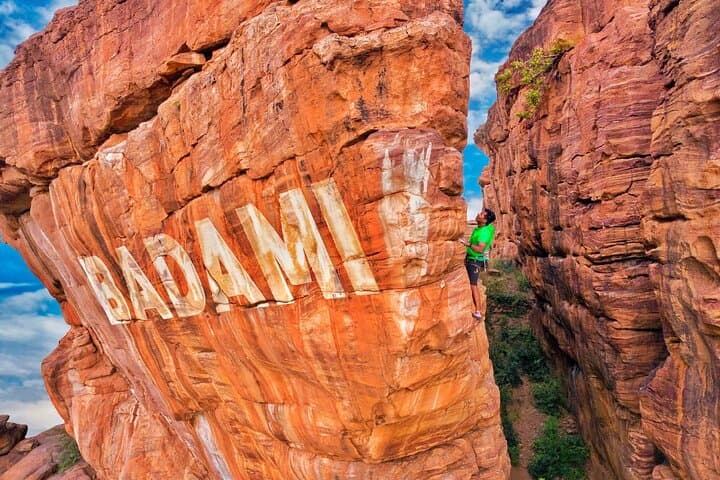


At first light the red sandstone of Badami drinks the sun and then spits it back in every warm hue—ochre, rust, honey. You meet your guide at the bus stand, then climb the stepped approach past a small temple until the town opens out beneath you: Agastya Lake mirror-flat, the cave temples carved into the cliff face across the valley. The rock here is honest—rough enough for confident holds, soft enough that the routes read like history: hand- and footholds sculpted by centuries of wind and water, now used by climbers learning to move with care.
At first light the red sandstone of Badami drinks the sun and then spits it back in every warm hue—ochre, rust, honey. You meet your guide at the bus stand, then climb the stepped approach past a small temple until the town opens out beneath you: Agastya Lake mirror-flat, the cave temples carved into the cliff face across the valley. The rock here is honest—rough enough for confident holds, soft enough that the routes read like history: hand- and footholds sculpted by centuries of wind and water, now used by climbers learning to move with care.
Badami’s cliffs are part geology lesson, part cultural backdrop. These are Badami sandstones, deposited and lithified in the Deccan basin millions of years ago and later carved by the early Chalukya kings into cave shrines in the 6th century. The same faces that sheltered temple carvers now host modern ropes and chalk bags. Local climbing began as a small community activity and has grown into guided lessons that respect archaeological sites and existing pilgrimage traffic—routes are chosen to avoid delicate carvings and temple ledges.
A session with a local instructor is part skills clinic, part guided outing. Expect rope-management drills, belaying practice, knot work, and supervised top-roping and short lead climbs depending on your level. The tone is deliberately practical: safety briefings, equipment fits, and repeated demos until movements feel instinctive. Guides here emphasize efficient footwork on slabby, friction-dependent surfaces; you’ll learn when to trust the shoe and when to commit with the hands.
Practically speaking, the meeting point is Badami Bus Stand, and tours typically run five hours—long enough for warm-ups, skill drills, and several climbs without rushing. Wear breathable layers, climb in rubber-soled shoes (rentals are often available), and carry at least 1–2 liters of water. Plan climbs in early morning or late afternoon to avoid the midday heat and to catch the cliffs in flattering light.
Local insights make a good day great: pause between climbs to walk the path above Cave 3 for a panoramic perspective, and save time afterward for a cooling swim in Agastya Lake or a short tuk-tuk ride to Pattadakal’s temple complex. Leave no trace: sandstone erodes easily, so scrub clean gear off the rock, avoid excessive bolting near heritage zones, and follow your guide’s route choices.
For travelers who want a technical but approachable taste of Indian climbing, Badami offers rock that talks back—sometimes stubborn, often rewarding, and always framed by history. With patient instruction and respect for the stone, a single day here can turn basic skills into steady competence and a lingering taste for more vertical travel in South India.