THE ADVENTURE COLLECTIVE® · Independent discovery and booking for outdoor travel

Spend a day crossing the Atlantic to Robben Island’s prison grounds, then ride or hike to Table Mountain for sweeping city views before unwinding at the V&A Waterfront. This full-day Cape Town tour blends hard history with high-altitude panoramas and practical logistics.
Spend a day crossing the Atlantic to Robben Island’s prison grounds, then ride or hike to Table Mountain for sweeping city views before unwinding at the V&A Waterfront. This full-day Cape Town tour blends hard history with high-altitude panoramas and practical logistics.
The morning starts at the Nelson Mandela Gateway where the harbor smells of salt and diesel and the Atlantic dares you to look past the breakwater. Boats line the quay like patient workhorses; the 30-minute crossing to Robben Island slices across a cobalt expanse that can be glass-smooth or choppy enough to rattle your teeth. On the island, the wind speaks in blunt sentences as a museum guide walks a small group past concrete cells, pointing to the narrow bed where Nelson Mandela slept, and naming the years that marked South Africa's long reckoning.
Verified experiences and guided adventures in the surrounding area.
Operated by POD Cape Tours · Cape Town, Western Cape
The morning starts at the Nelson Mandela Gateway where the harbor smells of salt and diesel and the Atlantic dares you to look past the breakwater. Boats line the quay like patient workhorses; the 30-minute crossing to Robben Island slices across a cobalt expanse that can be glass-smooth or choppy enough to rattle your teeth. On the island, the wind speaks in blunt sentences as a museum guide walks a small group past concrete cells, pointing to the narrow bed where Nelson Mandela slept, and naming the years that marked South Africa's long reckoning.
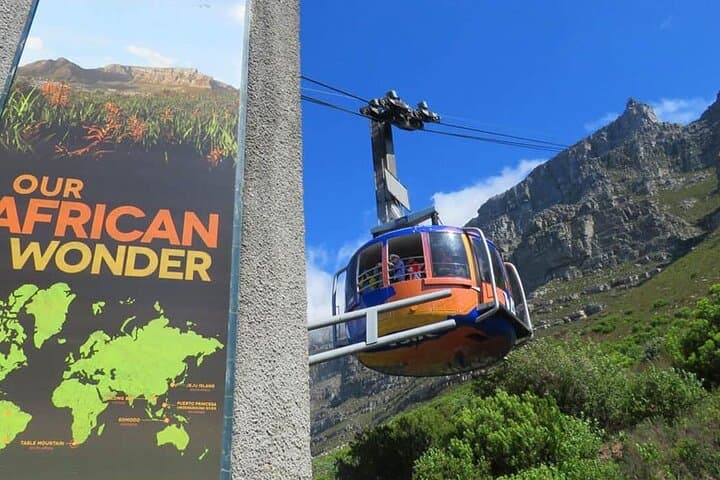
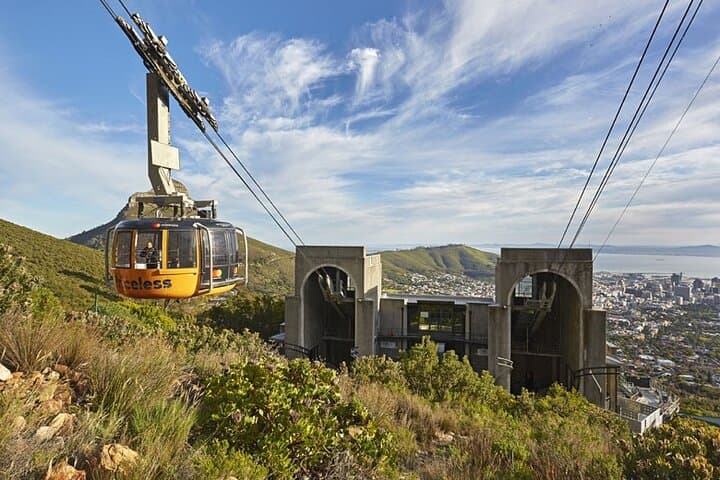
Later, a minivan threads through Cape Town toward Table Mountain National Park. The mountain’s flat top isn’t decorative — it’s geological instruction: an uplifted sandstone plateau carved by millennia of wind and rain. Guides stop at the lower cable station to discuss routes up and down; some travelers take the cable car’s large, rotating cabin for the ten-minute ascent, others set off on the Platteklip Gorge trail, ascending switchbacks through fynbos that smells faintly of citrus.
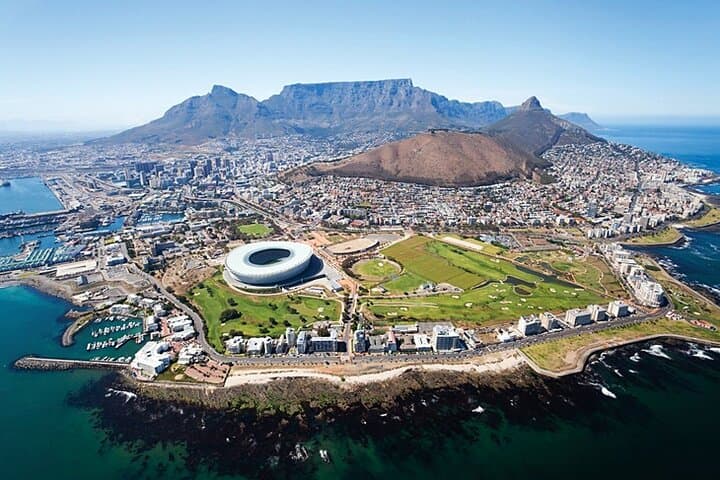
History runs under both sites. Robben Island was a prison for anti-apartheid activists and earlier a leper colony and military outpost; its lime-washed walls carry stories the guides pass on with quiet gravity. Table Mountain formed around 300 million years ago, its sandstone layers fossilizing the ancient coastline while the city below grew in the shade of its slab.
Culturally, the route threads into Cape Town life at the V&A Waterfront, where historic warehouses now house cafés, craftspeople, and seafood stalls that feed both locals and visitors. The return walk along the quayside is a chance to trade the island’s solemnity for loud marketplaces and fresh oysters on ice.
Practicalities: the full-day excursion runs about eight hours, including hotel pickup and return transfers, the boat crossing, a Robben Island museum tour with bus transport on the island, a guided walk back to the V&A Waterfront, lunch and shopping time, and a visit to Table Mountain with stops at the lower cable station. Travelers should expect moderate physical activity — the trip is accessible to most, but Platteklip or other hikes demand steady legs and good footwear. The Robben Island ferry can be rough on windy days; motion-sickness preparation is wise.
Timing tips: book early — Robben Island tours sell out — and reserve mornings for calmer seas and softer light on the mountain. Bring layers: ocean winds and plateau temperatures can differ by 15–20°C in a day. Carry a refillable water bottle, sun protection, and a small daypack for museum stops and waterfront walks. For travelers who want the full context, allow time to visit the Robben Island museum exhibits before or after the bus tour; they add depth without adding miles.
This is a day that pairs political history with geological spectacle — a compact Cape Town primer that leaves you with sore feet, clearer facts, and an appetite for more of South Africa’s coastline and culture.
moderate.
8 hours.
Suitable for travelers with moderate fitness; expect some walking and optional hiking up Mountain trails
The crossing takes about 30 minutes each way; allow for additional time for boarding and disembarkation.
Yes — the guided Robben Island museum tour includes a visit to Mandela’s former cell and other island sites.
The operator lists wheelchair accessibility, but some island areas and buses may have limited access — contact the provider in advance to confirm arrangements.
Both options are available; the itinerary includes stops at the lower cable car station and time to choose either a cableway ride or a self-guided hike.
Lunch is not included; the itinerary provides time at the V&A Waterfront to purchase meals and shop.
Robben Island tours can be affected by rough seas; cancellation policies vary, but this tour allows refunds if canceled 24 hours prior—confirm specifics with the operator.
Robben Island served as a political prison during apartheid and earlier as a leper colony and military base; its museum preserves the island’s layered past.
Robben Island and Table Mountain are protected sites; stay on marked paths, avoid removing plant material, and use water refill stations to reduce single-use plastic.
POD Cape Tours operates guided outdoor trips and adventures with an emphasis on safety, stewardship, and memorable experiences.

The morning starts at the Nelson Mandela Gateway where the harbor smells of salt and diesel and the Atlantic dares you to look past the breakwater. Boats line the quay like patient workhorses; the 30-minute crossing to Robben Island slices across a cobalt expanse that can be glass-smooth or choppy enough to rattle your teeth. On the island, the wind speaks in blunt sentences as a museum guide walks a small group past concrete cells, pointing to the narrow bed where Nelson Mandela slept, and naming the years that marked South Africa's long reckoning.
The morning starts at the Nelson Mandela Gateway where the harbor smells of salt and diesel and the Atlantic dares you to look past the breakwater. Boats line the quay like patient workhorses; the 30-minute crossing to Robben Island slices across a cobalt expanse that can be glass-smooth or choppy enough to rattle your teeth. On the island, the wind speaks in blunt sentences as a museum guide walks a small group past concrete cells, pointing to the narrow bed where Nelson Mandela slept, and naming the years that marked South Africa's long reckoning.
Later, a minivan threads through Cape Town toward Table Mountain National Park. The mountain’s flat top isn’t decorative — it’s geological instruction: an uplifted sandstone plateau carved by millennia of wind and rain. Guides stop at the lower cable station to discuss routes up and down; some travelers take the cable car’s large, rotating cabin for the ten-minute ascent, others set off on the Platteklip Gorge trail, ascending switchbacks through fynbos that smells faintly of citrus.
History runs under both sites. Robben Island was a prison for anti-apartheid activists and earlier a leper colony and military outpost; its lime-washed walls carry stories the guides pass on with quiet gravity. Table Mountain formed around 300 million years ago, its sandstone layers fossilizing the ancient coastline while the city below grew in the shade of its slab.
Culturally, the route threads into Cape Town life at the V&A Waterfront, where historic warehouses now house cafés, craftspeople, and seafood stalls that feed both locals and visitors. The return walk along the quayside is a chance to trade the island’s solemnity for loud marketplaces and fresh oysters on ice.
Practicalities: the full-day excursion runs about eight hours, including hotel pickup and return transfers, the boat crossing, a Robben Island museum tour with bus transport on the island, a guided walk back to the V&A Waterfront, lunch and shopping time, and a visit to Table Mountain with stops at the lower cable station. Travelers should expect moderate physical activity — the trip is accessible to most, but Platteklip or other hikes demand steady legs and good footwear. The Robben Island ferry can be rough on windy days; motion-sickness preparation is wise.
Timing tips: book early — Robben Island tours sell out — and reserve mornings for calmer seas and softer light on the mountain. Bring layers: ocean winds and plateau temperatures can differ by 15–20°C in a day. Carry a refillable water bottle, sun protection, and a small daypack for museum stops and waterfront walks. For travelers who want the full context, allow time to visit the Robben Island museum exhibits before or after the bus tour; they add depth without adding miles.
This is a day that pairs political history with geological spectacle — a compact Cape Town primer that leaves you with sore feet, clearer facts, and an appetite for more of South Africa’s coastline and culture.