THE ADVENTURE COLLECTIVE® · Independent discovery and booking for outdoor travel

In a single, well-paced day from Reykjavík you can cross tectonic rifts at Thingvellir, watch Strokkur erupt at Geysir, and feel the thunder of Gullfoss. This private Golden Circle trip balances dramatic stops with efficient driving for travelers who want maximum impact in eight hours.
In a single, well-paced day from Reykjavík you can cross tectonic rifts at Thingvellir, watch Strokkur erupt at Geysir, and feel the thunder of Gullfoss. This private Golden Circle trip balances dramatic stops with efficient driving for travelers who want maximum impact in eight hours.
You step into a day that reads like Iceland’s greatest hits: a narrow road unspools from Reykjavík and, within an hour, the ground opens into Thingvellir’s rift—rock faces splitting like pages in a slow-motion tectonic book.
Verified experiences and guided adventures in the surrounding area.
Operated by Snaeland Travel · Reykjavik, Capital Region
You step into a day that reads like Iceland’s greatest hits: a narrow road unspools from Reykjavík and, within an hour, the ground opens into Thingvellir’s rift—rock faces splitting like pages in a slow-motion tectonic book.
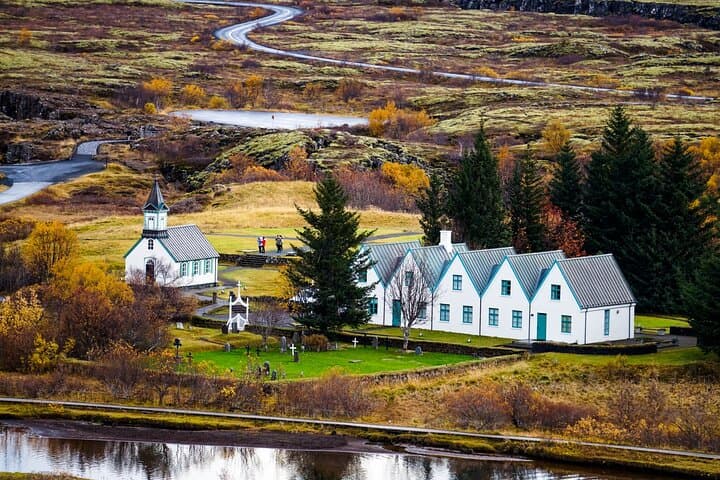
The tour moves with the confident economy of a private car: stop, look, listen. At Thingvellir the air smells of cold stone and river; moss clings to ancient lava flows and the grassy plains hold the ghosts of the Alþingi, Iceland’s parliament founded in 930 AD. Guides will point out the visible seam where the North American and Eurasian plates drift apart—a geological fault you can almost walk between, and a clear reminder that this landscape is still being written.
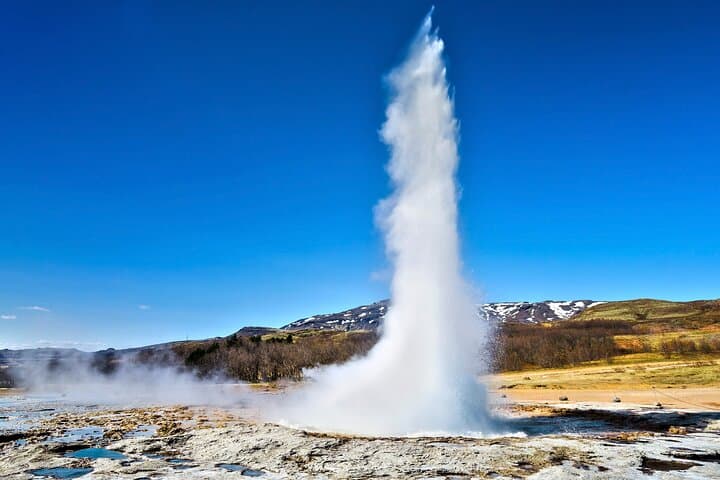
Next is Haukadalur’s geothermal theater. Geysir may sit sulken and historic, but Strokkur performs on cue, launching a column of hot water every few minutes, steam fanning the surrounding pans of sulphur-tinted mineral pools. The ground here feels alive—warm, slightly unstable, and impossibly colorful—so the walkways are as much about safety as framing a photograph.
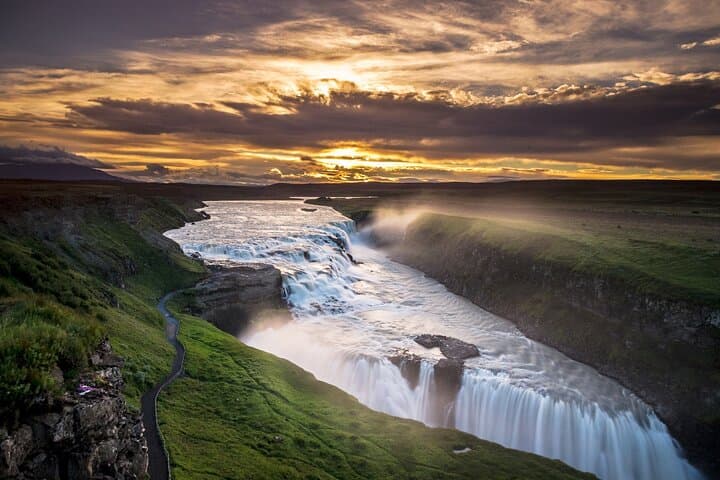
Gullfoss closes the arc. The waterfall drops in two steps into a jagged gorge, the Hvítá river churning mud-tinted gold in sunlight and throwing spray like currency at the viewing platforms. From certain angles the falls demand a crowd’s silence; from others they seem to dare you closer, your clothes and camera lens catching the fine mist.
History and geology are constant companions on this route: medieval law, volcanic plates, glacial rivers carving canyons. The cultural layer is simple and practical—farms and turf houses dot the drive back toward Reykjavík, and Icelandic horses often pause in fields as if to pose for photographs.
Practical notes: this private eight-hour tour includes roughly four hours of stops and four hours of driving. The driver is English-speaking but not a certified guide, so expect knowledgeable commentary and efficient logistics rather than in-depth lectures. Wear waterproof layers and solid walking shoes—paths near Gullfoss can be slippery and wind can arrive without much warning.
Timing matters. Start in the morning to avoid peak tour-bus windows at Geysir and Gullfoss; late afternoon light softens the waterfall’s hues. Bring a small daypack with water, snacks, and a spare dry layer. Restrooms and simple food options are available at major stops, but services thin out between attractions.
This is a day built for impressions: the rawness of tectonic unrest, the audible pulse of a live geyser, and the physical thunder of a great waterfall. For travelers with a single day to spare from Reykjavík, it’s the most efficient introduction to the forces that shape Iceland—and a compact, unforgettable itinerary to carry home.
easy.
8 hours.
Suitable for most fitness levels; expect short walks of 10–30 minutes at each stop and some uneven terrain.
The tour runs about eight hours and pickups occur between 08:30 and 09:00 from Reykjavík; exact pickup details are provided after booking.
Access to the public sites is included; there are no special admission charges for Thingvellir, Geysir, or Gullfoss on this tour.
The driver is English-speaking and provides commentary and logistics, but is not a licensed expert guide.
Restrooms and cafés are available at major stops; bring snacks if you prefer specific dietary options as options between sites are limited.
Yes—infants and small children can ride in strollers and infant seats are available; expect short walks and some uneven ground at viewpoints.
The tour may be canceled for severe weather; the cancellation policy allows a full refund if canceled at least 24 hours before departure.
Thingvellir was the site of the Alþingi, Iceland’s national assembly founded in 930 AD, making it both a geological and cultural landmark.
Stick to marked paths to protect fragile moss and geothermal features; local tour operators promote Leave No Trace practices to limit erosion and disturbance.
Snaeland Travel operates guided outdoor trips and adventures with an emphasis on safety, stewardship, and memorable experiences.

You step into a day that reads like Iceland’s greatest hits: a narrow road unspools from Reykjavík and, within an hour, the ground opens into Thingvellir’s rift—rock faces splitting like pages in a slow-motion tectonic book.
You step into a day that reads like Iceland’s greatest hits: a narrow road unspools from Reykjavík and, within an hour, the ground opens into Thingvellir’s rift—rock faces splitting like pages in a slow-motion tectonic book.
The tour moves with the confident economy of a private car: stop, look, listen. At Thingvellir the air smells of cold stone and river; moss clings to ancient lava flows and the grassy plains hold the ghosts of the Alþingi, Iceland’s parliament founded in 930 AD. Guides will point out the visible seam where the North American and Eurasian plates drift apart—a geological fault you can almost walk between, and a clear reminder that this landscape is still being written.
Next is Haukadalur’s geothermal theater. Geysir may sit sulken and historic, but Strokkur performs on cue, launching a column of hot water every few minutes, steam fanning the surrounding pans of sulphur-tinted mineral pools. The ground here feels alive—warm, slightly unstable, and impossibly colorful—so the walkways are as much about safety as framing a photograph.
Gullfoss closes the arc. The waterfall drops in two steps into a jagged gorge, the Hvítá river churning mud-tinted gold in sunlight and throwing spray like currency at the viewing platforms. From certain angles the falls demand a crowd’s silence; from others they seem to dare you closer, your clothes and camera lens catching the fine mist.
History and geology are constant companions on this route: medieval law, volcanic plates, glacial rivers carving canyons. The cultural layer is simple and practical—farms and turf houses dot the drive back toward Reykjavík, and Icelandic horses often pause in fields as if to pose for photographs.
Practical notes: this private eight-hour tour includes roughly four hours of stops and four hours of driving. The driver is English-speaking but not a certified guide, so expect knowledgeable commentary and efficient logistics rather than in-depth lectures. Wear waterproof layers and solid walking shoes—paths near Gullfoss can be slippery and wind can arrive without much warning.
Timing matters. Start in the morning to avoid peak tour-bus windows at Geysir and Gullfoss; late afternoon light softens the waterfall’s hues. Bring a small daypack with water, snacks, and a spare dry layer. Restrooms and simple food options are available at major stops, but services thin out between attractions.
This is a day built for impressions: the rawness of tectonic unrest, the audible pulse of a live geyser, and the physical thunder of a great waterfall. For travelers with a single day to spare from Reykjavík, it’s the most efficient introduction to the forces that shape Iceland—and a compact, unforgettable itinerary to carry home.