THE ADVENTURE COLLECTIVE® · Independent discovery and booking for outdoor travel

Start where most end: a guided self-drive that maps the Road to Hana in reverse. This audio tour from Kula to Paia mixes GPS-triggered narration, local stories, and turn-by-turn directions—letting you stop, explore, and set your own pace.
Start where most end: a guided self-drive that maps the Road to Hana in reverse. This audio tour from Kula to Paia mixes GPS-triggered narration, local stories, and turn-by-turn directions—letting you stop, explore, and set your own pace.
You pull out of a Kula roadside parking lot as a narration begins in your passenger’s ear — a voice that knows every hairpin and hidden pool on Maui’s loneliest coastline. The first miles of this “reverse” run take you along Haleakala’s leeward flanks, through pastureland that drops away to banana farms and cliffs that hunt the horizon. Instead of finishing in Hana and heading back to civilization, you start where few do: the quieter back side, then arc toward the famous waterfalls, beaches, and bamboo corridors that make the Hana Highway one of America’s great drives.
Verified experiences and guided adventures in the surrounding area.
Operated by Shaka Guide Apps · Kula, Hawaii
You pull out of a Kula roadside parking lot as a narration begins in your passenger’s ear — a voice that knows every hairpin and hidden pool on Maui’s loneliest coastline. The first miles of this “reverse” run take you along Haleakala’s leeward flanks, through pastureland that drops away to banana farms and cliffs that hunt the horizon. Instead of finishing in Hana and heading back to civilization, you start where few do: the quieter back side, then arc toward the famous waterfalls, beaches, and bamboo corridors that make the Hana Highway one of America’s great drives.
The route’s geology is blunt and obvious. Ancient lava flows sculpted this eastern flank of Haleakala, then ocean and waterfalls carved valleys into the softer layers; the result is sudden cliffs, black sand coves, and pockets of red and green sand where Puʻu o Pele left its signature. Culturally, the road threads through communities that still observe traditional kalo farming and small-business hospitality — fruit stands, family-run food shacks, and the quiet respect paid at Charles Lindbergh’s remote grave.
This audio tour swaps the pushy pace of group buses for a guided playlist of directions, stories, and Hawaiian music that triggers using GPS. It puts popular stops — Twin Falls, Wailua Falls, Ohe'o Gulch, Red Sand Beach — early in your itinerary, reducing the back-and-forth and letting you choose which short walks and swims to take. The narration includes safety notes for narrow bridges and one-lane sections, plus suggestions for where to refill gas and pick up banana bread.
Practical edge: the Reverse Road to Hana works offline, so download the Shaka Guide tour over Wi‑Fi before you leave. Plan 10–12 hours for a full run if you stop often; shorter if you’re selective. Drive slowly: the road’s charm is its curves and local life, not speed. Bring layers — upcountry Kula can be surprisingly cool while the coast stays humid. Wear sturdy shoes for short hikes: many waterfalls and viewpoints require uneven steps or muddy approaches.
Respect the island: stay on marked paths, pack out what you bring, and heed signs at swimming holes — currents can be deceptively strong. For photographers, early light at Kaumahina and late light over Ohe'o give the best contrast. Ultimately, this reverse drive turns the Road to Hana into a choose-your-own adventure, guided by local voices that point you toward the quietest coves, the best banana bread, and the waterfalls that still dare you to jump.
moderate.
10–12 hours.
Moderate — you should be comfortable with short hikes over uneven, sometimes muddy terrain and be able to get in and out of cars repeatedly.
No — the tour and maps work offline after you download them in the Shaka Guide app over Wi‑Fi.
Expect 10–12 hours for a full day with multiple stops; you can shorten it by limiting major stops to three or four.
Yes with caution — drive slowly, yield on one-lane bridges, and plan extra time; if uncomfortable, share driving duties with someone experienced.
Yes but sporadic — pack snacks and water; Nahiku Marketplace, fruit stands, and Paia have reliable food and restrooms.
Some pools and beaches are safe for swimming but conditions change; obey local signs and avoid cliff-jumping where prohibited.
Many driving viewpoints and some roadside stops are accessible, but most short hikes and pools require steps and uneven surfaces.
The Hana Highway evolved from old plantation roads and mountain paths; communities along the route retain Hawaiian agricultural practices and sacred sites tied to Haleakala.
Stick to marked trails, avoid removing rocks or sand from beaches, and support local vendors to help keep roadside stands open and conservation efforts funded.
Shaka Guide Apps operates guided outdoor trips and adventures with an emphasis on safety, stewardship, and memorable experiences.


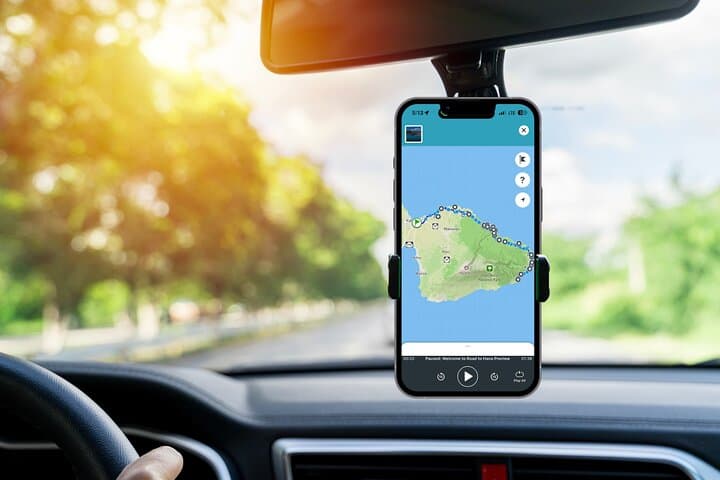

You pull out of a Kula roadside parking lot as a narration begins in your passenger’s ear — a voice that knows every hairpin and hidden pool on Maui’s loneliest coastline. The first miles of this “reverse” run take you along Haleakala’s leeward flanks, through pastureland that drops away to banana farms and cliffs that hunt the horizon. Instead of finishing in Hana and heading back to civilization, you start where few do: the quieter back side, then arc toward the famous waterfalls, beaches, and bamboo corridors that make the Hana Highway one of America’s great drives.
You pull out of a Kula roadside parking lot as a narration begins in your passenger’s ear — a voice that knows every hairpin and hidden pool on Maui’s loneliest coastline. The first miles of this “reverse” run take you along Haleakala’s leeward flanks, through pastureland that drops away to banana farms and cliffs that hunt the horizon. Instead of finishing in Hana and heading back to civilization, you start where few do: the quieter back side, then arc toward the famous waterfalls, beaches, and bamboo corridors that make the Hana Highway one of America’s great drives.
The route’s geology is blunt and obvious. Ancient lava flows sculpted this eastern flank of Haleakala, then ocean and waterfalls carved valleys into the softer layers; the result is sudden cliffs, black sand coves, and pockets of red and green sand where Puʻu o Pele left its signature. Culturally, the road threads through communities that still observe traditional kalo farming and small-business hospitality — fruit stands, family-run food shacks, and the quiet respect paid at Charles Lindbergh’s remote grave.
This audio tour swaps the pushy pace of group buses for a guided playlist of directions, stories, and Hawaiian music that triggers using GPS. It puts popular stops — Twin Falls, Wailua Falls, Ohe'o Gulch, Red Sand Beach — early in your itinerary, reducing the back-and-forth and letting you choose which short walks and swims to take. The narration includes safety notes for narrow bridges and one-lane sections, plus suggestions for where to refill gas and pick up banana bread.
Practical edge: the Reverse Road to Hana works offline, so download the Shaka Guide tour over Wi‑Fi before you leave. Plan 10–12 hours for a full run if you stop often; shorter if you’re selective. Drive slowly: the road’s charm is its curves and local life, not speed. Bring layers — upcountry Kula can be surprisingly cool while the coast stays humid. Wear sturdy shoes for short hikes: many waterfalls and viewpoints require uneven steps or muddy approaches.
Respect the island: stay on marked paths, pack out what you bring, and heed signs at swimming holes — currents can be deceptively strong. For photographers, early light at Kaumahina and late light over Ohe'o give the best contrast. Ultimately, this reverse drive turns the Road to Hana into a choose-your-own adventure, guided by local voices that point you toward the quietest coves, the best banana bread, and the waterfalls that still dare you to jump.