THE ADVENTURE COLLECTIVE® · Independent discovery and booking for outdoor travel

Spend a day moving through Cappadocia’s signature landscapes—Pigeon Valley, Pasabag’s fairy chimneys, Zelve’s cave monasteries and Avanos’ pottery streets—on a guided Red Tour that pairs geology with living craft. This full-day excursion is a compact, practical introduction to the region.
Spend a day moving through Cappadocia’s signature landscapes—Pigeon Valley, Pasabag’s fairy chimneys, Zelve’s cave monasteries and Avanos’ pottery streets—on a guided Red Tour that pairs geology with living craft. This full-day excursion is a compact, practical introduction to the region.
A sun-warmed minivan eases onto a road that threads through a moonscape—where columns of pumice and tuff rise like frozen flames. On the Red Tour of Cappadocia, the landscape announces itself in shifts: first low, rounded ridges rimmed with vineyards, then sudden towers—the fairy chimneys—that demanded explanation long before tourism did.
Verified experiences and guided adventures in the surrounding area.
Operated by CappadociaBudget · Göreme, Nevşehir
A sun-warmed minivan eases onto a road that threads through a moonscape—where columns of pumice and tuff rise like frozen flames. On the Red Tour of Cappadocia, the landscape announces itself in shifts: first low, rounded ridges rimmed with vineyards, then sudden towers—the fairy chimneys—that demanded explanation long before tourism did.
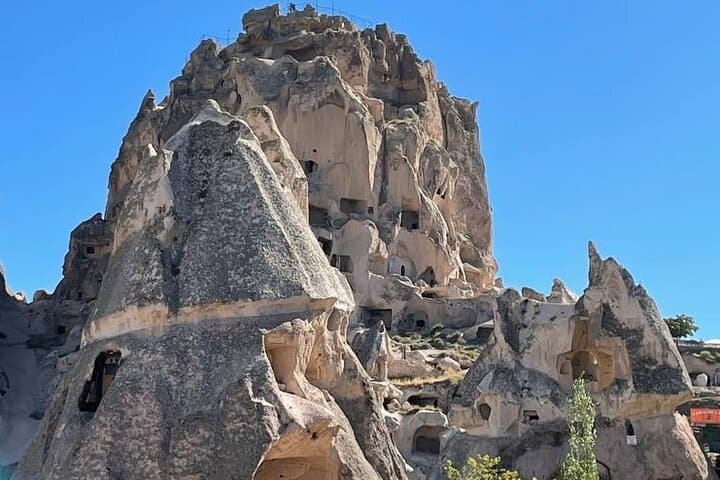
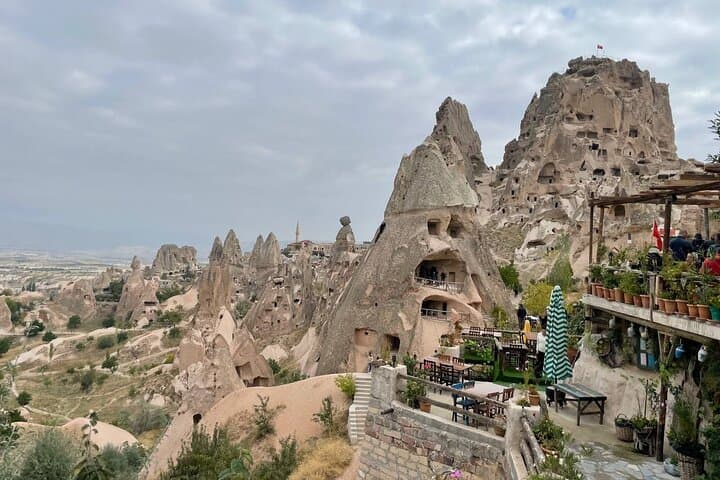
The day begins with Pigeon Valley, where dovecotes carved into soft rock mark centuries of local ingenuity. These niches, once used to collect guano for fertilizer, now frame views across to Uçhisar Castle. From the castle’s base you’ll get a panoramic sense of Cappadocia’s volcanic architecture: ancient lava flows and ash deposits compacted into strata that wind and erode in predictable, spectacular ways.
Love Valley and Devrent Valley read like geological shorthand. Wind and rain sculpted columns into phallic spires and animal silhouettes; Devrent’s informal gallery invites visitors to hunt for camels and seals in stone. Pasabag’s mushroom-capped pillars—known as Monk’s Valley—carry a cultural layer too: hermits carved cells into the rock and inscribed a sparse, ascetic human presence into an already otherworldly place.
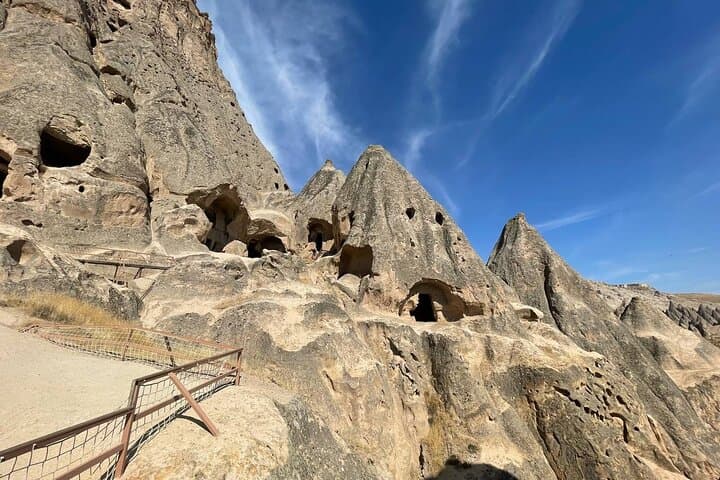
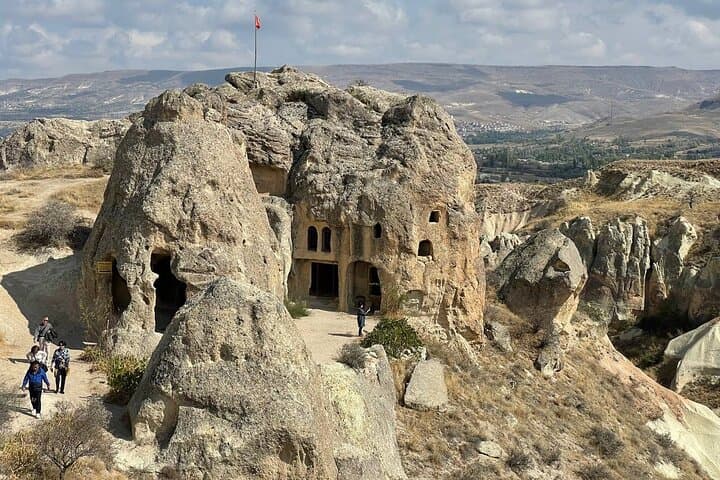
Zelve Open Air Museum takes that human story further. Its Byzantine-era monastery and cave homes hint at the region’s shifting populations: Hittites, Greeks, Armenians, and Turks who adapted dwellings to a geology that both sheltered and threatened. Avanos, downstream along the Kızılırmak River, flips the frame from stone to clay—local potters still throw on wheels using red river clay, a craft passed through generations.
Practical edge: this is a 6½-hour shared tour with hotel pickup and drop-off, lunch in Avanos, an English-speaking guide, and short walks at each stop. Expect uneven, dusty paths and stairs at some viewpoints. The tour is suitable for most fitness levels but brings sensible footwear and sun protection—the volume of walking is light but surfaces can be slippery.
Timing matters. Morning light sculpts deep shadows in the valleys, so arrive early for dramatic contrast; late afternoon softens the tuff into warm honey tones. Bring a small daypack (water, layers, camera) and a curiosity for pottery and local stories—guides will layer geological facts with cultural context. For photographers and first-time visitors, the Red Tour is a compact primer: it moves deliberately through Cappadocia’s core landscapes, then pauses in Avanos so you can touch the clay that helped build them.
easy.
6–7 hours.
Suitable for travelers in average physical condition; involves short walks on uneven ground and brief stair climbs.
The tour runs about 6.5 hours (390 minutes) including travel between sites, guided stops, and a lunch break in Avanos.
Yes; pickup and drop-off from Göreme-area hotels is provided—pickup time depends on distance and will be confirmed by the supplier.
Most key stops listed in the itinerary include admission; your booking confirmation will specify which sites require extra payment, if any.
Yes—children can join, though infants are required to sit on an adult’s lap during transport; consider shorter attention spans for longer transfers.
Comfortable, closed-toe shoes and layered clothing are best—valleys can be cool in the morning and hot by afternoon.
The tour involves short walks and steps; it’s not ideal for travelers with limited mobility or those who cannot navigate rough ground.
Cappadocia’s cave dwellings and churches reflect millennia of settlement, with Byzantine-era monasteries and later Ottoman adaptations carved directly into volcanic tuff.
High foot traffic erodes fragile tuff formations; stay on marked paths and support local guides and small businesses to ensure tourism benefits the landscape and communities.
CappadociaBudget operates guided outdoor trips and adventures with an emphasis on safety, stewardship, and memorable experiences.
A sun-warmed minivan eases onto a road that threads through a moonscape—where columns of pumice and tuff rise like frozen flames. On the Red Tour of Cappadocia, the landscape announces itself in shifts: first low, rounded ridges rimmed with vineyards, then sudden towers—the fairy chimneys—that demanded explanation long before tourism did.
A sun-warmed minivan eases onto a road that threads through a moonscape—where columns of pumice and tuff rise like frozen flames. On the Red Tour of Cappadocia, the landscape announces itself in shifts: first low, rounded ridges rimmed with vineyards, then sudden towers—the fairy chimneys—that demanded explanation long before tourism did.
The day begins with Pigeon Valley, where dovecotes carved into soft rock mark centuries of local ingenuity. These niches, once used to collect guano for fertilizer, now frame views across to Uçhisar Castle. From the castle’s base you’ll get a panoramic sense of Cappadocia’s volcanic architecture: ancient lava flows and ash deposits compacted into strata that wind and erode in predictable, spectacular ways.
Love Valley and Devrent Valley read like geological shorthand. Wind and rain sculpted columns into phallic spires and animal silhouettes; Devrent’s informal gallery invites visitors to hunt for camels and seals in stone. Pasabag’s mushroom-capped pillars—known as Monk’s Valley—carry a cultural layer too: hermits carved cells into the rock and inscribed a sparse, ascetic human presence into an already otherworldly place.
Zelve Open Air Museum takes that human story further. Its Byzantine-era monastery and cave homes hint at the region’s shifting populations: Hittites, Greeks, Armenians, and Turks who adapted dwellings to a geology that both sheltered and threatened. Avanos, downstream along the Kızılırmak River, flips the frame from stone to clay—local potters still throw on wheels using red river clay, a craft passed through generations.
Practical edge: this is a 6½-hour shared tour with hotel pickup and drop-off, lunch in Avanos, an English-speaking guide, and short walks at each stop. Expect uneven, dusty paths and stairs at some viewpoints. The tour is suitable for most fitness levels but brings sensible footwear and sun protection—the volume of walking is light but surfaces can be slippery.
Timing matters. Morning light sculpts deep shadows in the valleys, so arrive early for dramatic contrast; late afternoon softens the tuff into warm honey tones. Bring a small daypack (water, layers, camera) and a curiosity for pottery and local stories—guides will layer geological facts with cultural context. For photographers and first-time visitors, the Red Tour is a compact primer: it moves deliberately through Cappadocia’s core landscapes, then pauses in Avanos so you can touch the clay that helped build them.