THE ADVENTURE COLLECTIVE® · Independent discovery and booking for outdoor travel

Spend a full day on Cappadocia’s classic Red Tour, ticking off Zelve, Love Valley, Paşabağ and Uçhisar with a local guide. Expect carved churches, mushroom-shaped chimneys, a pottery workshop and plenty of uneven walking—perfect for photographers and curious travelers.
Spend a full day on Cappadocia’s classic Red Tour, ticking off Zelve, Love Valley, Paşabağ and Uçhisar with a local guide. Expect carved churches, mushroom-shaped chimneys, a pottery workshop and plenty of uneven walking—perfect for photographers and curious travelers.
A minibus eases away from a hotel at dawn, and the valley wakes around it: strings of low houses, a scattering of tourists with coffee cups, and the rock rising slow and patient in the distance. The Red Tour shepherds visitors through the part of Cappadocia where volcanic stone has been coaxed into chimneys, windows, and cave rooms. A local guide sketches the day’s map with the economy of someone who knows which viewpoints hold the light.
Verified experiences and guided adventures in the surrounding area.
Operated by INNtur · Göreme, Nevşehir
A minibus eases away from a hotel at dawn, and the valley wakes around it: strings of low houses, a scattering of tourists with coffee cups, and the rock rising slow and patient in the distance. The Red Tour shepherds visitors through the part of Cappadocia where volcanic stone has been coaxed into chimneys, windows, and cave rooms. A local guide sketches the day’s map with the economy of someone who knows which viewpoints hold the light.
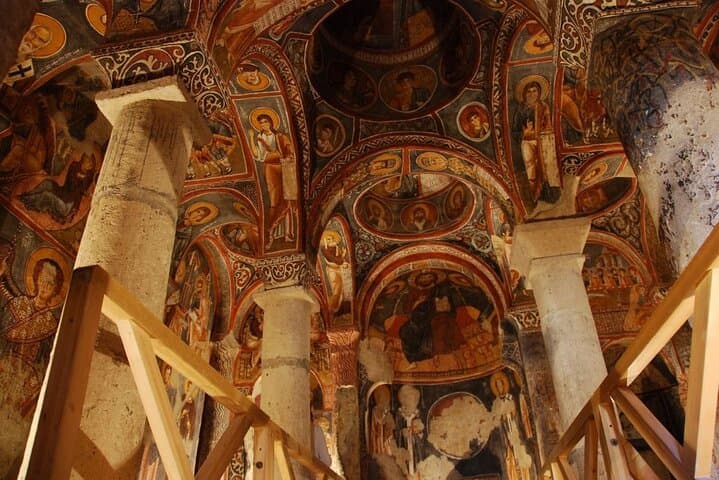
The land here carries layered histories. Hittite roads once crossed the plateau; Christian communities later hollowed churches into the soft tuff and painted frescoes that survive in dim, cool chambers. By the time the caravan routes faded, villagers had adapted the stone itself into homes and ovens—architecture grown from geology.
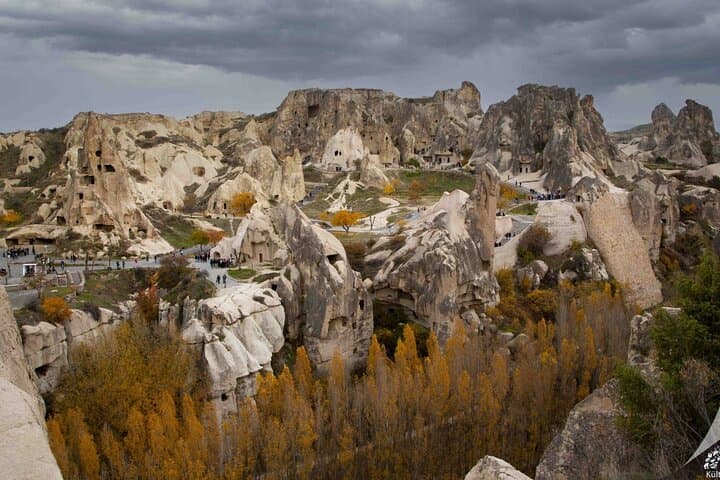
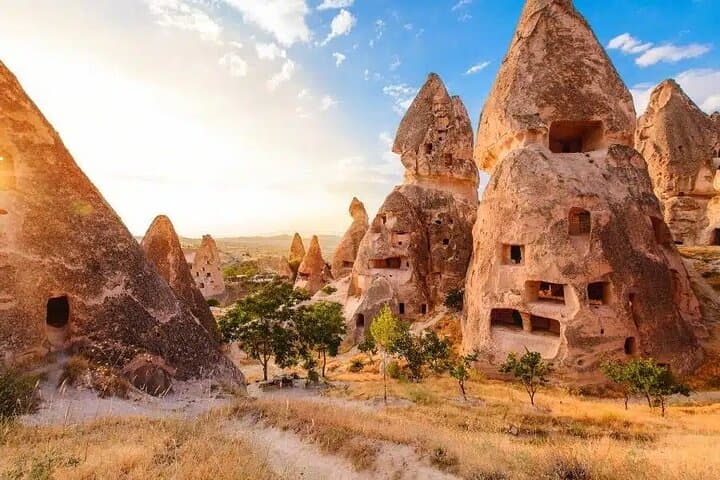
Geology is simple and dramatic: ash from ancient eruptions compacted into tuff, then wind and rain ate the softer sections away, leaving the harder caps that protect the thin columns below. Fairy chimneys aren’t fantasy so much as patient erosion with a flair for stagecraft; the wind and groundwater did the set dressing, and humans made the rooms.
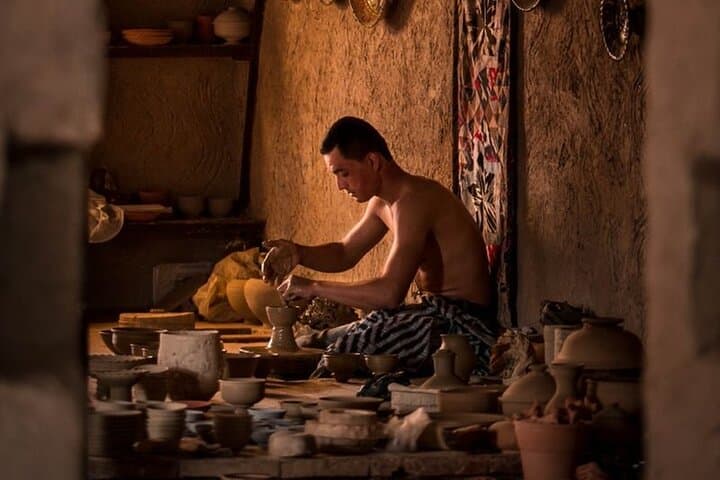
Culture in Cappadocia still swivels between craft and tourism. In Avanos, potters use the red river clay the town is named for; at a workshop visit you’ll see hands shape a bowl with the same motions passed down generations. Uçhisar’s summit, by contrast, is a human-made observatory—an old stronghold turned panoramic stage for sunrise and sunset.
Practically, the Red Tour is a long, walk-heavy day that covers Zelve, Love Valley, Paşabağ (the mushroom-shaped chimneys), Uçhisar Castle viewpoint, and a pottery workshop, typically 6–8 hours including lunch and museum admissions (tickets included). Paths are uneven: short hikes and stair climbs, loose gravel and narrow ledges. Wear sturdy shoes, bring a refillable water bottle, and layer for temperature swings—mornings can carry a winter bite even in summer.
Plan to start early for softer light at Love Valley and the three-headed chimneys; late afternoon narrows crowds and enriches colors. The tour includes hotel pickup and drop-off in Göreme-area hotels—confirm your pickup point when booking. Museum entries are handled by the operator, while drinks at lunch are usually out-of-pocket.
For photographers and travelers wanting context: listen to the guide’s local legends, try pottery at the wheel, and give yourself a moment on Uçhisar to watch the landscape breathe. Respect signs in cave churches—fragile pigments need distance—and pack out waste. The day presses a lot into one loop, and it rewards patience: there's a clarity to walking through landscapes that still feel as if they're shaping themselves.
moderate.
6–8 hours.
Should be comfortable walking 3–6 miles over uneven ground with short uphill sections; basic mobility required.
Yes—museum admission tickets listed in the itinerary are included in the tour price.
Pickup and drop-off from Göreme-area hotels are included; confirm your exact pickup point and phone number when booking.
The tour is family-friendly but includes uneven terrain and stairs; infants should be in a carrier and small children supervised.
Yes—there’s a scheduled workshop stop where you can observe and try basic pottery; more in-depth sessions may cost extra.
You might glimpse balloons at sunrise from viewpoints, but the tour is not a balloon ride; consider booking a separate sunrise balloon for a dedicated flight.
Tipping is appreciated but discretionary; 5–10% of the tour price or a small cash tip per person is common practice.
Cappadocia’s cave settlements and painted churches grew from Byzantine-era monastic communities that carved sanctuaries into the soft tuff.
Visitor numbers strain fragile cave frescoes and fragile soils; stay on marked trails, avoid touching painted walls, and support local businesses that follow sustainable practices.
INNtur operates guided outdoor trips and adventures with an emphasis on safety, stewardship, and memorable experiences.
A minibus eases away from a hotel at dawn, and the valley wakes around it: strings of low houses, a scattering of tourists with coffee cups, and the rock rising slow and patient in the distance. The Red Tour shepherds visitors through the part of Cappadocia where volcanic stone has been coaxed into chimneys, windows, and cave rooms. A local guide sketches the day’s map with the economy of someone who knows which viewpoints hold the light.
A minibus eases away from a hotel at dawn, and the valley wakes around it: strings of low houses, a scattering of tourists with coffee cups, and the rock rising slow and patient in the distance. The Red Tour shepherds visitors through the part of Cappadocia where volcanic stone has been coaxed into chimneys, windows, and cave rooms. A local guide sketches the day’s map with the economy of someone who knows which viewpoints hold the light.
The land here carries layered histories. Hittite roads once crossed the plateau; Christian communities later hollowed churches into the soft tuff and painted frescoes that survive in dim, cool chambers. By the time the caravan routes faded, villagers had adapted the stone itself into homes and ovens—architecture grown from geology.
Geology is simple and dramatic: ash from ancient eruptions compacted into tuff, then wind and rain ate the softer sections away, leaving the harder caps that protect the thin columns below. Fairy chimneys aren’t fantasy so much as patient erosion with a flair for stagecraft; the wind and groundwater did the set dressing, and humans made the rooms.
Culture in Cappadocia still swivels between craft and tourism. In Avanos, potters use the red river clay the town is named for; at a workshop visit you’ll see hands shape a bowl with the same motions passed down generations. Uçhisar’s summit, by contrast, is a human-made observatory—an old stronghold turned panoramic stage for sunrise and sunset.
Practically, the Red Tour is a long, walk-heavy day that covers Zelve, Love Valley, Paşabağ (the mushroom-shaped chimneys), Uçhisar Castle viewpoint, and a pottery workshop, typically 6–8 hours including lunch and museum admissions (tickets included). Paths are uneven: short hikes and stair climbs, loose gravel and narrow ledges. Wear sturdy shoes, bring a refillable water bottle, and layer for temperature swings—mornings can carry a winter bite even in summer.
Plan to start early for softer light at Love Valley and the three-headed chimneys; late afternoon narrows crowds and enriches colors. The tour includes hotel pickup and drop-off in Göreme-area hotels—confirm your pickup point when booking. Museum entries are handled by the operator, while drinks at lunch are usually out-of-pocket.
For photographers and travelers wanting context: listen to the guide’s local legends, try pottery at the wheel, and give yourself a moment on Uçhisar to watch the landscape breathe. Respect signs in cave churches—fragile pigments need distance—and pack out waste. The day presses a lot into one loop, and it rewards patience: there's a clarity to walking through landscapes that still feel as if they're shaping themselves.