THE ADVENTURE COLLECTIVE® · Independent discovery and booking for outdoor travel

Explore Cappadocia’s northern highlights in a single, well-paced day: fairy chimneys at Paşabağ, clay-throwing in Avanos, panoramic Uçhisar views and the Göreme Open-Air Museum’s cave churches. Small groups and licensed guides make this a focused introduction to the region’s geology, history and living craft.
Explore Cappadocia’s northern highlights in a single, well-paced day: fairy chimneys at Paşabağ, clay-throwing in Avanos, panoramic Uçhisar views and the Göreme Open-Air Museum’s cave churches. Small groups and licensed guides make this a focused introduction to the region’s geology, history and living craft.
You step off the van and the landscape rearranges itself — smooth, honey-colored ridges give way to columns and caps of stone that look as if a child stacked mushrooms across an ancient plain. The Red (Northern) Tour moves like a short, efficient novel through Cappadocia: Devrent’s imagination-shaped rock forms, the three-pronged towers at Paşabağ, the sweeping Love Valley overlook, hands-on clay at an Avanos pottery studio, a bird’s-eye panorama from Uçhisar Castle and the painted caves of the Göreme Open-Air Museum.
Verified experiences and guided adventures in the surrounding area.
Operated by Cappadoc · Göreme, Nevşehir
You step off the van and the landscape rearranges itself — smooth, honey-colored ridges give way to columns and caps of stone that look as if a child stacked mushrooms across an ancient plain. The Red (Northern) Tour moves like a short, efficient novel through Cappadocia: Devrent’s imagination-shaped rock forms, the three-pronged towers at Paşabağ, the sweeping Love Valley overlook, hands-on clay at an Avanos pottery studio, a bird’s-eye panorama from Uçhisar Castle and the painted caves of the Göreme Open-Air Museum.
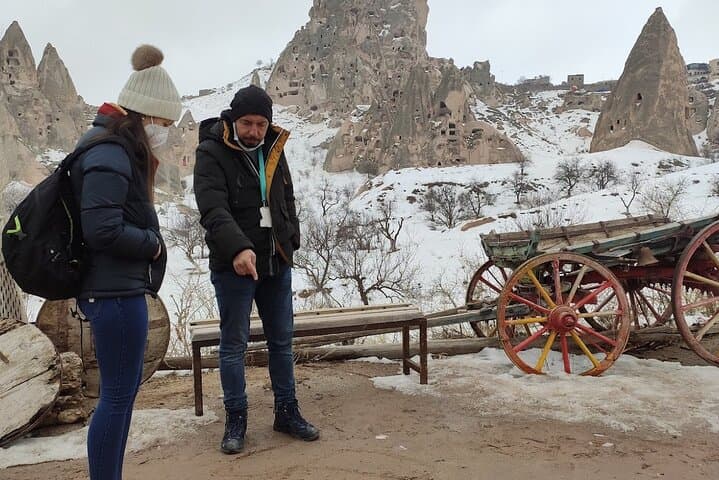
The region’s story reads in geological time. Volcanic ash compacted into tuff millions of years ago; wind, rain and temperature swings have since become sculptors, carving slender chimneys and onion-shaped caps. Human history layered over that geology: Byzantine monks hollowed out sanctuaries and painted frescoes here from as early as the 3rd century, turning soft rock into cloisters and communities hidden from the steppe beyond.
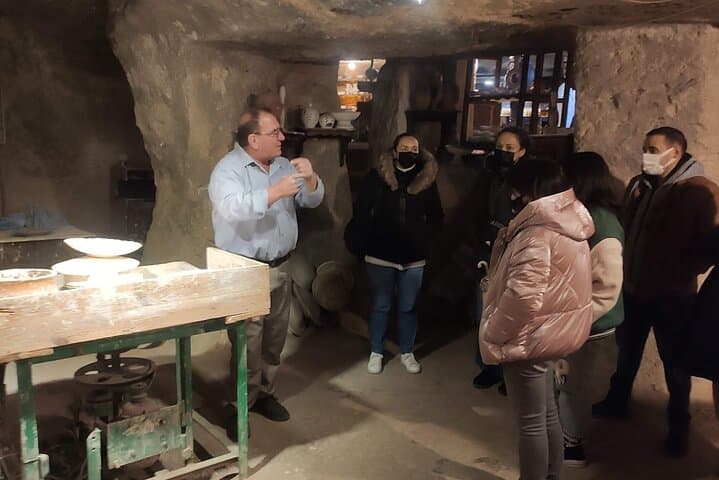
Local culture still pivots on earth and craft. Avanos, on the Kızılırmak River, has been a pottery center for millennia; you’ll see workshops where instructors guide you through wedging, centering and the satisfying slap of wet clay. At Göreme, well-preserved cave churches offer a rare, quiet lesson in monastic life — but those frescoes are fragile, so the tour balances photography stops with respectful viewing.
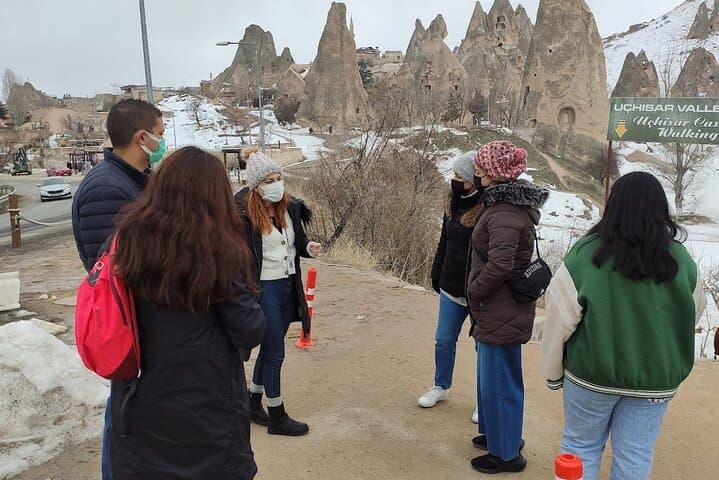
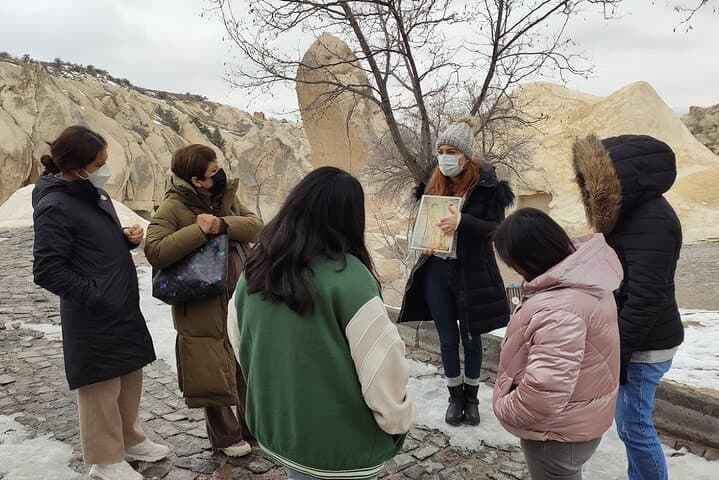
Practicalities are simple: the tour runs about seven hours with licensed guides who know when to pause for photos and when to leave room for the light to shift. Groups are intentionally small — up to 18 — so you spend more time at viewpoints and less time in a queue. Entrance fees for the open-air museum are included, and pickup/drop-off from Göreme-area hotels is part of the package.
Timing matters. Midday flattens textures; early morning or late afternoon brings the chimneys into crisp relief and gilds the rock with warmth. Footing is uneven: short walks on dirt and stone steps, little technical effort but steady shoes are mandatory. Summers can be hot and dry; spring and autumn offer the most comfortable hiking weather.
If you want a compact introduction to Cappadocia’s geology, ancient cave life and living craft traditions, this northern circuit covers the essentials without feeling rushed. Bring sun protection, a refillable water bottle, and a sense of curiosity — the land here seems to lean in, inviting questions and photographs in equal measure.
easy.
6–7 hours.
Suitable for most fitness levels—expect a few short walks on uneven ground and stairs; no sustained climbs.
The tour runs approximately 7 hours (420 minutes) with multiple stops including Devrent, Paşabağ, Love Valley, Avanos, Uçhisar and Göreme Open-Air Museum.
Yes—entry to the Göreme Open-Air Museum is included in the tour price.
Yes—pickup and drop-off from Göreme-area hotels is provided; confirm your pickup point when booking.
Guides are licensed and provide fluent narration in the language listed at booking; confirm language availability when you reserve.
The tour is suitable for most ages, but some sites have uneven terrain and steps; those with limited mobility should check specific access at each stop before booking.
Photography for personal use is permitted at most stops; drones are subject to local regulations and may be restricted near heritage sites like the Göreme Open-Air Museum—check with your guide.
Cappadocia’s cave churches and monasteries date to early Byzantine monasticism; monks carved entire communities into tuff to shelter from invasions and the climate.
Stick to marked trails and avoid touching frescoes; support local craft by buying pottery from artisans who use traditional, low-impact methods.
Cappadoc operates guided outdoor trips and adventures with an emphasis on safety, stewardship, and memorable experiences.
You step off the van and the landscape rearranges itself — smooth, honey-colored ridges give way to columns and caps of stone that look as if a child stacked mushrooms across an ancient plain. The Red (Northern) Tour moves like a short, efficient novel through Cappadocia: Devrent’s imagination-shaped rock forms, the three-pronged towers at Paşabağ, the sweeping Love Valley overlook, hands-on clay at an Avanos pottery studio, a bird’s-eye panorama from Uçhisar Castle and the painted caves of the Göreme Open-Air Museum.
You step off the van and the landscape rearranges itself — smooth, honey-colored ridges give way to columns and caps of stone that look as if a child stacked mushrooms across an ancient plain. The Red (Northern) Tour moves like a short, efficient novel through Cappadocia: Devrent’s imagination-shaped rock forms, the three-pronged towers at Paşabağ, the sweeping Love Valley overlook, hands-on clay at an Avanos pottery studio, a bird’s-eye panorama from Uçhisar Castle and the painted caves of the Göreme Open-Air Museum.
The region’s story reads in geological time. Volcanic ash compacted into tuff millions of years ago; wind, rain and temperature swings have since become sculptors, carving slender chimneys and onion-shaped caps. Human history layered over that geology: Byzantine monks hollowed out sanctuaries and painted frescoes here from as early as the 3rd century, turning soft rock into cloisters and communities hidden from the steppe beyond.
Local culture still pivots on earth and craft. Avanos, on the Kızılırmak River, has been a pottery center for millennia; you’ll see workshops where instructors guide you through wedging, centering and the satisfying slap of wet clay. At Göreme, well-preserved cave churches offer a rare, quiet lesson in monastic life — but those frescoes are fragile, so the tour balances photography stops with respectful viewing.
Practicalities are simple: the tour runs about seven hours with licensed guides who know when to pause for photos and when to leave room for the light to shift. Groups are intentionally small — up to 18 — so you spend more time at viewpoints and less time in a queue. Entrance fees for the open-air museum are included, and pickup/drop-off from Göreme-area hotels is part of the package.
Timing matters. Midday flattens textures; early morning or late afternoon brings the chimneys into crisp relief and gilds the rock with warmth. Footing is uneven: short walks on dirt and stone steps, little technical effort but steady shoes are mandatory. Summers can be hot and dry; spring and autumn offer the most comfortable hiking weather.
If you want a compact introduction to Cappadocia’s geology, ancient cave life and living craft traditions, this northern circuit covers the essentials without feeling rushed. Bring sun protection, a refillable water bottle, and a sense of curiosity — the land here seems to lean in, inviting questions and photographs in equal measure.