THE ADVENTURE COLLECTIVE® · Independent discovery and booking for outdoor travel

Lower into narrow redrock slots, learn rope skills, and move through 6 hours of sandstone obstacles guided by experienced canyoneers in Capitol Reef. This full-day adventure balances technical instruction with wild scenery for fit travelers.
Lower into narrow redrock slots, learn rope skills, and move through 6 hours of sandstone obstacles guided by experienced canyoneers in Capitol Reef. This full-day adventure balances technical instruction with wild scenery for fit travelers.
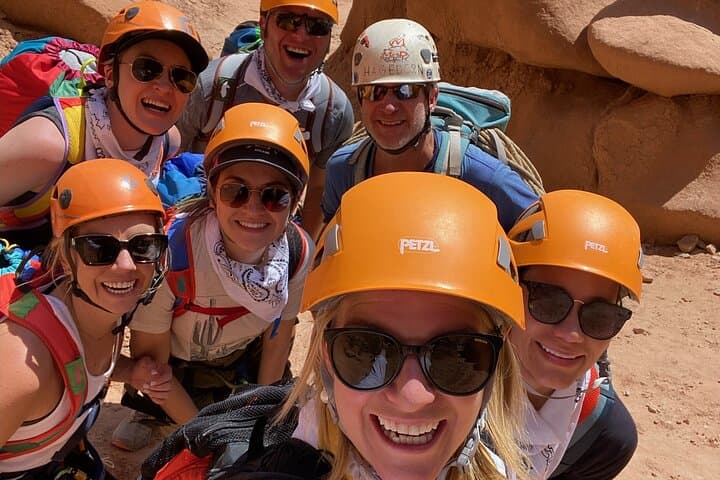
You leave the highway and the air seems to change: sun-baked slickrock warms your palms and a dry wind begins to push through narrow fins of sandstone. The group gathers at the Capitol Reef Visitor Center, maps folded, harnesses clipped to packs. Your guide—steady-voiced, practiced—runs a safety check, and then the canyon swallows you. The slot opens and the world compresses to vertical lines of iron-stained red, pockets of blue sky, and a geology that refuses to be flat.
Verified experiences and guided adventures in the surrounding area.
Operated by Get In The Wild Adventures · Torrey, Utah
You leave the highway and the air seems to change: sun-baked slickrock warms your palms and a dry wind begins to push through narrow fins of sandstone. The group gathers at the Capitol Reef Visitor Center, maps folded, harnesses clipped to packs. Your guide—steady-voiced, practiced—runs a safety check, and then the canyon swallows you. The slot opens and the world compresses to vertical lines of iron-stained red, pockets of blue sky, and a geology that refuses to be flat.
Capitol Reef is an overturned fold in the Colorado Plateau called the Waterpocket Fold; its cliffs and chutes were carved by uplift and erosion over millions of years. What you move through on this full-day canyoneering route is a living geological record: cross-bedded Navajo Sandstone, streaks of manganese and iron, and narrow amphitheaters where water still gathers after storms. The area around Fruita—an old Mormon settlement turned orchard community—adds a human layer: scattered fruit trees, historic orchards, and a history of settlers who read the land for water and shelter.
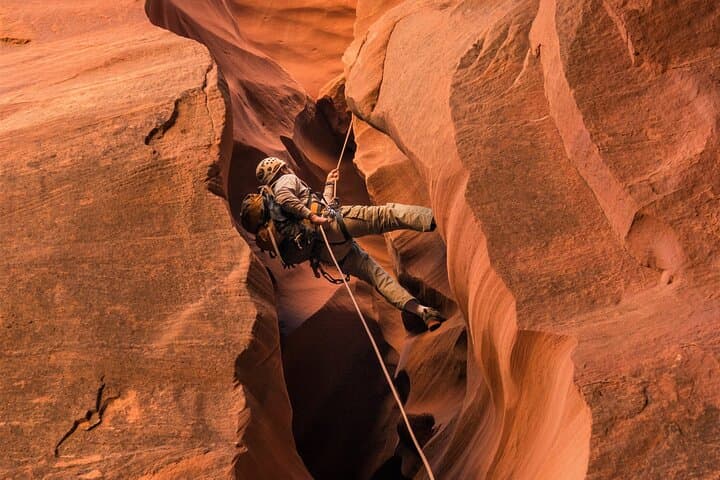
Canyoneering here is an exercise in negotiation: reading the rock, choosing whether to down-climb a polished slab, or commit to a controlled rappel where the rope becomes a thin lifeline into sunlight. The guides provide instruction in rope work and belay systems, so technical novices can learn on the move. Expect hiking, scrambling, wading through seasonal pools, and several short rappels—each one a decision point where the canyon seems to test your attention and resolve.
Practicalities matter. This is a six-hour, physically demanding outing. You should be comfortable on uneven terrain, able to move with a pack and handle exposure. Weather can flip: summer heat can push above 90°F, making canyon bottoms like ovens; spring and fall are generally ideal but bring a chance of flash floods. Wear closed, grippy footwear, bring layered clothing, and carry at least 2 liters of water and sun protection. Guides supply technical gear—harnesses, helmets, ropes—and instruction, but you'll sign a waiver and must meet weight and age limits.
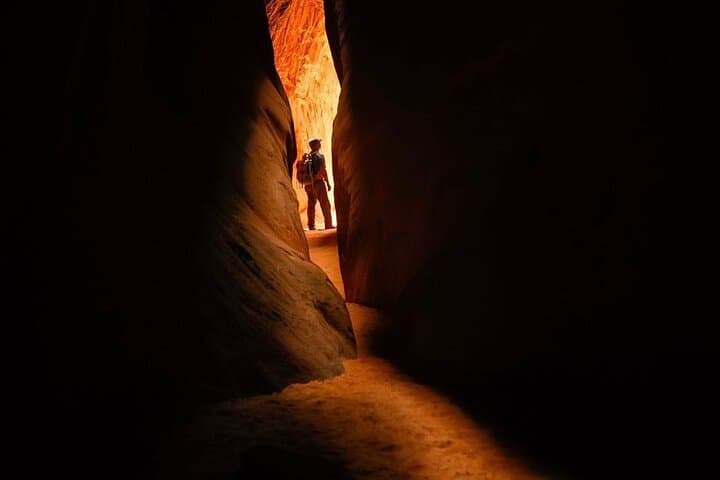
Beyond the adrenaline, the reward is steady: a quiet pool tucked in a bowl of stone, a sunbeam slicing a slot, or the particular satisfaction of clipping off a rap and moving on. If you want to extend the day, stop in Torrey afterward for a cold drink and a view of the Wasatch-to-Wah Wah skyline—Capitol Reef's ridgelines are stubborn company, always demanding another look.
challenging.
6 hours.
Requires good cardiovascular fitness, agility for scrambling, and comfort with exposure and sustained physical activity.
No. Guides provide instruction in rappelling and rope techniques; however, you should be physically fit and comfortable with heights.
Participants must be at least seven years old and weigh between 70 and 250 pounds (32–114 kg) per operator requirements.
Tours can be canceled for bad weather, especially if there's flash-flood risk; the operator offers refunds or alternatives if canceled 24 hours before.
Guiding, canyoneering equipment (harnesses, helmets, ropes), and instruction are included; bring personal food, water, and sun protection.
Expect a demanding six-hour outing with hiking, scrambling, wading, and several rappels—aim for moderate to high fitness.
Guides meet at the Capitol Reef National Park Visitor Center at the intersection of Highway 24 and Scenic Drive; check in 15 minutes early.
The Waterpocket Fold is a 65-mile monocline formed during uplift of the Colorado Plateau; early Mormon settlers farmed the fertile Fremont River valley at Fruita.
Stick to established routes, pack out all trash, and avoid disturbing riparian pockets—those small water features are ecologically fragile.
Get In The Wild Adventures operates guided outdoor trips and adventures with an emphasis on safety, stewardship, and memorable experiences.
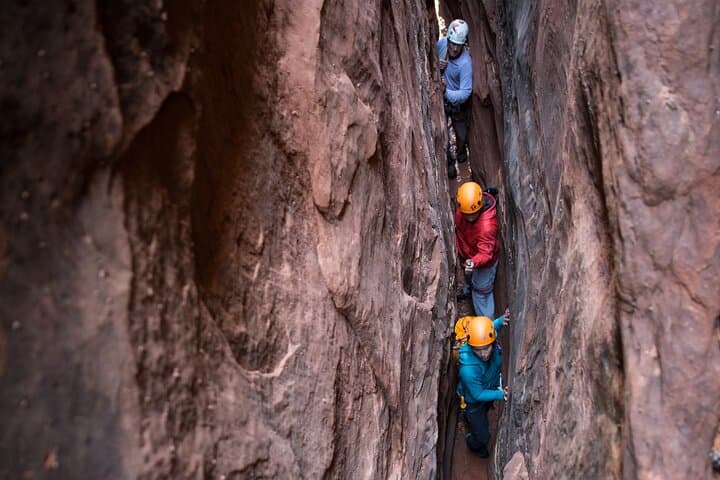
You leave the highway and the air seems to change: sun-baked slickrock warms your palms and a dry wind begins to push through narrow fins of sandstone. The group gathers at the Capitol Reef Visitor Center, maps folded, harnesses clipped to packs. Your guide—steady-voiced, practiced—runs a safety check, and then the canyon swallows you. The slot opens and the world compresses to vertical lines of iron-stained red, pockets of blue sky, and a geology that refuses to be flat.
You leave the highway and the air seems to change: sun-baked slickrock warms your palms and a dry wind begins to push through narrow fins of sandstone. The group gathers at the Capitol Reef Visitor Center, maps folded, harnesses clipped to packs. Your guide—steady-voiced, practiced—runs a safety check, and then the canyon swallows you. The slot opens and the world compresses to vertical lines of iron-stained red, pockets of blue sky, and a geology that refuses to be flat.
Capitol Reef is an overturned fold in the Colorado Plateau called the Waterpocket Fold; its cliffs and chutes were carved by uplift and erosion over millions of years. What you move through on this full-day canyoneering route is a living geological record: cross-bedded Navajo Sandstone, streaks of manganese and iron, and narrow amphitheaters where water still gathers after storms. The area around Fruita—an old Mormon settlement turned orchard community—adds a human layer: scattered fruit trees, historic orchards, and a history of settlers who read the land for water and shelter.
Canyoneering here is an exercise in negotiation: reading the rock, choosing whether to down-climb a polished slab, or commit to a controlled rappel where the rope becomes a thin lifeline into sunlight. The guides provide instruction in rope work and belay systems, so technical novices can learn on the move. Expect hiking, scrambling, wading through seasonal pools, and several short rappels—each one a decision point where the canyon seems to test your attention and resolve.
Practicalities matter. This is a six-hour, physically demanding outing. You should be comfortable on uneven terrain, able to move with a pack and handle exposure. Weather can flip: summer heat can push above 90°F, making canyon bottoms like ovens; spring and fall are generally ideal but bring a chance of flash floods. Wear closed, grippy footwear, bring layered clothing, and carry at least 2 liters of water and sun protection. Guides supply technical gear—harnesses, helmets, ropes—and instruction, but you'll sign a waiver and must meet weight and age limits.
Beyond the adrenaline, the reward is steady: a quiet pool tucked in a bowl of stone, a sunbeam slicing a slot, or the particular satisfaction of clipping off a rap and moving on. If you want to extend the day, stop in Torrey afterward for a cold drink and a view of the Wasatch-to-Wah Wah skyline—Capitol Reef's ridgelines are stubborn company, always demanding another look.