THE ADVENTURE COLLECTIVE® · Independent discovery and booking for outdoor travel

Rise into the canopy on a one‑mile tram that gives you a bird’s-eye view of Costa Rica’s rain forest. This private tour from San José pairs a narrated treetop ride with nature walks, a butterfly garden and local interpretation for an accessible, educational half‑day.
Rise into the canopy on a one‑mile tram that gives you a bird’s-eye view of Costa Rica’s rain forest. This private tour from San José pairs a narrated treetop ride with nature walks, a butterfly garden and local interpretation for an accessible, educational half‑day.
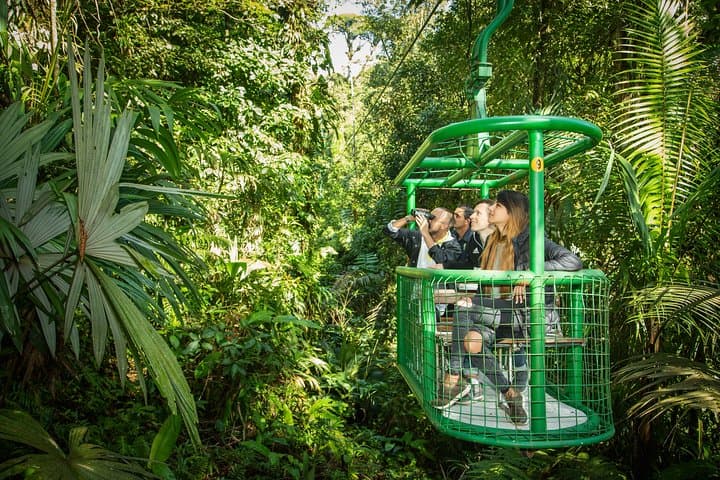
You step off the van and the humid air tightens around your face, the forest immediately reclaiming the edge of the clearing. Above you a cable hums and the tram cars—suspended like slow-moving birds—glide along a one-mile span over a living, breathing canopy. The guide gestures to a flash of red as a toucan slips through the emergent layer; the tram moves, and the rainforest opens and closes like pages in a field guide.
Verified experiences and guided adventures in the surrounding area.
Operated by Greenway Nature Day Tours · San José, San José Province
You step off the van and the humid air tightens around your face, the forest immediately reclaiming the edge of the clearing. Above you a cable hums and the tram cars—suspended like slow-moving birds—glide along a one-mile span over a living, breathing canopy. The guide gestures to a flash of red as a toucan slips through the emergent layer; the tram moves, and the rainforest opens and closes like pages in a field guide.
The Rain Forest Aerial Tram was built in the 1990s by a biologist who wanted to study and share the treetop world without cutting into it. The system was sited on the flank of Costa Rica’s Central Volcanic Range, within the ecological influence of Poás and Irazú volcanoes and the broader Braulio Carrillo corridor. Geologically this is young terrain—andesitic volcanoes and steep ridges feed soils that support cloud-forest pockets, lowland wet forest and a dizzying altitudinal gradient where rainfall can swing from a few thousand to more than five thousand millimeters a year.
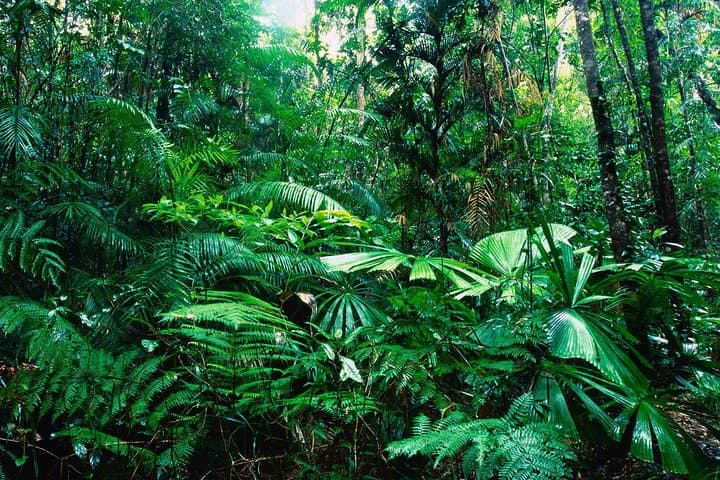
Local guides weave natural history, pointing out epiphytic bromeliads that drink fog and strangler figs that slowly re-map the canopy. Cultural threads run nearby too: coffee fincas and small towns in the Central Valley shaped settlement patterns and continue to press and protect the edges of these protected zones. The site mixes interpretive exhibits—a butterfly garden and short nature walks—with the tram’s quiet education, making it as much a field lab as an attraction.
Practically, the tram is a slow, deliberate way to see the canopy without strenuous hiking. The ride covers roughly a mile of suspended track with interpretive stops; the whole private tour lasts about seven hours from hotel pickup in San José and includes bottled water, lunch and a naturalist guide. Accessibility is good—paths and the tram are wheelchair accessible, and the program suits mixed fitness levels.
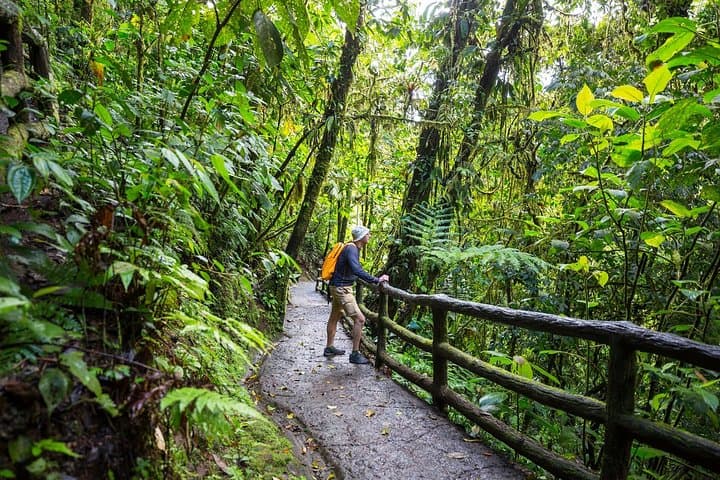
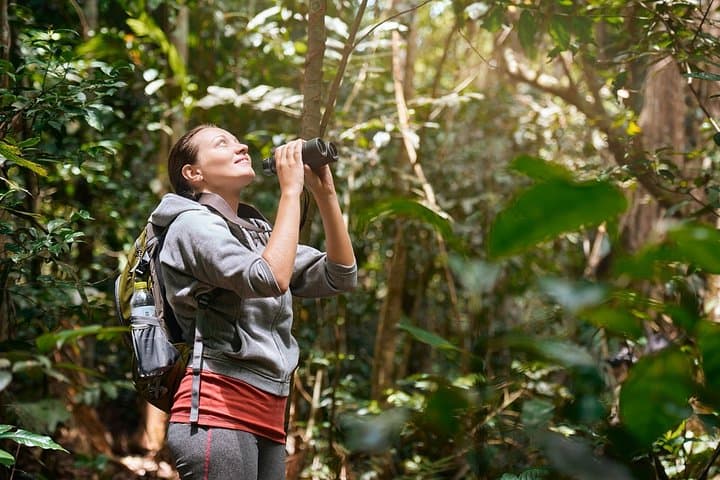
Plan for weather: mornings can be clearer; afternoons often bring tropical showers. Bring a light waterproof, sturdy shoes for the boardwalks, and insect repellent for shaded trails. Binoculars and a camera with a longer lens improve wildlife chances—birds and monkeys are common, but the canopy hides as much as it reveals.
If you want a measured, educational encounter with the rainforest—from the comfort of a tram car—this private tour delivers context, close-up texture and a clear conservation message. It’s a practical, immersive half-day that rewards attention: stay quiet on the tram, let the forest reveal itself in small, brilliant increments, and you’ll leave with both species names and a better sense of the fragile systems that sustain them.
easy.
6–7 hours.
Suitable for people in average physical condition; minimal walking required but some standing during the tram ride.
The aerial tram covers approximately one mile of suspended track with interpretive stops; the ride portion is about 60–90 minutes within the 3-hour on-site program.
Yes—this attraction and its surfaces are wheelchair accessible and suitable for most mobility needs.
Most hotels in San José are under an hour away by private transport; exact pickup time depends on your hotel location.
Common sightings include toucans, motmots, trogons, howler and capuchin monkeys, and abundant epiphytes; sightings aren’t guaranteed but guides maximize opportunities.
Yes—the experience is family-friendly; check age restrictions with the operator but the tram is generally safe for older infants and children able to sit in the tram car.
Lunch is included in the tour; bring snacks if you have specific dietary needs and inform the operator in advance.
Constructed in the 1990s by a biologist, the tram was designed to study treetop ecosystems without destructive canopy access methods.
The tram operates within a conservation-minded framework—guided interpretation emphasizes habitat protection and low-impact tourism to reduce pressure on sensitive forest areas.
Greenway Nature Day Tours operates guided outdoor trips and adventures with an emphasis on safety, stewardship, and memorable experiences.
You step off the van and the humid air tightens around your face, the forest immediately reclaiming the edge of the clearing. Above you a cable hums and the tram cars—suspended like slow-moving birds—glide along a one-mile span over a living, breathing canopy. The guide gestures to a flash of red as a toucan slips through the emergent layer; the tram moves, and the rainforest opens and closes like pages in a field guide.
You step off the van and the humid air tightens around your face, the forest immediately reclaiming the edge of the clearing. Above you a cable hums and the tram cars—suspended like slow-moving birds—glide along a one-mile span over a living, breathing canopy. The guide gestures to a flash of red as a toucan slips through the emergent layer; the tram moves, and the rainforest opens and closes like pages in a field guide.
The Rain Forest Aerial Tram was built in the 1990s by a biologist who wanted to study and share the treetop world without cutting into it. The system was sited on the flank of Costa Rica’s Central Volcanic Range, within the ecological influence of Poás and Irazú volcanoes and the broader Braulio Carrillo corridor. Geologically this is young terrain—andesitic volcanoes and steep ridges feed soils that support cloud-forest pockets, lowland wet forest and a dizzying altitudinal gradient where rainfall can swing from a few thousand to more than five thousand millimeters a year.
Local guides weave natural history, pointing out epiphytic bromeliads that drink fog and strangler figs that slowly re-map the canopy. Cultural threads run nearby too: coffee fincas and small towns in the Central Valley shaped settlement patterns and continue to press and protect the edges of these protected zones. The site mixes interpretive exhibits—a butterfly garden and short nature walks—with the tram’s quiet education, making it as much a field lab as an attraction.
Practically, the tram is a slow, deliberate way to see the canopy without strenuous hiking. The ride covers roughly a mile of suspended track with interpretive stops; the whole private tour lasts about seven hours from hotel pickup in San José and includes bottled water, lunch and a naturalist guide. Accessibility is good—paths and the tram are wheelchair accessible, and the program suits mixed fitness levels.
Plan for weather: mornings can be clearer; afternoons often bring tropical showers. Bring a light waterproof, sturdy shoes for the boardwalks, and insect repellent for shaded trails. Binoculars and a camera with a longer lens improve wildlife chances—birds and monkeys are common, but the canopy hides as much as it reveals.
If you want a measured, educational encounter with the rainforest—from the comfort of a tram car—this private tour delivers context, close-up texture and a clear conservation message. It’s a practical, immersive half-day that rewards attention: stay quiet on the tram, let the forest reveal itself in small, brilliant increments, and you’ll leave with both species names and a better sense of the fragile systems that sustain them.