THE ADVENTURE COLLECTIVE® · Independent discovery and booking for outdoor travel

From Kathmandu, a single day can take you from the broad, learner-friendly riffles of the Trishuli to the vertical roar of Bhote Koshi. This guide breaks down what to expect on each river—and how to prepare for a full day of whitewater in Nepal.
From Kathmandu, a single day can take you from the broad, learner-friendly riffles of the Trishuli to the vertical roar of Bhote Koshi. This guide breaks down what to expect on each river—and how to prepare for a full day of whitewater in Nepal.
The van eases out of Kathmandu before dawn, streetlamps still haloing saffron prayer flags as the city thins into rice terraces and the road follows a river’s voice. By mid-morning you’re standing at the edge of the Trishuli—cold, clear water racing over stone—guides checking helmets and tightening straps. The river doesn’t whisper; it dares you. On Trishuli the boat surges, drops, and spits you through a sequence of moderate rapids that feel immediate and honest—perfect for a first big run. Hours downstream, on the Bhote Koshi, the mood sharpens: a narrow gorge, thunderous drops, and rapids that prefer experienced paddlers. Here the current takes command and the cliffs watch.
Verified experiences and guided adventures in the surrounding area.
Operated by Shepherd Holidays · Kathmandu, Bagmati Province
The van eases out of Kathmandu before dawn, streetlamps still haloing saffron prayer flags as the city thins into rice terraces and the road follows a river’s voice. By mid-morning you’re standing at the edge of the Trishuli—cold, clear water racing over stone—guides checking helmets and tightening straps. The river doesn’t whisper; it dares you. On Trishuli the boat surges, drops, and spits you through a sequence of moderate rapids that feel immediate and honest—perfect for a first big run. Hours downstream, on the Bhote Koshi, the mood sharpens: a narrow gorge, thunderous drops, and rapids that prefer experienced paddlers. Here the current takes command and the cliffs watch.
These rivers are carved by the same forces that raised the Himalaya. Trishuli’s channels cut through Miocene sediment and glacial deposits; Bhote Koshi—a name that hints at its Tibetan headwaters—thunders through younger, steep-walled gorges. Historically these waterways marked routes between Kathmandu and trans-Himalayan trade paths; villages along their banks still ferry local produce and stories to market.
Culture sits close to the water: riverside tea stalls steam with homemade chai, and lunch after the run is simple and sustaining—dal, rice, seasonal vegetables—served where the bank is wide enough to spread a mat. Local guides are often from the valleys themselves; they read currents the way elders read weather, and they’ll point out kingfishers hovering over eddies or langurs sunning on boulders.
Practical guide: this is a full-day trip—expect 6–12 hours from hotel pickup to drop-off. Trishuli is the better choice if you’re new to whitewater: Class II–III rapids, short ferrying and clear exits. Bhote Koshi climbs into Class III–V territory and runs best for strong paddlers or those who book the expert raft option. Boats, helmets, wetsuits in cooler months, and a riverside lunch are included. Bring a secure, waterproof bag for your phone, a small towel, and footwear that will stay on in rapids.
Timing and safety: mornings are cooler and the drive is smoother; monsoon season (June–September) swells both runs but also increases risk—follow guide advice and operator weather policies. Hydrate before you get on the river; the sun can feel deceptively intense at 800–1,200 meters elevation. If you can swim and follow commands, you’ll get more out of the day.
Whether you float calmly through Trishuli’s farmed valleys or peel through Bhote Koshi’s narrow throat, the rivers of Nepal deliver something elemental—a moving landscape that demands respect and rewards presence.
moderate.
6–12 hours.
You should have moderate fitness: able to climb in and out of rafts, brace through rapids, and follow safety instructions.
No—Trishuli is designed for beginners and mixed-ability groups; Bhote Koshi requires stronger skills and is best for experienced paddlers.
Depending on traffic and chosen river, plan on 1.5–3 hours each way; the operator offers private or shared transport options.
Yes—typical Nepali riverside lunch (dal bhat) is included in the trip price.
Trips may be canceled for unsafe conditions; the operator will notify you and follow their 24-hour cancellation/refund policy.
Infants and small children can ride but must sit on an adult’s lap; operators set age and safety limits—check at booking.
Guides typically supply safety kit including helmets and lifejackets; wetsuits or neoprene layers are available on request, especially in cooler months.
These rivers trace old trade corridors toward Tibet; Bhote Koshi’s name nods to its highland headwaters and the long history of cross-border movement.
Operators encourage no-plastic lunches and use reusable containers when possible; stick to established put-ins to limit bank erosion and disturbance.
Shepherd Holidays operates guided outdoor trips and adventures with an emphasis on safety, stewardship, and memorable experiences.
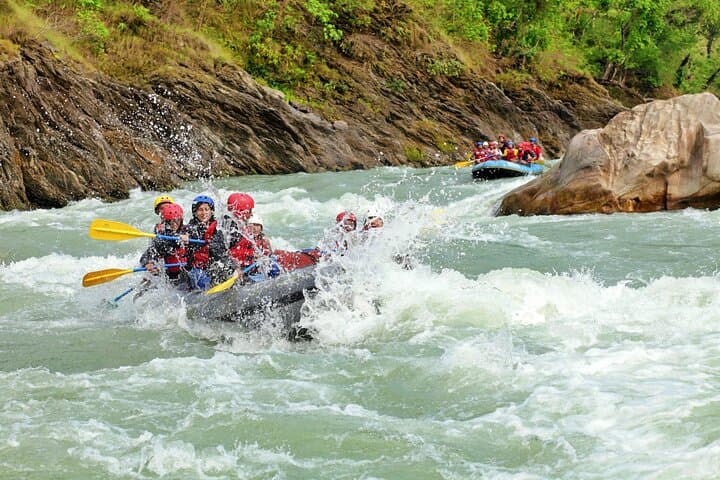
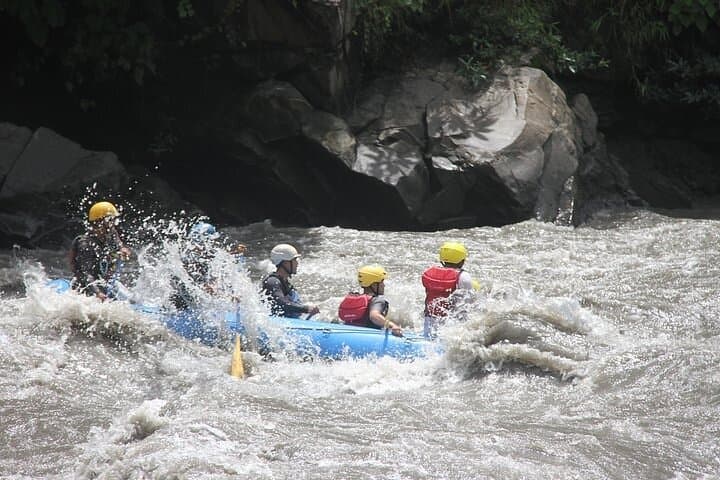
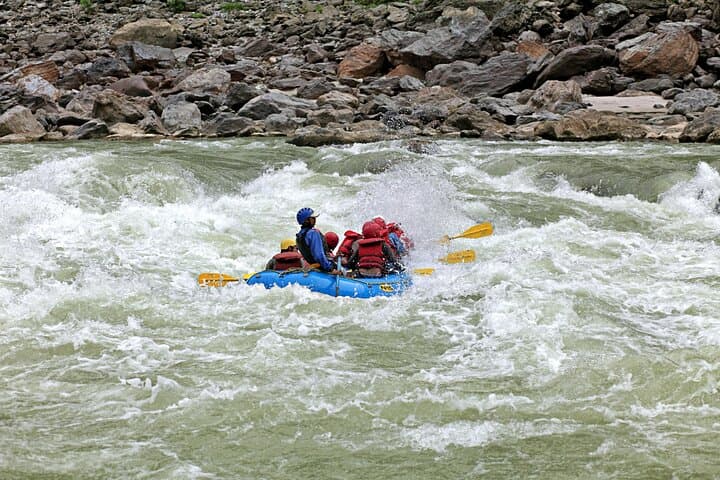
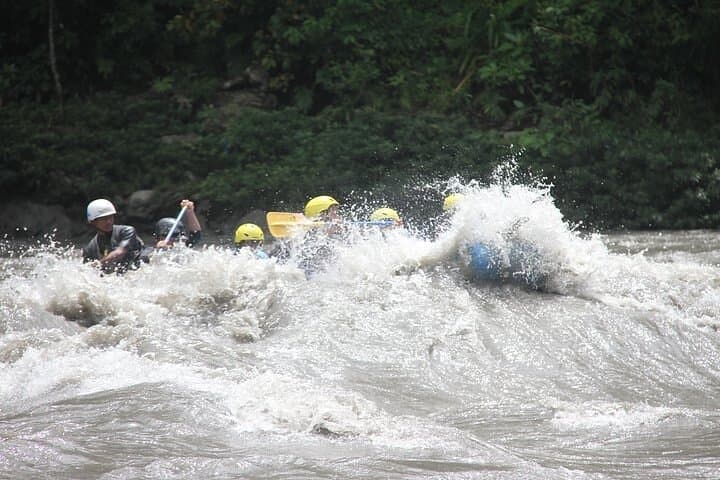
The van eases out of Kathmandu before dawn, streetlamps still haloing saffron prayer flags as the city thins into rice terraces and the road follows a river’s voice. By mid-morning you’re standing at the edge of the Trishuli—cold, clear water racing over stone—guides checking helmets and tightening straps. The river doesn’t whisper; it dares you. On Trishuli the boat surges, drops, and spits you through a sequence of moderate rapids that feel immediate and honest—perfect for a first big run. Hours downstream, on the Bhote Koshi, the mood sharpens: a narrow gorge, thunderous drops, and rapids that prefer experienced paddlers. Here the current takes command and the cliffs watch.
The van eases out of Kathmandu before dawn, streetlamps still haloing saffron prayer flags as the city thins into rice terraces and the road follows a river’s voice. By mid-morning you’re standing at the edge of the Trishuli—cold, clear water racing over stone—guides checking helmets and tightening straps. The river doesn’t whisper; it dares you. On Trishuli the boat surges, drops, and spits you through a sequence of moderate rapids that feel immediate and honest—perfect for a first big run. Hours downstream, on the Bhote Koshi, the mood sharpens: a narrow gorge, thunderous drops, and rapids that prefer experienced paddlers. Here the current takes command and the cliffs watch.
These rivers are carved by the same forces that raised the Himalaya. Trishuli’s channels cut through Miocene sediment and glacial deposits; Bhote Koshi—a name that hints at its Tibetan headwaters—thunders through younger, steep-walled gorges. Historically these waterways marked routes between Kathmandu and trans-Himalayan trade paths; villages along their banks still ferry local produce and stories to market.
Culture sits close to the water: riverside tea stalls steam with homemade chai, and lunch after the run is simple and sustaining—dal, rice, seasonal vegetables—served where the bank is wide enough to spread a mat. Local guides are often from the valleys themselves; they read currents the way elders read weather, and they’ll point out kingfishers hovering over eddies or langurs sunning on boulders.
Practical guide: this is a full-day trip—expect 6–12 hours from hotel pickup to drop-off. Trishuli is the better choice if you’re new to whitewater: Class II–III rapids, short ferrying and clear exits. Bhote Koshi climbs into Class III–V territory and runs best for strong paddlers or those who book the expert raft option. Boats, helmets, wetsuits in cooler months, and a riverside lunch are included. Bring a secure, waterproof bag for your phone, a small towel, and footwear that will stay on in rapids.
Timing and safety: mornings are cooler and the drive is smoother; monsoon season (June–September) swells both runs but also increases risk—follow guide advice and operator weather policies. Hydrate before you get on the river; the sun can feel deceptively intense at 800–1,200 meters elevation. If you can swim and follow commands, you’ll get more out of the day.
Whether you float calmly through Trishuli’s farmed valleys or peel through Bhote Koshi’s narrow throat, the rivers of Nepal deliver something elemental—a moving landscape that demands respect and rewards presence.