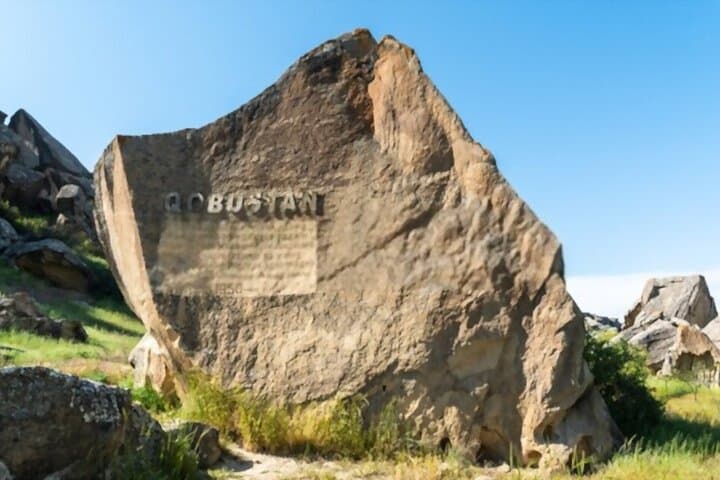
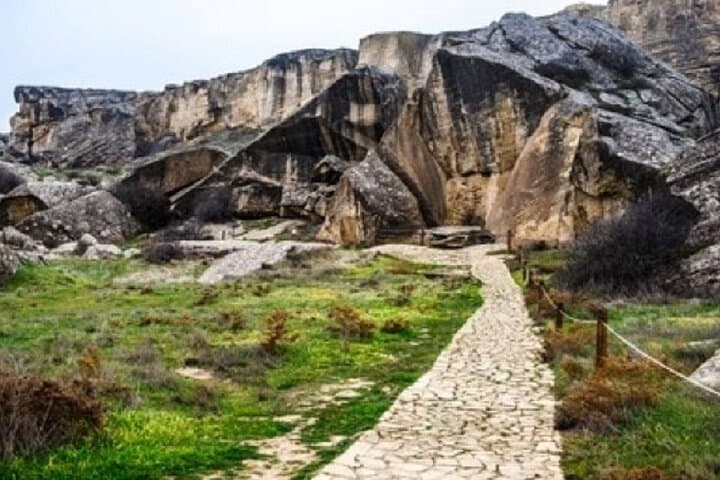
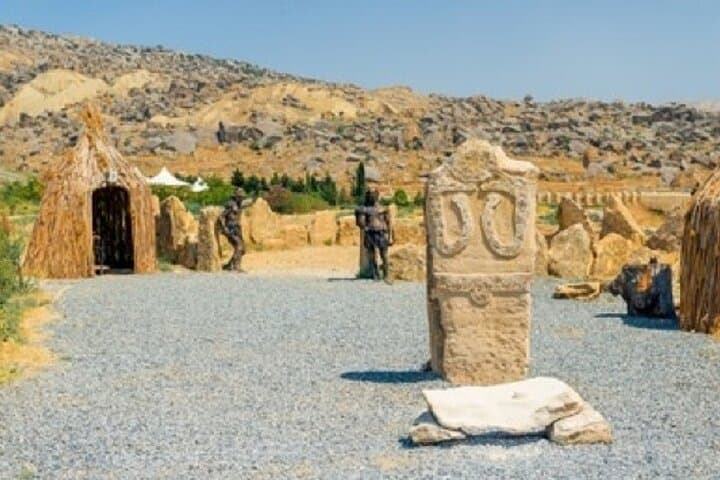
The morning air off the Caspian is thin and bright as a minivan eases out of Baku, the city’s glass towers shrinking behind you and the flat, wind-scoured plain of Absheron stretching ahead. By the time the highway threads toward Qobustan, the land has the blunt honesty of exposed stone—scarred ridges, petrified riverbeds, and a wide openness that seems to make sound itself smaller. At the Qobustan rock art reserve, you step onto a low volcanic plateau and find human marks older than written history: boats, hunters, and strange ritual figures cut into the rock between 5,000 and 40,000 years ago. The petroglyphs don’t whisper; they insist, holding traces of migrations, seasonal camps, and a coastline that has shifted over millennia.