THE ADVENTURE COLLECTIVE® · Independent discovery and booking for outdoor travel

A six-day circuit from Hanoi that stitches Pu Luong’s rice terraces and Thai villages with Ninh Binh’s ancient capital and a Lan Ha/Halong Bay cruise. Expect moderate treks, cycling, homestays and a relaxed junk-boat finale.
A six-day circuit from Hanoi that stitches Pu Luong’s rice terraces and Thai villages with Ninh Binh’s ancient capital and a Lan Ha/Halong Bay cruise. Expect moderate treks, cycling, homestays and a relaxed junk-boat finale.
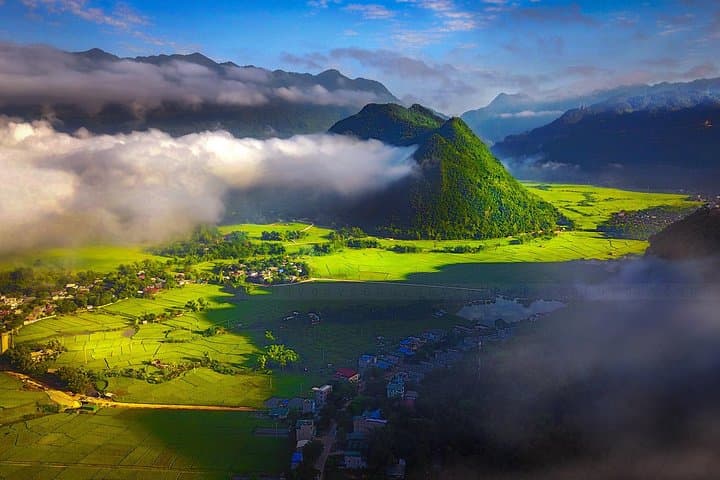
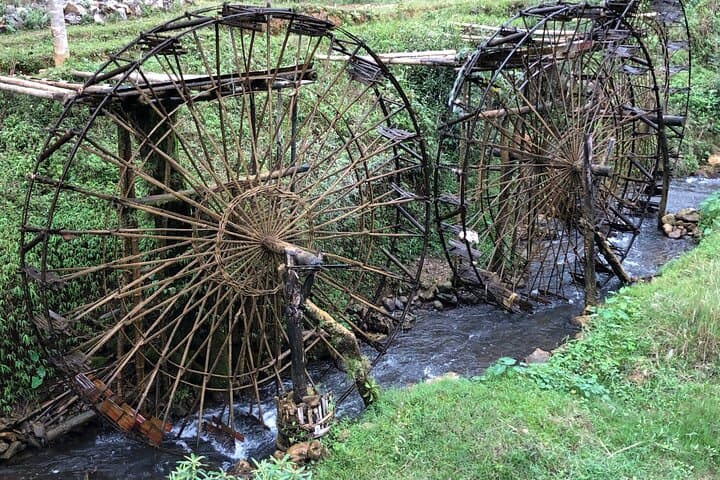
You step off the bus before dawn and the air smells of damp earth and cooked rice; limestone peaks loom like slow-breathed giants as mist peels away from terraces. The first day in Pu Luong is tactile—wooden stilt houses, bamboo waterwheels turning with a soft creak, children skipping across a hanging bridge. Walking here feels like moving through a portion of rural Vietnam that still follows the pace set by seasons and soil.
Verified experiences and guided adventures in the surrounding area.
Operated by Eco Travel Go Green VietNam · Hanoi, Hanoi
You step off the bus before dawn and the air smells of damp earth and cooked rice; limestone peaks loom like slow-breathed giants as mist peels away from terraces. The first day in Pu Luong is tactile—wooden stilt houses, bamboo waterwheels turning with a soft creak, children skipping across a hanging bridge. Walking here feels like moving through a portion of rural Vietnam that still follows the pace set by seasons and soil.
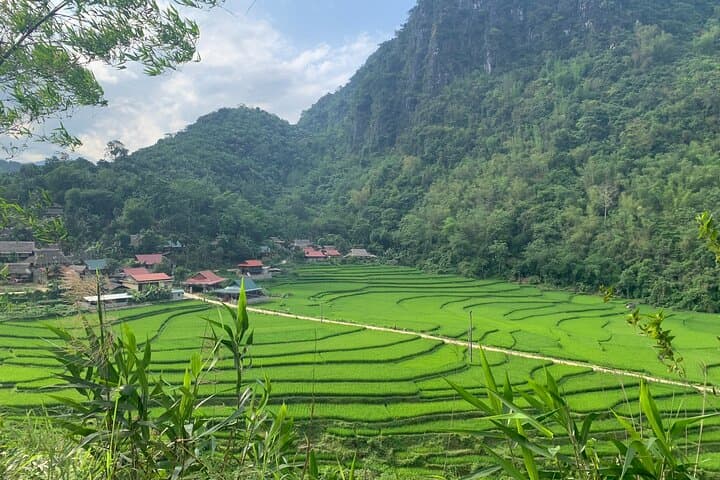
Pu Luong’s karst ridgelines and stepped rice fields are part geology lesson, part living culture. These limestone folds—older than the lowlands to the east—have been carved into terraces by generations of Thai minority farmers. The trek routes thread hamlets, waterfalls and jungle gullies; in Kho Muong you can duck into a cave mouth and imagine the ways local communities have adapted to a landscape that gives both shelter and challenge.
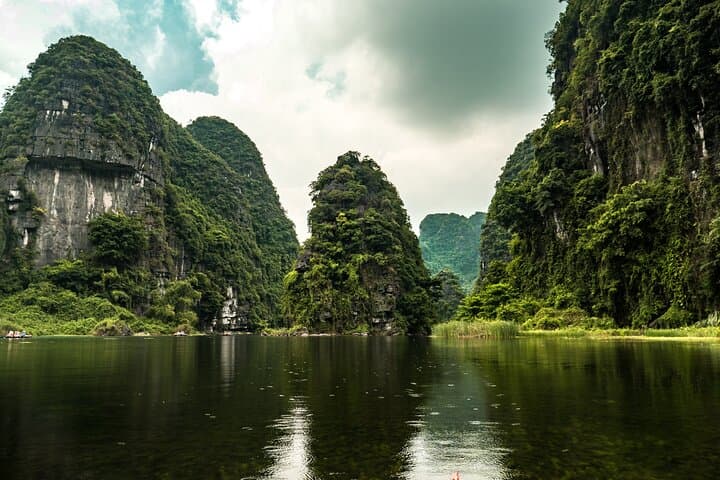
From Pu Luong the trip arcs south to Ninh Binh, often called ‘Halong Bay on land’. Here the same karst towers rise from rice flats, surrounding the ancient stones of Hoa Lu, Vietnam’s 10th-century capital. Rows of temples and defensive walls whisper dynastic history while a slow boat through Trang An slips beneath cave mouths and past shrines—water daring you into a quieter rhythm.
The finale is Lan Ha/Halong Bay: a saltwater counterpoint where emerald channels separate vertical islets. A cruise day offers kayaking into hidden lagoons, a guided row through Dark and Light Cave, and the kind of sunset that makes every camera feel inadequate. Onboard, mornings begin with Tai Chi or a quiet cup on the top deck while islands push and pull at the horizon.
Practical edge: expect daily walking of 5–10 km on variable trails with short steep sections and 200–400 m of cumulative ascent on trekking days. Trails can be slippery in the wet season; waterproof footwear and trekking poles are useful. Accommodation alternates between eco-lodges and a comfortable overnight cruise cabin; luggage transfers are handled but pack a daypack for hikes and a small dry bag for boat days.
Cultural notes: markets like Pho Doan offer a crash course in local flavors—try bánh cuốn or a bowl of pho from a stall—and ask before photographing people in villages. Conserve water, avoid single-use plastics on boats, and support homestays to keep tourism benefits local.
This six-day loop is both scenic syllabus and paced retreat: technical demands are moderate, but the rewards—rice terraces that glow under rainlight, the hush of Trang An, a kayak slicing through island-studded water—are quietly, insistently memorable.
moderate.
5–6 days.
Good baseline fitness for repeated half-day treks and cycling; able to walk 5–10 km across uneven terrain.
The standard meeting point is Hanoi’s Old Quarter (near the Opera House); the tour loops back to Hanoi on day 6.
Daily walks are moderate—typically 5–10 km with short steep sections and 200–400 m of cumulative ascent—suitable for travelers with regular activity.
Yes—accommodations, most breakfasts, lunches and dinners as listed, and an English-speaking guide are included.
Boat boarding and cave/karst exploration require stepping and some stairs; travelers with limited mobility should consult the operator in advance.
Vietnamese Dong (VND) is preferred in villages; ATMs are available in larger towns but bring cash for markets and tips.
Swimming is allowed in some waterfall pools and bays, but always heed local guidance about currents, depth and water quality.
Hoa Lu was Vietnam’s capital in the 10th century and preserves temples and walls from the Dinh and Early Le dynasties, offering a window into early Vietnamese statecraft.
Eco-lodges in Pu Luong support community-based tourism; avoid single-use plastics and stick to marked trails to protect fragile karst ecosystems.
Eco Travel Go Green VietNam operates guided outdoor trips and adventures with an emphasis on safety, stewardship, and memorable experiences.
You step off the bus before dawn and the air smells of damp earth and cooked rice; limestone peaks loom like slow-breathed giants as mist peels away from terraces. The first day in Pu Luong is tactile—wooden stilt houses, bamboo waterwheels turning with a soft creak, children skipping across a hanging bridge. Walking here feels like moving through a portion of rural Vietnam that still follows the pace set by seasons and soil.
You step off the bus before dawn and the air smells of damp earth and cooked rice; limestone peaks loom like slow-breathed giants as mist peels away from terraces. The first day in Pu Luong is tactile—wooden stilt houses, bamboo waterwheels turning with a soft creak, children skipping across a hanging bridge. Walking here feels like moving through a portion of rural Vietnam that still follows the pace set by seasons and soil.
Pu Luong’s karst ridgelines and stepped rice fields are part geology lesson, part living culture. These limestone folds—older than the lowlands to the east—have been carved into terraces by generations of Thai minority farmers. The trek routes thread hamlets, waterfalls and jungle gullies; in Kho Muong you can duck into a cave mouth and imagine the ways local communities have adapted to a landscape that gives both shelter and challenge.
From Pu Luong the trip arcs south to Ninh Binh, often called ‘Halong Bay on land’. Here the same karst towers rise from rice flats, surrounding the ancient stones of Hoa Lu, Vietnam’s 10th-century capital. Rows of temples and defensive walls whisper dynastic history while a slow boat through Trang An slips beneath cave mouths and past shrines—water daring you into a quieter rhythm.
The finale is Lan Ha/Halong Bay: a saltwater counterpoint where emerald channels separate vertical islets. A cruise day offers kayaking into hidden lagoons, a guided row through Dark and Light Cave, and the kind of sunset that makes every camera feel inadequate. Onboard, mornings begin with Tai Chi or a quiet cup on the top deck while islands push and pull at the horizon.
Practical edge: expect daily walking of 5–10 km on variable trails with short steep sections and 200–400 m of cumulative ascent on trekking days. Trails can be slippery in the wet season; waterproof footwear and trekking poles are useful. Accommodation alternates between eco-lodges and a comfortable overnight cruise cabin; luggage transfers are handled but pack a daypack for hikes and a small dry bag for boat days.
Cultural notes: markets like Pho Doan offer a crash course in local flavors—try bánh cuốn or a bowl of pho from a stall—and ask before photographing people in villages. Conserve water, avoid single-use plastics on boats, and support homestays to keep tourism benefits local.
This six-day loop is both scenic syllabus and paced retreat: technical demands are moderate, but the rewards—rice terraces that glow under rainlight, the hush of Trang An, a kayak slicing through island-studded water—are quietly, insistently memorable.