THE ADVENTURE COLLECTIVE® · Independent discovery and booking for outdoor travel

Walk York’s cobbles with a private local guide and compress two millennia of history into a focused two-hour route. Expect narrow lanes, city walls, and stop‑by stories that bring Roman, Viking and medieval York to life.
Walk York’s cobbles with a private local guide and compress two millennia of history into a focused two-hour route. Expect narrow lanes, city walls, and stop‑by stories that bring Roman, Viking and medieval York to life.
The guide waits outside York Art Gallery in a bright orange jacket, voice cutting through the muted hum of Exhibition Square as tram bells and pigeon wings punctuate the morning. Travelers step onto cobbles that have borne Roman sandals, Viking boots and Victorian crinolines; within minutes the city’s walls loom, stone ribs that still keep memory and wind. For two hours this private route threads narrow lanes, market squares and riverside promenades, the guide folding centuries into concise stories as the group moves at an easy, deliberate pace.
Verified experiences and guided adventures in the surrounding area.
Operated by Walking Tours in England · York, North Yorkshire
The guide waits outside York Art Gallery in a bright orange jacket, voice cutting through the muted hum of Exhibition Square as tram bells and pigeon wings punctuate the morning. Travelers step onto cobbles that have borne Roman sandals, Viking boots and Victorian crinolines; within minutes the city’s walls loom, stone ribs that still keep memory and wind. For two hours this private route threads narrow lanes, market squares and riverside promenades, the guide folding centuries into concise stories as the group moves at an easy, deliberate pace.
York’s history arrives in layers. Founded as the Roman fortress Eboracum, remade as Jorvik under Norse settlers, and later enriched by medieval wool merchants, the city’s identity is visible in the compact footprint of its core: towering York Minster, the defensive sweep of the medieval walls, and The Shambles, a crooked medieval street whose overhangs once shaded butchers’ stalls. Geology here is subtle — glacial clays and sandstone undercut centuries of construction — but its cultural imprint is obvious in guildhalls and the diagonal cut of riverside streets.
Local insights matter: the Jorvik Centre’s exterior hints at Viking York, Clifford’s Tower tells a story of conflict and consequence, and small courtyards hold vaults and gravestones with surprising anecdotes — a highwayman’s marker, a restored merchant’s façade. The tour ends at Treasurer’s House, a fitting bookend where domestic history meets whispered ghost stories.
Practical guidance is straightforward. The two-hour route covers roughly 1.5–2 miles (2.5–3.2 km) on uneven, often cobbled surfaces with brief sections of steps on the city walls; elevation gain is negligible but steady footing matters. The pace is slow to moderate with frequent stops for stories and photos. The meeting point is outside York Art Gallery in Exhibition Square; the finish is at Treasurer’s House. Tours are private, ideal for those who prefer a custom tempo and questions tailored to their interests.
Plan for changeable British weather: waterproof layers and sensible shoes are essential; lightweight daypacks are fine for a camera, water bottle and a guidebook. The tour is stroller-accessible in parts but expect cobbles to jostle little ones. Booking is flexible with free cancellation up to 24 hours ahead. For quieter streets, aim for early morning or late afternoon — midday brings coach groups and school trips.
This is a walk for people who want history rooted in place: it teaches how York’s stones, streets and river conspired to create a compact city where every turn has a story. The guide’s local knowledge converts names and dates into living detail, making two hours feel like a private apprenticeship in an ancient city.
easy.
2 hours.
Suitable for most fitness levels; able to stand and walk 1.5–2 miles over uneven surfaces.
The tour is two hours and covers roughly 1.5–2 miles (2.5–3.2 km) on mostly flat but cobbled terrain.
Meet outside York Art Gallery in Exhibition Square; the guide will be identifiable by a bright orange jacket or lanyard.
Infants and small children can use a stroller, but expect uneven cobbles; the guide can adjust pacing for families.
Yes — as a private tour the guide will adjust emphasis for Vikings, medieval history, architecture or literary connections if you request it.
Tours run in most weather; bring waterproofs. Cancellations for a full refund can be made at least 24 hours before departure.
This walking tour includes exterior visits and commentary only; admissions to museums or attractions are not included.
York began as the Roman fortress Eboracum, became the Viking trading hub Jorvik, and prospered in the medieval period through wool and merchant guilds.
Respect for fragile stonework and minimal group size helps protect cobbles and historic facades; use marked paths on the walls and avoid touching carved stonework.
Walking Tours in England operates guided outdoor trips and adventures with an emphasis on safety, stewardship, and memorable experiences.
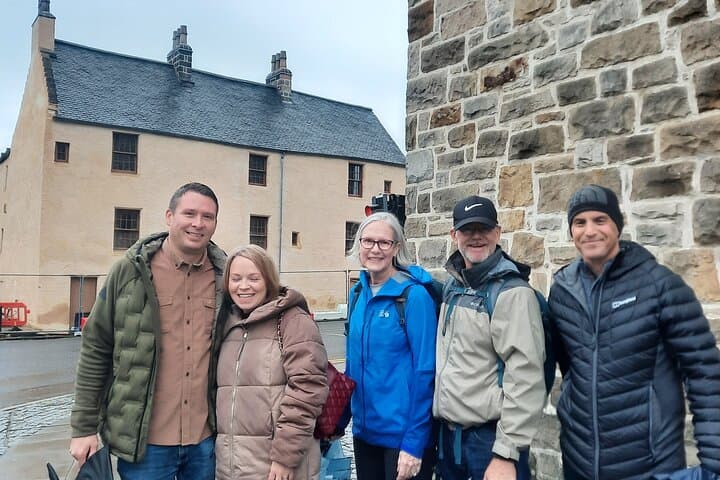
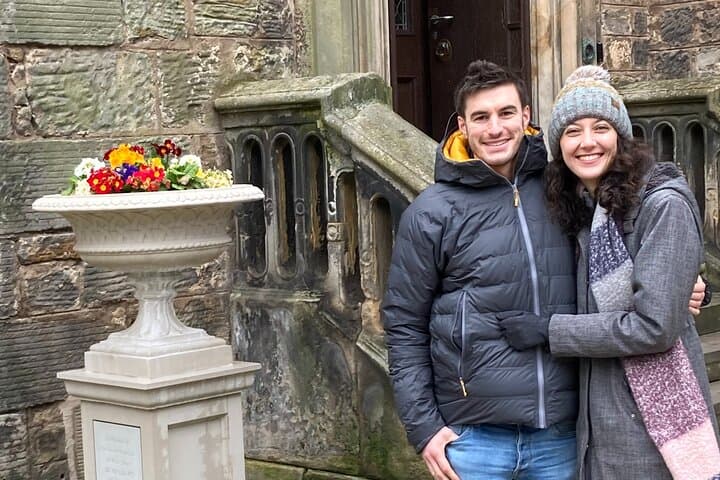
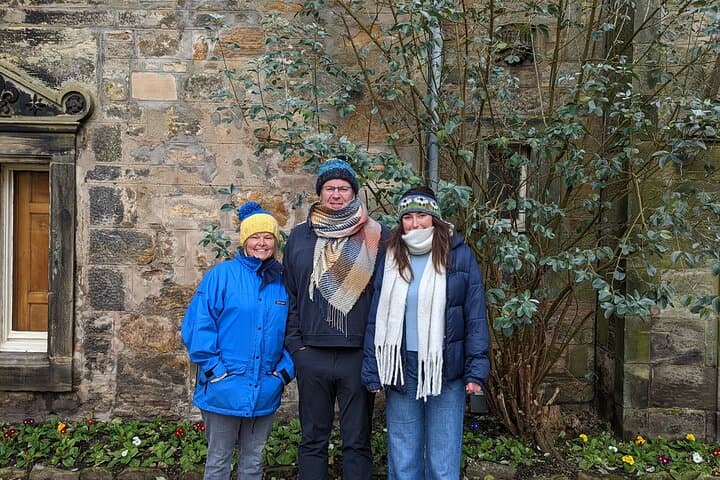
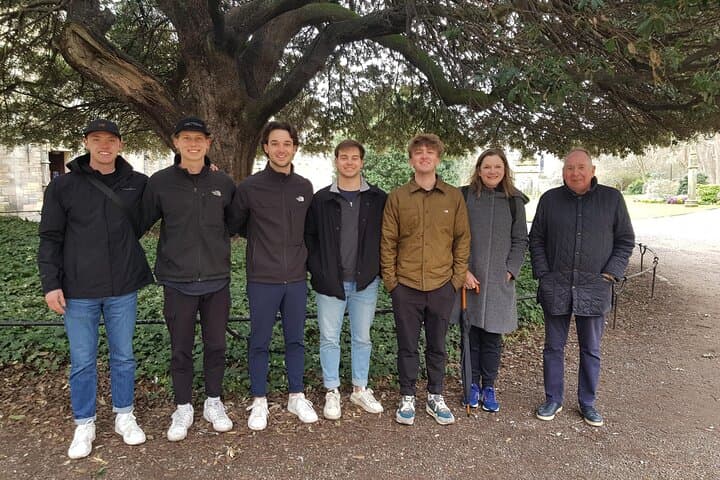
The guide waits outside York Art Gallery in a bright orange jacket, voice cutting through the muted hum of Exhibition Square as tram bells and pigeon wings punctuate the morning. Travelers step onto cobbles that have borne Roman sandals, Viking boots and Victorian crinolines; within minutes the city’s walls loom, stone ribs that still keep memory and wind. For two hours this private route threads narrow lanes, market squares and riverside promenades, the guide folding centuries into concise stories as the group moves at an easy, deliberate pace.
The guide waits outside York Art Gallery in a bright orange jacket, voice cutting through the muted hum of Exhibition Square as tram bells and pigeon wings punctuate the morning. Travelers step onto cobbles that have borne Roman sandals, Viking boots and Victorian crinolines; within minutes the city’s walls loom, stone ribs that still keep memory and wind. For two hours this private route threads narrow lanes, market squares and riverside promenades, the guide folding centuries into concise stories as the group moves at an easy, deliberate pace.
York’s history arrives in layers. Founded as the Roman fortress Eboracum, remade as Jorvik under Norse settlers, and later enriched by medieval wool merchants, the city’s identity is visible in the compact footprint of its core: towering York Minster, the defensive sweep of the medieval walls, and The Shambles, a crooked medieval street whose overhangs once shaded butchers’ stalls. Geology here is subtle — glacial clays and sandstone undercut centuries of construction — but its cultural imprint is obvious in guildhalls and the diagonal cut of riverside streets.
Local insights matter: the Jorvik Centre’s exterior hints at Viking York, Clifford’s Tower tells a story of conflict and consequence, and small courtyards hold vaults and gravestones with surprising anecdotes — a highwayman’s marker, a restored merchant’s façade. The tour ends at Treasurer’s House, a fitting bookend where domestic history meets whispered ghost stories.
Practical guidance is straightforward. The two-hour route covers roughly 1.5–2 miles (2.5–3.2 km) on uneven, often cobbled surfaces with brief sections of steps on the city walls; elevation gain is negligible but steady footing matters. The pace is slow to moderate with frequent stops for stories and photos. The meeting point is outside York Art Gallery in Exhibition Square; the finish is at Treasurer’s House. Tours are private, ideal for those who prefer a custom tempo and questions tailored to their interests.
Plan for changeable British weather: waterproof layers and sensible shoes are essential; lightweight daypacks are fine for a camera, water bottle and a guidebook. The tour is stroller-accessible in parts but expect cobbles to jostle little ones. Booking is flexible with free cancellation up to 24 hours ahead. For quieter streets, aim for early morning or late afternoon — midday brings coach groups and school trips.
This is a walk for people who want history rooted in place: it teaches how York’s stones, streets and river conspired to create a compact city where every turn has a story. The guide’s local knowledge converts names and dates into living detail, making two hours feel like a private apprenticeship in an ancient city.