THE ADVENTURE COLLECTIVE® · Independent discovery and booking for outdoor travel

Leave the Strip and spend three curated hours at one of America's great engineering feats. This Private VIP Hoover Dam Tour combines front-row views, tailored storytelling, and private transport from Las Vegas to make the dam's history and scale easy to grasp.
Leave the Strip and spend three curated hours at one of America's great engineering feats. This Private VIP Hoover Dam Tour combines front-row views, tailored storytelling, and private transport from Las Vegas to make the dam's history and scale easy to grasp.
The engine hums to life and the strip's neon memory slips behind you as the private van eases onto the sun-baked road toward Hoover Dam. Within thirty minutes the air changes—acetone-dry and bright—and the first views of Lake Mead appear like a slab of mercury held against the desert. On this private VIP tour the dam is not simply a photo stop; it is a place where concrete meets ambition and the Colorado River still argues with gravity below.
Verified experiences and guided adventures in the surrounding area.
Operated by Another Side Of Las Vegas Tours · Boulder City, Nevada
The engine hums to life and the strip's neon memory slips behind you as the private van eases onto the sun-baked road toward Hoover Dam. Within thirty minutes the air changes—acetone-dry and bright—and the first views of Lake Mead appear like a slab of mercury held against the desert. On this private VIP tour the dam is not simply a photo stop; it is a place where concrete meets ambition and the Colorado River still argues with gravity below.
Built between 1931 and 1936, Hoover Dam redefined what human engineering could do in a hostile landscape. The concrete arch-gravity structure locks the river into Lake Mead, creating an artificial sea that irrigated the Southwest and powered cities. Geologically, the dam sits where Precambrian metamorphic rocks buttress younger sedimentary layers; the canyon walls are raw pages of tectonic history, peeled open by the river's persistent work.
Boulder City, the company town that sprang up to build the dam, still carries the project's aftertaste: quiet streets, dated brick, and a museum-like attention to the past. Guides on the VIP tour weave labor stories—immigrant crews, the hazards of early high‑steel work, the urgent math of wartime power demands—into the route, bringing the dam's figures into focus without turning them into myth.
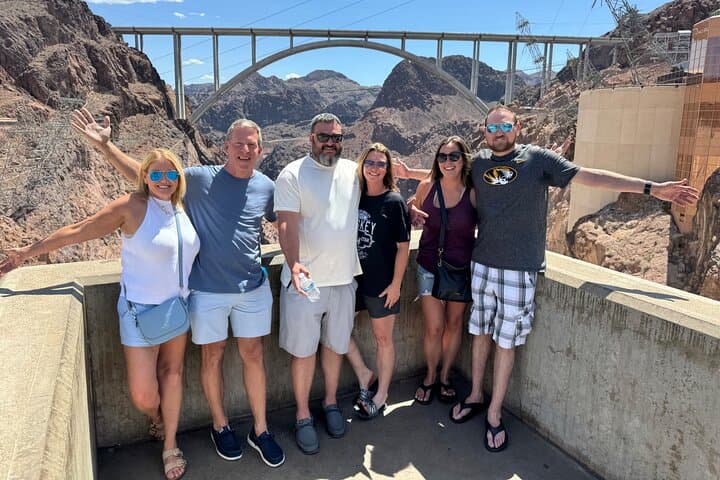
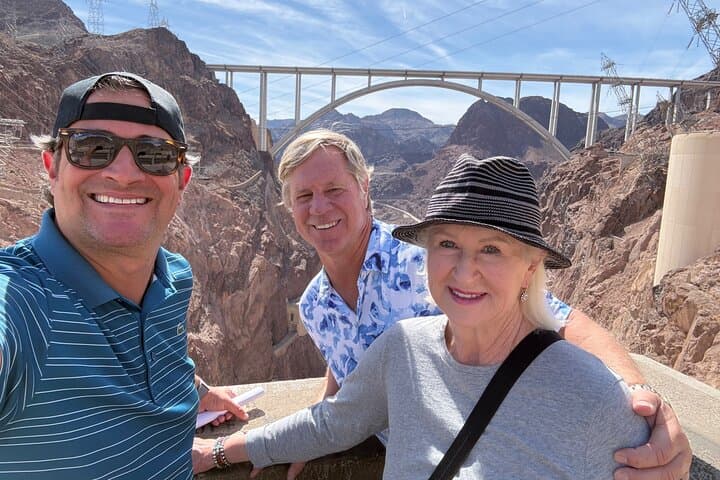
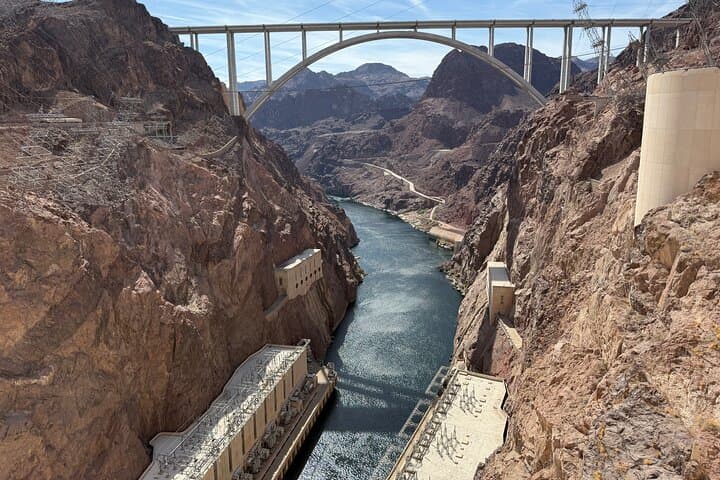
A VIP approach changes the rhythm: skip the crowds, linger at overlooks, and walk the crest at a measured pace while the river dares you with its drop below. There's a human scale to the mechanical hardware—intake towers like industrial cathedrals, spillways that look eager to let go. Across the gorge the Mike O'Callaghan–Pat Tillman Memorial Bridge frames a different type of engineering bravado, an arch that dares the canyon to hold it.
Practical side: the tour runs about three hours from pickup in Las Vegas, and includes private transport, bottled water, snacks, and an air-conditioned vehicle. Wear closed-toe shoes for the dam walk and a hat—the sun is relentless. Expect some short, accessible walks and a few stairs; elevators and viewpoints are managed but not always immediate, so a moderate level of mobility is helpful.
Best timing is morning light for softer contrasts on the concrete, or late afternoon if you want warmer tones and long shadows for photography. If you have a particular interest—hydropower, architecture, or local history—mention it when booking; the private format lets guides tailor the narrative and pace. And remember: this is desert infrastructure—bring water, sun protection, and respect: the site is both monument and working facility. Leave with a sense of scale: the dam is less a single object than a hinge that turned a river into a region.
easy.
3 hours.
Light mobility required; suitable for most fitness levels but expect short walks and stairs.
The scheduled duration is about three hours from Las Vegas pickup to return, though pickup logistics can add a few minutes depending on your hotel location.
This private tour provides up-close views and guided stops; any official visitor center or powerplant admissions are not included unless specified at booking.
Yes; infant seats are available and the tour is described as suitable for all physical fitness levels, but children should be supervised near overlooks.
The tour views the Mike O'Callaghan–Pat Tillman Memorial Bridge that spans the state line, but standard visits focus on the Nevada side and overlook areas.
Yes—photography is permitted at public viewpoints and on the dam crest, but follow guide instructions and avoid restricted areas for safety and security.
Bring sun protection, comfortable shoes, a charged phone or camera, and any mobility aids you need; mention special requirements when booking for pickup arrangements.
Hoover Dam was constructed during the Great Depression and created Boulder City to house workers; its completion in 1936 reshaped water management and electrification for the Southwest.
Lake Mead and surrounding lands face long-term water-level variability; visitors are encouraged to minimize water waste, pack out trash, and stick to designated paths to protect fragile desert soils.
Another Side Of Las Vegas Tours operates guided outdoor trips and adventures with an emphasis on safety, stewardship, and memorable experiences.
The engine hums to life and the strip's neon memory slips behind you as the private van eases onto the sun-baked road toward Hoover Dam. Within thirty minutes the air changes—acetone-dry and bright—and the first views of Lake Mead appear like a slab of mercury held against the desert. On this private VIP tour the dam is not simply a photo stop; it is a place where concrete meets ambition and the Colorado River still argues with gravity below.
The engine hums to life and the strip's neon memory slips behind you as the private van eases onto the sun-baked road toward Hoover Dam. Within thirty minutes the air changes—acetone-dry and bright—and the first views of Lake Mead appear like a slab of mercury held against the desert. On this private VIP tour the dam is not simply a photo stop; it is a place where concrete meets ambition and the Colorado River still argues with gravity below.
Built between 1931 and 1936, Hoover Dam redefined what human engineering could do in a hostile landscape. The concrete arch-gravity structure locks the river into Lake Mead, creating an artificial sea that irrigated the Southwest and powered cities. Geologically, the dam sits where Precambrian metamorphic rocks buttress younger sedimentary layers; the canyon walls are raw pages of tectonic history, peeled open by the river's persistent work.
Boulder City, the company town that sprang up to build the dam, still carries the project's aftertaste: quiet streets, dated brick, and a museum-like attention to the past. Guides on the VIP tour weave labor stories—immigrant crews, the hazards of early high‑steel work, the urgent math of wartime power demands—into the route, bringing the dam's figures into focus without turning them into myth.
A VIP approach changes the rhythm: skip the crowds, linger at overlooks, and walk the crest at a measured pace while the river dares you with its drop below. There's a human scale to the mechanical hardware—intake towers like industrial cathedrals, spillways that look eager to let go. Across the gorge the Mike O'Callaghan–Pat Tillman Memorial Bridge frames a different type of engineering bravado, an arch that dares the canyon to hold it.
Practical side: the tour runs about three hours from pickup in Las Vegas, and includes private transport, bottled water, snacks, and an air-conditioned vehicle. Wear closed-toe shoes for the dam walk and a hat—the sun is relentless. Expect some short, accessible walks and a few stairs; elevators and viewpoints are managed but not always immediate, so a moderate level of mobility is helpful.
Best timing is morning light for softer contrasts on the concrete, or late afternoon if you want warmer tones and long shadows for photography. If you have a particular interest—hydropower, architecture, or local history—mention it when booking; the private format lets guides tailor the narrative and pace. And remember: this is desert infrastructure—bring water, sun protection, and respect: the site is both monument and working facility. Leave with a sense of scale: the dam is less a single object than a hinge that turned a river into a region.