THE ADVENTURE COLLECTIVE® · Independent discovery and booking for outdoor travel

Drive the cliffs of the Verdon, stand over Europe’s most dramatic canyon and wander endless lavender fields on a private day tour from Nice. This full-day route pairs geology, village culture and seasonal spectacle for travelers who want depth and flexibility without the crowds.
Drive the cliffs of the Verdon, stand over Europe’s most dramatic canyon and wander endless lavender fields on a private day tour from Nice. This full-day route pairs geology, village culture and seasonal spectacle for travelers who want depth and flexibility without the crowds.
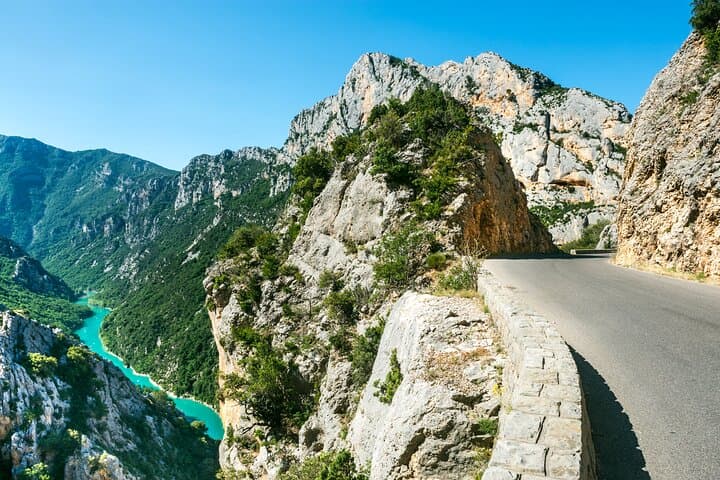
You step into a Provençal morning as the minivan eases away from Nice—light sliding across terracotta roofs, the driver steering toward the high plateaus. Within an hour the Mediterranean gives way to limestone ridges; the air sharpens and the road begins to carve the landscape. By midmorning the Verdon announces itself: a ribbon of turquoise threading a canyon that seems to have been cut with a surgeon's hand. The cliffs lean in, daring you to peer over railings and measure the depth with a held breath.
Verified experiences and guided adventures in the surrounding area.
Operated by The Drivers Nice · Moustiers-Sainte-Marie, Provence-Alpes-Côte d'Azur
You step into a Provençal morning as the minivan eases away from Nice—light sliding across terracotta roofs, the driver steering toward the high plateaus. Within an hour the Mediterranean gives way to limestone ridges; the air sharpens and the road begins to carve the landscape. By midmorning the Verdon announces itself: a ribbon of turquoise threading a canyon that seems to have been cut with a surgeon's hand. The cliffs lean in, daring you to peer over railings and measure the depth with a held breath.
The gorge is young in geological terms—river-cut limestone and karst sculpted over millions of years. Verdon's vertical walls expose folds and faults that tell a slow-motion story of tectonics and erosion; in places the river runs a vivid, mineral-rich blue that contrasts with the ochre rock like paint on a palette. Around the rim, shepherding villages like Castellane and Moustiers-Sainte-Marie keep a quieter history: medieval lanes, ceramics workshops and chapels clinging to cliff faces. Notre-Dame du Roc watches the valley from on high; centuries of pilgrims have made the climb for views and protection.
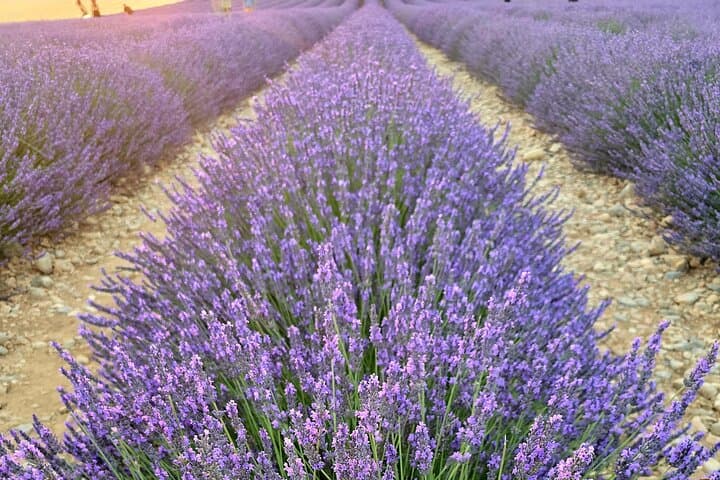
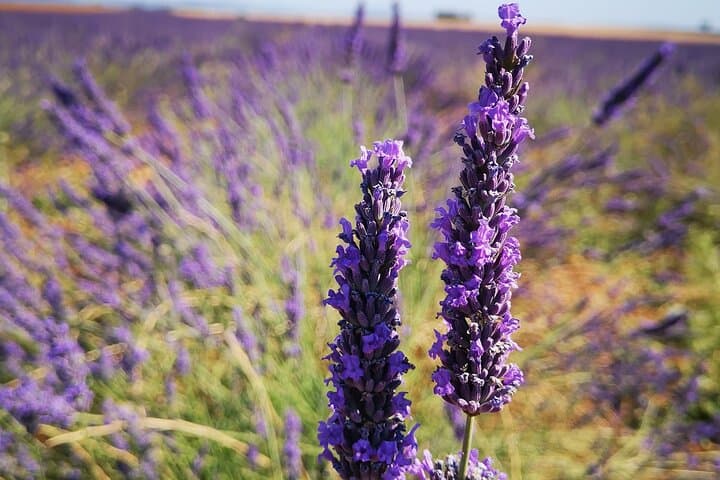
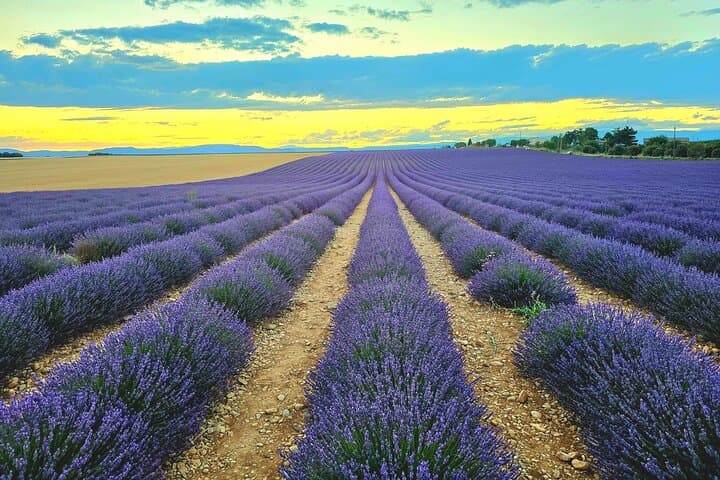
Then there is the Plateau de Valensole—an agricultural amphitheater. Come late June to mid-July the lavender fields move like purple waves to the horizon. Rows are planted for distillation, not just beauty; that scent you smell is essential oil, and the communities here still time harvests with the market seasons. Route Napoleon threads the day, a road with its own story—Bonaparte's march later romanticized into a scenic route—and it makes a purposeful spine for the tour.
Practically speaking, this private day trip balances driving with short, accessible walks and several viewpoint stops. Expect about nine hours total, with two hours at the canyon rim, and an hour each at Lake Sainte-Croix, Moustiers and Valensole. The tour uses private transport and includes bottled water; drivers adapt the route to your pace and interests. Wear supportive shoes for cobbled village streets and lookout terraces, bring sunscreen and a hat—shade is thin on the plateaus and the mid-summer sun is relentless. If you want lavender at its peak, time your visit to the third week of June through early July; for quieter lanes and cooler light, spring and September offer softer conditions.
For photographers, the canyon's color is best in morning or late afternoon, while lavender is at its peak in golden light near sunset. The day moves from dramatic geology to cultivated landscapes, and by evening you return to the coast with a clearer sense of how history, geology and agriculture have shaped Provence into a place that both invites and rewards wandering with intention.
easy.
9 hours.
Suitable for most fitness levels; requires short walks on uneven surfaces and a few steps at viewpoints
The tour lasts about nine hours with a mix of highway and scenic driving; expect several 30–60 minute legs between stops.
Lavender typically peaks from late June through mid‑July; exact timing varies with altitude and seasonal weather.
Bottled water is included; meals are not—guides can recommend or stop at village cafés where you can buy a leisurely lunch.
The tour is family‑friendly and physically easy, though some lookout areas have steps; let the operator know mobility needs when booking.
Yes—this private tour is flexible and drivers will tailor stops and timing to your preferences where possible.
Pickup is available from Nice hotels or a custom meeting point; the driver will return you to your original pickup location.
The Route Napoleon traces Napoleon’s 1815 route; villages like Castellane and Moustiers retain medieval plans and trading histories tied to upland agriculture.
Visitor pressure is managed by designated viewpoints and trails; stick to marked areas to protect fragile karst habitats and cultivated lavender fields.
The Drivers Nice operates guided outdoor trips and adventures with an emphasis on safety, stewardship, and memorable experiences.
You step into a Provençal morning as the minivan eases away from Nice—light sliding across terracotta roofs, the driver steering toward the high plateaus. Within an hour the Mediterranean gives way to limestone ridges; the air sharpens and the road begins to carve the landscape. By midmorning the Verdon announces itself: a ribbon of turquoise threading a canyon that seems to have been cut with a surgeon's hand. The cliffs lean in, daring you to peer over railings and measure the depth with a held breath.
You step into a Provençal morning as the minivan eases away from Nice—light sliding across terracotta roofs, the driver steering toward the high plateaus. Within an hour the Mediterranean gives way to limestone ridges; the air sharpens and the road begins to carve the landscape. By midmorning the Verdon announces itself: a ribbon of turquoise threading a canyon that seems to have been cut with a surgeon's hand. The cliffs lean in, daring you to peer over railings and measure the depth with a held breath.
The gorge is young in geological terms—river-cut limestone and karst sculpted over millions of years. Verdon's vertical walls expose folds and faults that tell a slow-motion story of tectonics and erosion; in places the river runs a vivid, mineral-rich blue that contrasts with the ochre rock like paint on a palette. Around the rim, shepherding villages like Castellane and Moustiers-Sainte-Marie keep a quieter history: medieval lanes, ceramics workshops and chapels clinging to cliff faces. Notre-Dame du Roc watches the valley from on high; centuries of pilgrims have made the climb for views and protection.
Then there is the Plateau de Valensole—an agricultural amphitheater. Come late June to mid-July the lavender fields move like purple waves to the horizon. Rows are planted for distillation, not just beauty; that scent you smell is essential oil, and the communities here still time harvests with the market seasons. Route Napoleon threads the day, a road with its own story—Bonaparte's march later romanticized into a scenic route—and it makes a purposeful spine for the tour.
Practically speaking, this private day trip balances driving with short, accessible walks and several viewpoint stops. Expect about nine hours total, with two hours at the canyon rim, and an hour each at Lake Sainte-Croix, Moustiers and Valensole. The tour uses private transport and includes bottled water; drivers adapt the route to your pace and interests. Wear supportive shoes for cobbled village streets and lookout terraces, bring sunscreen and a hat—shade is thin on the plateaus and the mid-summer sun is relentless. If you want lavender at its peak, time your visit to the third week of June through early July; for quieter lanes and cooler light, spring and September offer softer conditions.
For photographers, the canyon's color is best in morning or late afternoon, while lavender is at its peak in golden light near sunset. The day moves from dramatic geology to cultivated landscapes, and by evening you return to the coast with a clearer sense of how history, geology and agriculture have shaped Provence into a place that both invites and rewards wandering with intention.