THE ADVENTURE COLLECTIVE® · Independent discovery and booking for outdoor travel

Escape Tokyo for a private day through Hakone’s volcanic landscapes, Lake Ashi’s reflective shores, and Gotemba viewpoints for Mount Fuji. This seven-hour drive-and-walk tour blends geothermal spectacle, cultural sites, and near-guaranteed photographic moments when the weather cooperates.
Escape Tokyo for a private day through Hakone’s volcanic landscapes, Lake Ashi’s reflective shores, and Gotemba viewpoints for Mount Fuji. This seven-hour drive-and-walk tour blends geothermal spectacle, cultural sites, and near-guaranteed photographic moments when the weather cooperates.
The van eases out of Tokyo before dawn, the city shrinking into a grid of lights while the air grows cooler and the silhouette of Mount Fuji becomes a patient promise on the horizon. By the time the road climbs into Hakone, cedars lean over the highway like curious onlookers and the van turns toward Lake Ashi, whose black, glassy surface dares you to look up and find the volcano reflected in full.
Verified experiences and guided adventures in the surrounding area.
Operated by TOKYO DRIFT TOUR · Hakone, Kanagawa
The van eases out of Tokyo before dawn, the city shrinking into a grid of lights while the air grows cooler and the silhouette of Mount Fuji becomes a patient promise on the horizon. By the time the road climbs into Hakone, cedars lean over the highway like curious onlookers and the van turns toward Lake Ashi, whose black, glassy surface dares you to look up and find the volcano reflected in full.
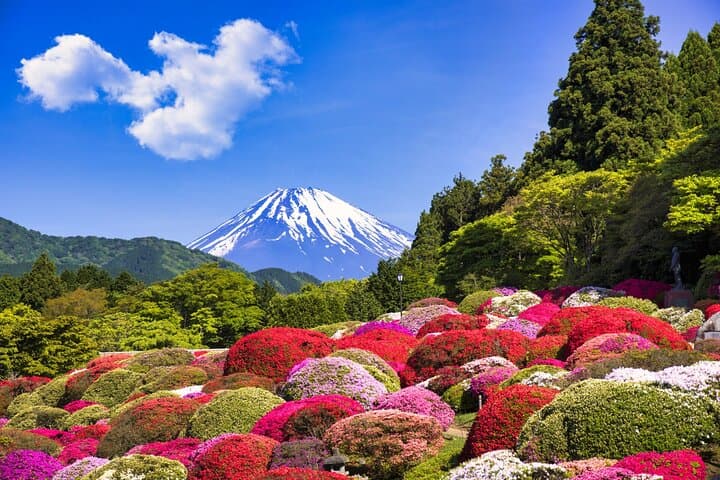
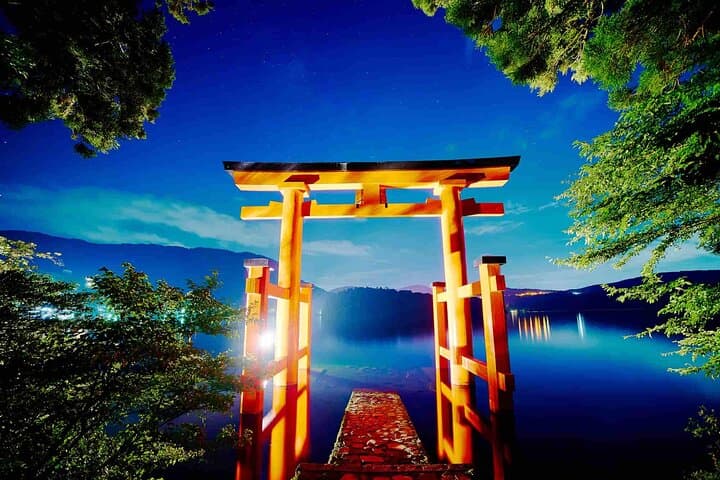
This one-day private route stitches together Hakone’s geological drama and cultural traces. Lake Ashi formed in a caldera long after Hakone’s eruptions; its shoreline hosts Hakone Shrine, a Shinto site relocated to the lake’s edge in the 17th century. Nearby Owakudani—“Great Boiling Valley”—is the economy of steam and sulfur, where vents simmer and kuro-tamago (black eggs) are cooked in mineral-rich hot springs. Gotemba, sitting on the eastern flanks, offers expansive vantage points for Fuji’s cone; on clear days the mountain dominates the skyline like a patient, snow-capped monarch.
The route also has a quieter cultural angle. The Hakone Open-Air Museum mixes sculptural modernism with manicured lawns and natural hot-spring foot baths, a reminder that Japan frames contemporary art alongside geothermal phenomena. Locals will point to Edo-era travel routes that once threaded these valleys—pilgrimage and trade carved the first tourist paths.
Practical planning is straightforward: the full-day private tour runs roughly seven hours with door-to-door pickup from Tokyo neighborhoods or a specified meeting point in Akihabara. Expect a mix of paved roads, short shoreline promenades, and the sulfur-scented walkways near Owakudani; the activity level is moderate rather than strenuous. Timing is everything—Fuji’s face is famously coy, often hiding behind mid-day haze, so schedule the earliest possible departure and check the forecast.
Bring layered clothing (the lake and valley can be several degrees cooler than the city), a good pair of walking shoes for uneven paths, and a charged camera—views change dramatically with clouds and sun. If you’re sensitive to sulfur, a lightweight scarf helps; if you want the black eggs, budget a short queue at Owakudani. The private format means the guide can adapt stops—more time at the museum, a longer lakeside walk, or an early viewpoint at Gotemba’s outskirts for unobstructed Fuji shots.
This day is about contrasts: ancient shrine steps versus modern sculpture lawns, placid lake reflections versus the audible hiss of geothermal vents. For travelers based in Tokyo with a single day to spare, the tour compresses the region’s geology, culture, and iconic views into a manageable, memorable stretch of road.
moderate.
7 hours.
Good for travelers who can walk short distances up to an hour and handle stairs and uneven ground; a moderate fitness level is helpful for comfortably enjoying multiple stops.
The tour lasts about seven hours (420 minutes); departure times vary but early morning pickups are recommended to improve Mount Fuji visibility.
Admissions are not typically included; the tour covers transport and stops but fees for museums or optional activities should be paid separately unless stated otherwise.
Yes—this is a private tour and the guide can adjust time at stops like the Open-Air Museum, Lake Ashi, or Gotemba viewpoints based on your interests.
No—Fuji’s visibility depends on weather and seasonal haze; early departures and clear-weather days increase your chances but visibility cannot be guaranteed.
Yes—there are public restrooms at major stops, and small cafes or vendors near Lake Ashi, Owakudani, and the museum where you can buy snacks or refreshments.
Infants and small children can join (stroller accessible and infant seats available); however, some short walks and sulfur-vent areas may be challenging for those with limited mobility—consult the operator when booking.
Hakone’s valleys were key points on the Tokaido Road during the Edo period; shrine relocations and post-stations here catered to travelers making pilgrimage to the capital and back.
Hakone balances tourism with fragile volcanic landscapes—stay on marked paths, avoid littering near thermal areas, and support local businesses that follow low-impact practices.
TOKYO DRIFT TOUR operates guided outdoor trips and adventures with an emphasis on safety, stewardship, and memorable experiences.
The van eases out of Tokyo before dawn, the city shrinking into a grid of lights while the air grows cooler and the silhouette of Mount Fuji becomes a patient promise on the horizon. By the time the road climbs into Hakone, cedars lean over the highway like curious onlookers and the van turns toward Lake Ashi, whose black, glassy surface dares you to look up and find the volcano reflected in full.
The van eases out of Tokyo before dawn, the city shrinking into a grid of lights while the air grows cooler and the silhouette of Mount Fuji becomes a patient promise on the horizon. By the time the road climbs into Hakone, cedars lean over the highway like curious onlookers and the van turns toward Lake Ashi, whose black, glassy surface dares you to look up and find the volcano reflected in full.
This one-day private route stitches together Hakone’s geological drama and cultural traces. Lake Ashi formed in a caldera long after Hakone’s eruptions; its shoreline hosts Hakone Shrine, a Shinto site relocated to the lake’s edge in the 17th century. Nearby Owakudani—“Great Boiling Valley”—is the economy of steam and sulfur, where vents simmer and kuro-tamago (black eggs) are cooked in mineral-rich hot springs. Gotemba, sitting on the eastern flanks, offers expansive vantage points for Fuji’s cone; on clear days the mountain dominates the skyline like a patient, snow-capped monarch.
The route also has a quieter cultural angle. The Hakone Open-Air Museum mixes sculptural modernism with manicured lawns and natural hot-spring foot baths, a reminder that Japan frames contemporary art alongside geothermal phenomena. Locals will point to Edo-era travel routes that once threaded these valleys—pilgrimage and trade carved the first tourist paths.
Practical planning is straightforward: the full-day private tour runs roughly seven hours with door-to-door pickup from Tokyo neighborhoods or a specified meeting point in Akihabara. Expect a mix of paved roads, short shoreline promenades, and the sulfur-scented walkways near Owakudani; the activity level is moderate rather than strenuous. Timing is everything—Fuji’s face is famously coy, often hiding behind mid-day haze, so schedule the earliest possible departure and check the forecast.
Bring layered clothing (the lake and valley can be several degrees cooler than the city), a good pair of walking shoes for uneven paths, and a charged camera—views change dramatically with clouds and sun. If you’re sensitive to sulfur, a lightweight scarf helps; if you want the black eggs, budget a short queue at Owakudani. The private format means the guide can adapt stops—more time at the museum, a longer lakeside walk, or an early viewpoint at Gotemba’s outskirts for unobstructed Fuji shots.
This day is about contrasts: ancient shrine steps versus modern sculpture lawns, placid lake reflections versus the audible hiss of geothermal vents. For travelers based in Tokyo with a single day to spare, the tour compresses the region’s geology, culture, and iconic views into a manageable, memorable stretch of road.