THE ADVENTURE COLLECTIVE® · Independent discovery and booking for outdoor travel

Cover three UNESCO sites in one immersive day: climb Sigiriya's lion rock, walk the painted caves of Dambulla, and explore the stone Buddha gallery of Polonnaruwa. This private tour pairs archaeology with practical pacing and local insights to make a long day both manageable and memorable.
Cover three UNESCO sites in one immersive day: climb Sigiriya's lion rock, walk the painted caves of Dambulla, and explore the stone Buddha gallery of Polonnaruwa. This private tour pairs archaeology with practical pacing and local insights to make a long day both manageable and memorable.
You step out of the van before dawn and the air is already warm, edged with the smell of damp earth and cooking fires from nearby villages. The silhouette of Sigiriya rises like a raw, vertical island from the flat plains — a 200-meter slab of red-brown rock daring you to climb. Over the next six to eight hours a private driver-guide moves you between three UNESCO anchors of Sri Lanka's Cultural Triangle: the painted caves of Dambulla, the lion-clawed summit of Sigiriya, and the stone-carved serenity of Polonnaruwa.
Verified experiences and guided adventures in the surrounding area.
Operated by Haven Lanka Tours · Dambulla, Central Province
You step out of the van before dawn and the air is already warm, edged with the smell of damp earth and cooking fires from nearby villages. The silhouette of Sigiriya rises like a raw, vertical island from the flat plains — a 200-meter slab of red-brown rock daring you to climb. Over the next six to eight hours a private driver-guide moves you between three UNESCO anchors of Sri Lanka's Cultural Triangle: the painted caves of Dambulla, the lion-clawed summit of Sigiriya, and the stone-carved serenity of Polonnaruwa.
Dambulla's cave temples open the day with incense and cool stone. These sanctuaries stretch back more than two millennia, their gilded Buddhas and muraled ceilings tracing layers of Sri Lanka's devotion and art. Geologically, the caves sit on a laterite and granite outcrop formed by ancient uplift, their cool shadows a counterpoint to the open plains below.
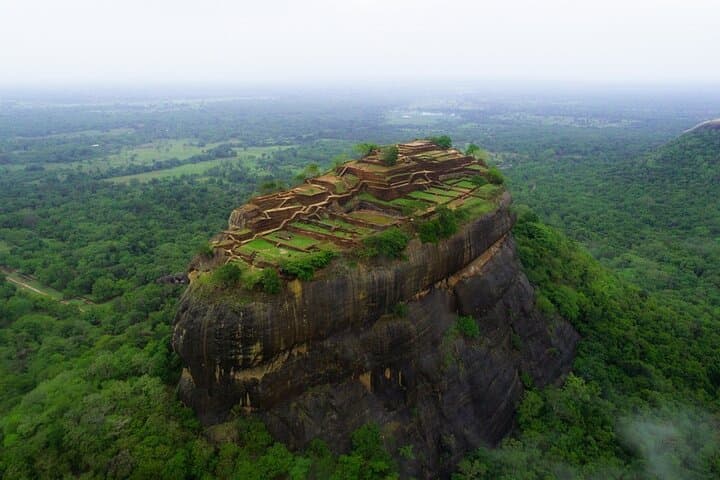
Sigiriya tells a different story. In the 5th century CE King Kasyapa transformed the rock into a fortress-palace, carving terraces, ponds, and mirror-streaked walls into the base. Climbing its iron stairs, you pass frescoes of celestial figures and a narrow gallery of graffiti where pilgrims once left verses. At the summit the view is uncompromising: irrigation tanks, forest patches, and the geometry of ancient hydraulic works that supplied the capital now spread like a plan drawn in green and gold.
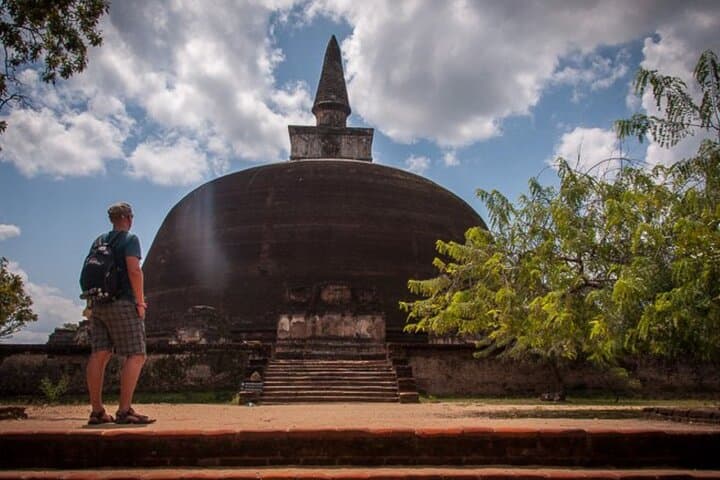
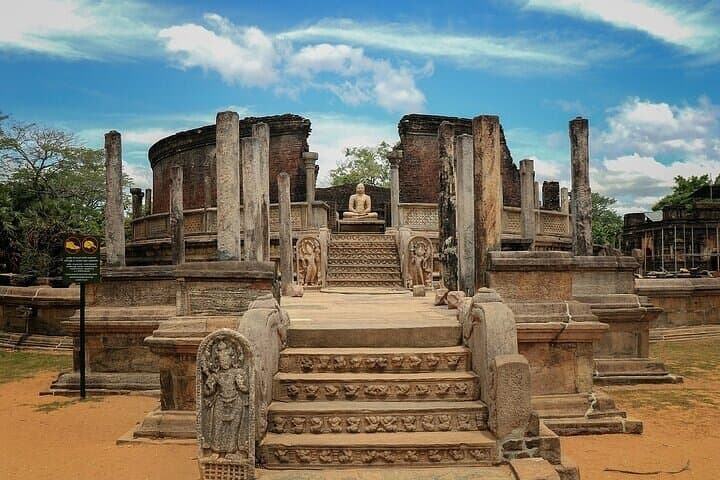
Polonnaruwa closes the loop with medieval scale. Here the Gal Vihara's four granite Buddhas — reclining, seated, standing — are carved from a single granite slab and reveal the technical confidence of 11th-century Sinhalese sculptors. The city’s remnants map a time when irrigation engineering and stone carving were political statements.
Practical notes: the tour runs 6–8 hours and is best started early to avoid midday heat on Sigiriya's exposed stairways. Expect moderate exertion — steep steps and uneven stone at each site. Respect temple rules: shoes off in Dambulla, modest clothing at all religious sites. Entrance fees are not included in some packages, so carry local currency. Your guide can tailor pacing; a private vehicle means flexible photo stops and an easier schedule to fit a quieter lunch in a village.
Local insight: combine this tour with a short Pidurangala climb for sunrise, or time a late afternoon stop at a reservoir to watch elephants move toward water. Bring sun protection, plenty of water, and modest curiosity — the region rewards quiet observation as much as bold climbs. Above all, move with respect: these sites are living heritage, their stone and paint fragile under the touch of crowds.
moderate.
6–8 hours.
Good walking fitness; able to climb steep, sometimes narrow stairs and stand for guided stops.
Expect several short but steep climbs (notably Sigiriya’s stairs) and moderate walking across uneven stone at Polonnaruwa and Dambulla.
Admission is often not included — check your booking details and bring local currency to cover site tickets if needed.
Yes; the tour offers hotel pickup in nearby towns (additional surcharge may apply for distant pickup like Kandalama).
Yes for those comfortable with stair climbs; consider pace and mobility — the private format allows pauses and tailored timing.
The tour includes an English-speaking driver-guide who can provide historical context and navigate local etiquette.
Generally yes for Sigiriya and Polonnaruwa, but be respectful in Dambulla: flash and tripods may be restricted in some cave chambers.
Sigiriya was converted into a fortress-palace by King Kasyapa in the 5th century CE; Polonnaruwa later became the island’s medieval capital famed for hydraulic engineering and rock sculpture.
Visitor pressure threatens frescoes and fragile stone; follow site rules, avoid touching artworks, and use local guides to support conservation-minded practices.
Haven Lanka Tours operates guided outdoor trips and adventures with an emphasis on safety, stewardship, and memorable experiences.
You step out of the van before dawn and the air is already warm, edged with the smell of damp earth and cooking fires from nearby villages. The silhouette of Sigiriya rises like a raw, vertical island from the flat plains — a 200-meter slab of red-brown rock daring you to climb. Over the next six to eight hours a private driver-guide moves you between three UNESCO anchors of Sri Lanka's Cultural Triangle: the painted caves of Dambulla, the lion-clawed summit of Sigiriya, and the stone-carved serenity of Polonnaruwa.
You step out of the van before dawn and the air is already warm, edged with the smell of damp earth and cooking fires from nearby villages. The silhouette of Sigiriya rises like a raw, vertical island from the flat plains — a 200-meter slab of red-brown rock daring you to climb. Over the next six to eight hours a private driver-guide moves you between three UNESCO anchors of Sri Lanka's Cultural Triangle: the painted caves of Dambulla, the lion-clawed summit of Sigiriya, and the stone-carved serenity of Polonnaruwa.
Dambulla's cave temples open the day with incense and cool stone. These sanctuaries stretch back more than two millennia, their gilded Buddhas and muraled ceilings tracing layers of Sri Lanka's devotion and art. Geologically, the caves sit on a laterite and granite outcrop formed by ancient uplift, their cool shadows a counterpoint to the open plains below.
Sigiriya tells a different story. In the 5th century CE King Kasyapa transformed the rock into a fortress-palace, carving terraces, ponds, and mirror-streaked walls into the base. Climbing its iron stairs, you pass frescoes of celestial figures and a narrow gallery of graffiti where pilgrims once left verses. At the summit the view is uncompromising: irrigation tanks, forest patches, and the geometry of ancient hydraulic works that supplied the capital now spread like a plan drawn in green and gold.
Polonnaruwa closes the loop with medieval scale. Here the Gal Vihara's four granite Buddhas — reclining, seated, standing — are carved from a single granite slab and reveal the technical confidence of 11th-century Sinhalese sculptors. The city’s remnants map a time when irrigation engineering and stone carving were political statements.
Practical notes: the tour runs 6–8 hours and is best started early to avoid midday heat on Sigiriya's exposed stairways. Expect moderate exertion — steep steps and uneven stone at each site. Respect temple rules: shoes off in Dambulla, modest clothing at all religious sites. Entrance fees are not included in some packages, so carry local currency. Your guide can tailor pacing; a private vehicle means flexible photo stops and an easier schedule to fit a quieter lunch in a village.
Local insight: combine this tour with a short Pidurangala climb for sunrise, or time a late afternoon stop at a reservoir to watch elephants move toward water. Bring sun protection, plenty of water, and modest curiosity — the region rewards quiet observation as much as bold climbs. Above all, move with respect: these sites are living heritage, their stone and paint fragile under the touch of crowds.