THE ADVENTURE COLLECTIVE® · Independent discovery and booking for outdoor travel

Spend a day away from the Adriatic rush and let Plitvice’s stair-stepped lakes and waterfalls reset your pace. This private tour from Split delivers four hours inside the park with private transport and a local driver-guide.
Spend a day away from the Adriatic rush and let Plitvice’s stair-stepped lakes and waterfalls reset your pace. This private tour from Split delivers four hours inside the park with private transport and a local driver-guide.
You step out of the minivan before the road thins and the air acquires a limestone chill. The driver closes the door, gives a friendly nod, and for a moment the noise of Dalmatia—harbor horns, distant scooters—fades to the hiss of water. Plitvice Lakes arrives as a living geology lesson: a stair of turquoise basins threaded by wooden boardwalks and waterfalls that seem intent on rearranging the landscape.
Verified experiences and guided adventures in the surrounding area.
Operated by Beautiful Day Private Tours & Transfers · Plitvička Jezera, Lika-Senj County
You step out of the minivan before the road thins and the air acquires a limestone chill. The driver closes the door, gives a friendly nod, and for a moment the noise of Dalmatia—harbor horns, distant scooters—fades to the hiss of water. Plitvice Lakes arrives as a living geology lesson: a stair of turquoise basins threaded by wooden boardwalks and waterfalls that seem intent on rearranging the landscape.
The park’s travertine dams are the result of millions of years of karst processes and constant plant-driven mineral deposition. Early human visitors left traces too; shepherding and small mountain settlements shaped the surrounding Lika-Senj County long before Plitvice was protected. In 1979 UNESCO recognized the park for its unique geomorphology and biodiversity, formalizing a conservation ethic that still governs visitor flow and behavior.
Culturally, the area feels rural and direct. Local guides will point out how seasonal floods and freeze-thaw cycles tweak the channels, and how traditional shepherding and wartime histories intersect with the national park’s modern management. The lakes are alive in the practical sense: trout, otters, and beech forests influence trail placement and boardwalk maintenance, and the park’s rules—no swimming, stay on paths—aren’t just bureaucracy, they’re preservation.
Practically, expect a lot of walking on flat to gently undulating boardwalks and dirt trails; the day usually follows a loop that covers Lower and Upper Lakes with a possible short boat transfer across Kozjak Lake. You’ll get approximately four hours inside the park during this private day trip from Split; the total door-to-door time is roughly ten hours, including transport.
Timing matters. Arrive early to avoid the crowds at the Big Waterfall and to catch the lakes when wind is low and surfaces mirror the karst cliffs. Bring layered rain protection—weather can shift quickly—and sturdy walking shoes; parts of the boardwalk can be wet and slick from spray. Hydrate before you hit longer stretches without shade and budget time to move at a steady pace rather than sprint between viewpoints.
If you’re curious about photography, aim for soft morning or late-afternoon light on the Lower Lakes; midday favors long exposures at falls. And remember the small rules that multiply: respect wildlife, carry out any trash, and allow the travertine to keep building itself by keeping to designated paths. The park rewards patients—if you walk slowly and listen, you’ll notice details most visitors miss: avian drumming, the smell of wet limestone, and the layered, slow work of water reshaping a place older than modern borders.
easy.
10 hours.
Light to moderate: comfortable walking for 3–5 hours with occasional short climbs; suitable for most fitness levels
No, admission fees are not included; you'll pay the park entrance separately on arrival (prices vary by season).
Expect about 3–5 hours of walking on mostly flat boardwalks and dirt trails, with some stairs and short uphill sections on viewpoints.
Yes, the operator offers pickup across Split county including hotels and the cruise port—specify your pickup during booking.
Generally yes—paths are well-maintained and the operator lists the tour as suitable for all fitness levels, though participants should be steady on their feet.
There are a few park cafes and restroom facilities near major trailheads, but options are limited—bring snacks and water as needed.
No. Swimming is prohibited to protect the travertine formations and the park’s fragile ecosystems.
Plitvice was declared a national park in 1949 and became a UNESCO World Heritage Site in 1979 due to its distinctive travertine dams and ecological value.
The park enforces strict rules—stay on marked paths and respect no-swim policies—to prevent damage to growing travertine and protect habitat for rare species.
Beautiful Day Private Tours & Transfers operates guided outdoor trips and adventures with an emphasis on safety, stewardship, and memorable experiences.
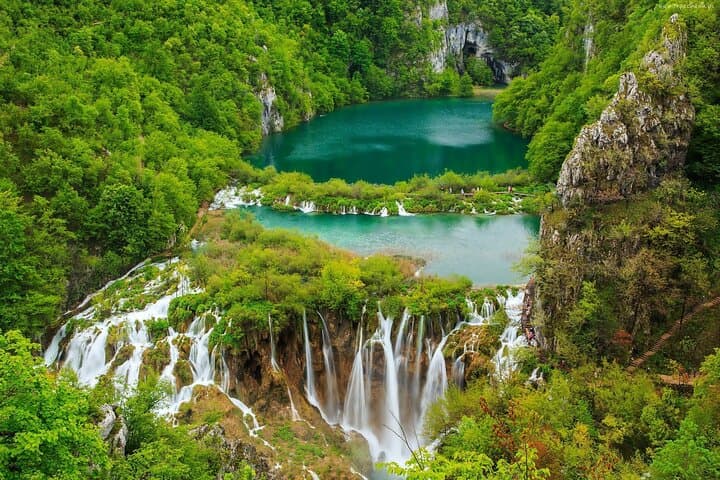
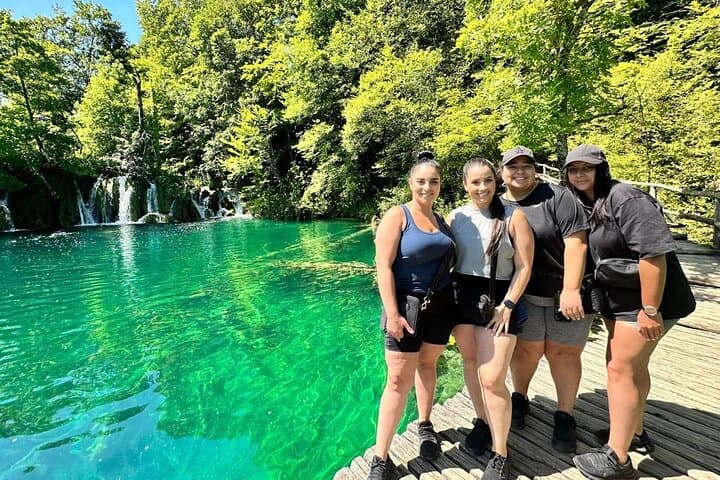
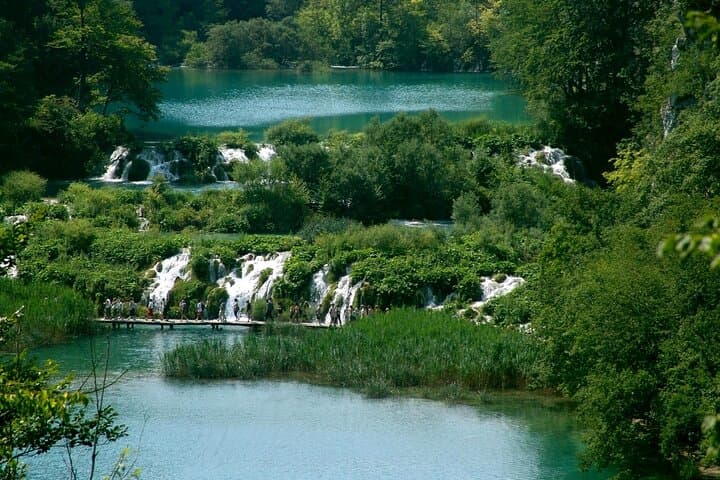
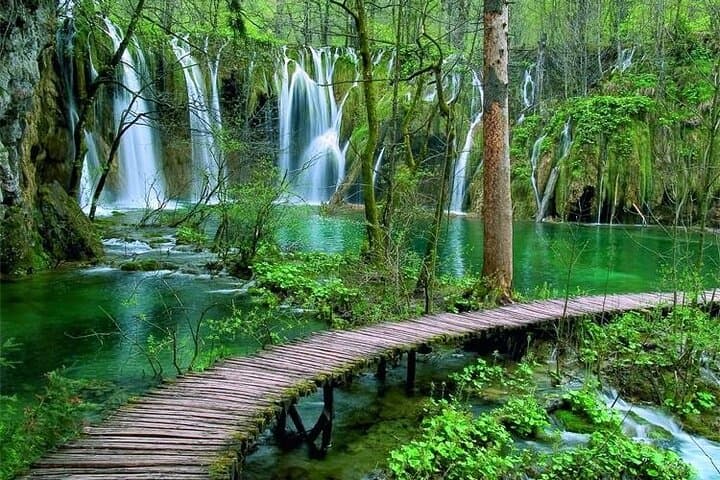
You step out of the minivan before the road thins and the air acquires a limestone chill. The driver closes the door, gives a friendly nod, and for a moment the noise of Dalmatia—harbor horns, distant scooters—fades to the hiss of water. Plitvice Lakes arrives as a living geology lesson: a stair of turquoise basins threaded by wooden boardwalks and waterfalls that seem intent on rearranging the landscape.
You step out of the minivan before the road thins and the air acquires a limestone chill. The driver closes the door, gives a friendly nod, and for a moment the noise of Dalmatia—harbor horns, distant scooters—fades to the hiss of water. Plitvice Lakes arrives as a living geology lesson: a stair of turquoise basins threaded by wooden boardwalks and waterfalls that seem intent on rearranging the landscape.
The park’s travertine dams are the result of millions of years of karst processes and constant plant-driven mineral deposition. Early human visitors left traces too; shepherding and small mountain settlements shaped the surrounding Lika-Senj County long before Plitvice was protected. In 1979 UNESCO recognized the park for its unique geomorphology and biodiversity, formalizing a conservation ethic that still governs visitor flow and behavior.
Culturally, the area feels rural and direct. Local guides will point out how seasonal floods and freeze-thaw cycles tweak the channels, and how traditional shepherding and wartime histories intersect with the national park’s modern management. The lakes are alive in the practical sense: trout, otters, and beech forests influence trail placement and boardwalk maintenance, and the park’s rules—no swimming, stay on paths—aren’t just bureaucracy, they’re preservation.
Practically, expect a lot of walking on flat to gently undulating boardwalks and dirt trails; the day usually follows a loop that covers Lower and Upper Lakes with a possible short boat transfer across Kozjak Lake. You’ll get approximately four hours inside the park during this private day trip from Split; the total door-to-door time is roughly ten hours, including transport.
Timing matters. Arrive early to avoid the crowds at the Big Waterfall and to catch the lakes when wind is low and surfaces mirror the karst cliffs. Bring layered rain protection—weather can shift quickly—and sturdy walking shoes; parts of the boardwalk can be wet and slick from spray. Hydrate before you hit longer stretches without shade and budget time to move at a steady pace rather than sprint between viewpoints.
If you’re curious about photography, aim for soft morning or late-afternoon light on the Lower Lakes; midday favors long exposures at falls. And remember the small rules that multiply: respect wildlife, carry out any trash, and allow the travertine to keep building itself by keeping to designated paths. The park rewards patients—if you walk slowly and listen, you’ll notice details most visitors miss: avian drumming, the smell of wet limestone, and the layered, slow work of water reshaping a place older than modern borders.