THE ADVENTURE COLLECTIVE® · Independent discovery and booking for outdoor travel

A full-day, private transfer that stitches Zagreb to Split through two of inland Croatia’s most photogenic places: the watermills of Rastoke and the travertine pools of Plitvice Lakes. Four hours in the park, a private guide and hotel pickup make this a time-efficient way to experience karst landscapes without backtracking.
A full-day, private transfer that stitches Zagreb to Split through two of inland Croatia’s most photogenic places: the watermills of Rastoke and the travertine pools of Plitvice Lakes. Four hours in the park, a private guide and hotel pickup make this a time-efficient way to experience karst landscapes without backtracking.
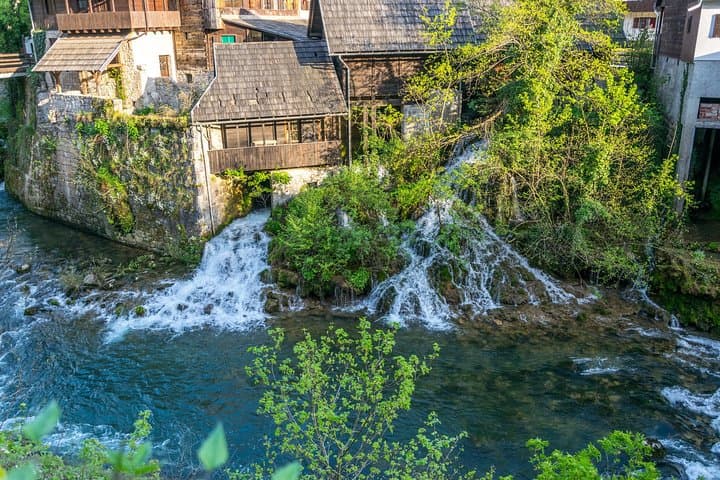
The van slips out of Zagreb before dawn and the Croatian countryside opens like a changing map: low karst ridges, patches of beech forest, the occasional red-roofed village. In under two hours the noise of the motorway gives way to the rattle of wooden mills — Rastoke — where small waterfalls thread through stone houses and photographers line a cobbled lane to catch the spray. It’s a quick, atmospheric stop; the day’s real gravity is still ahead at Plitvice Lakes National Park.
Verified experiences and guided adventures in the surrounding area.
Operated by Zico Tours · Plitvička Jezera, Lika-Senj County
The van slips out of Zagreb before dawn and the Croatian countryside opens like a changing map: low karst ridges, patches of beech forest, the occasional red-roofed village. In under two hours the noise of the motorway gives way to the rattle of wooden mills — Rastoke — where small waterfalls thread through stone houses and photographers line a cobbled lane to catch the spray. It’s a quick, atmospheric stop; the day’s real gravity is still ahead at Plitvice Lakes National Park.
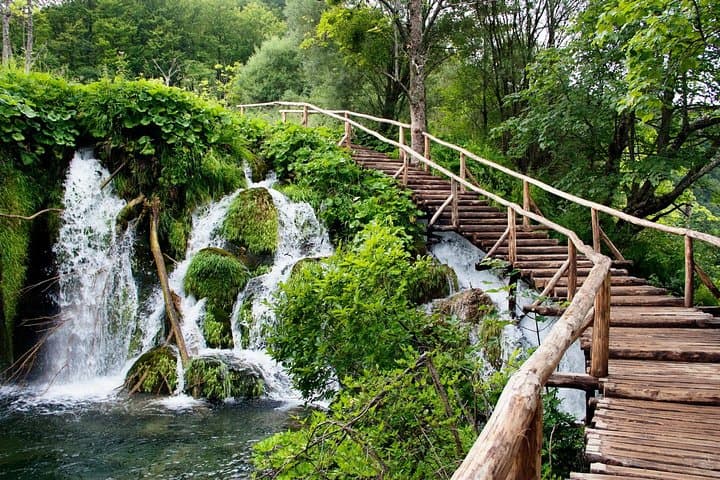
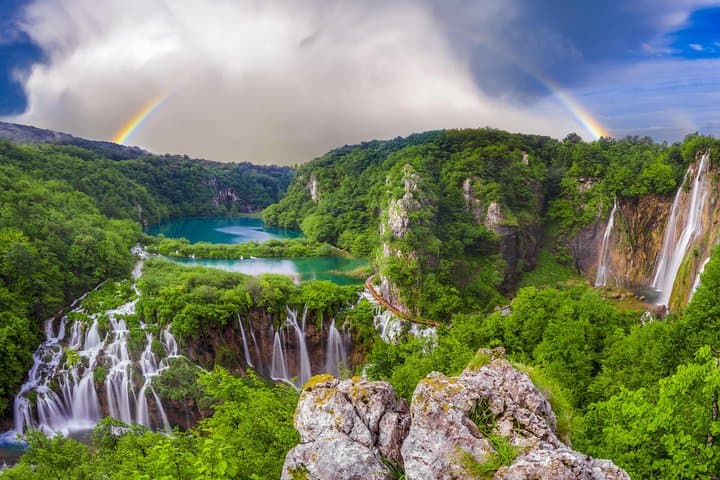
Arriving at Plitvice, the air tastes of mineral and green water. The park is organized around strings of turquoise lakes separated by travertine dams — living limestone shelves formed by mineral-rich water depositing calcium carbonate. Boardwalks and wooden bridges float across the surface, steering visitors past cataracts that roar and pools that hold glass-smooth reflections. Guides will usually combine a walking circuit with the park’s electric boat and the small panorama train, knitting together routes that can span 3–6 kilometres of steps and boardwalks with roughly 100–200 metres of elevation change depending on your chosen trail.
History sits quietly in the landscape. The area became a national park in 1949 and earned UNESCO status in 1979; its special geology and flora have been protected ever since. Nearby Rastoke preserves the region’s rural industry — working watermills and saws that predate modern electricity — giving a human scale to the same water that sculpts the national park.
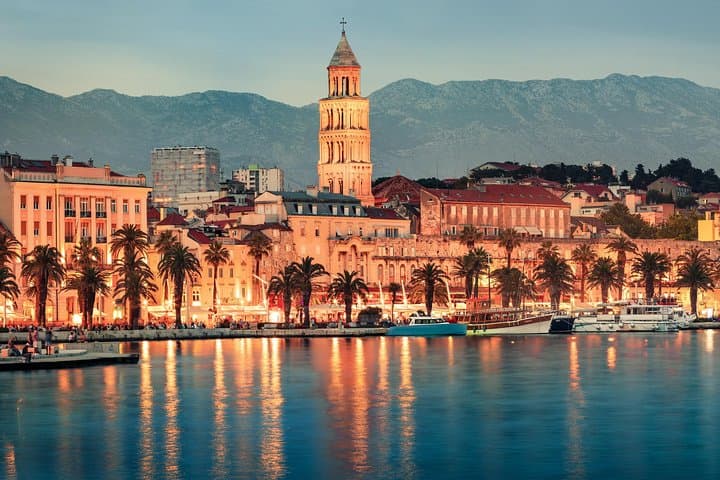
Practicalities matter on a one-day, point-to-point itinerary. The tour includes hotel pickup from Zagreb and private transport, a 30-minute photo stop at Rastoke, and four hours at Plitvice where you’ll use the boat and train services to cover ground. Note: park entrance is often not included, so reserve tickets in advance in high season to avoid queues. Bottled water is supplied on the van, and you’ll be dropped off at your accommodation in Split at the day’s end, making this an efficient way to bridge the capital and the Dalmatian coast.
Terrain is mostly flat boardwalks with stone steps and occasional uneven trails; waterproof, grippy footwear is recommended. Weather shifts quickly in the karst — bring a lightweight rain shell and layers. Respect the park’s rules: stay on paths, don’t disturb the travertine formations, and keep food secure — wildlife here ranges from chamois and deer to shy brown bears in the surrounding woodlands.
For photographers, the big waterfall viewpoints and the upper-lake boardwalks deliver classic compositions; early or late daylight softens contrasts and gives the water its most luminous tones. With a private guide and a drop-off in Split, this day tour is both practical and cinematic: a concentrated passage through one of Croatia’s most elemental landscapes.
moderate.
10 hours.
Moderate fitness — able to walk 3–6 km over uneven wooden boardwalks and stairs over several hours.
Plitvice entrance is often not included—check your booking details and, if not included, purchase timed tickets online before arrival to avoid lines.
This itinerary allocates about four hours at Plitvice, typically enough for one of the main circuit routes combined with the electric boat and panorama train.
Yes — the operator offers hotel pickup across Zagreb; you can specify your pickup location when booking.
Generally yes—boardwalks are accessible though there are stairs; travelers should be comfortable walking for several hours and parents should supervise near waterfalls.
Yes — the tour finishes with a scheduled drop-off in Split; confirm the exact drop-off address with the operator when booking.
The tour description includes use of the park’s boat and train to complete the circuit, but double-check whether any auxiliary transport fees are covered in your booking.
Plitvice was declared a national park in 1949 and inscribed as a UNESCO World Heritage Site in 1979 for its unique travertine-formation processes.
The park’s tufa barriers are fragile—stay on boardwalks, avoid touching formations, and take all litter with you to help maintain the ecosystem.
Zico Tours operates guided outdoor trips and adventures with an emphasis on safety, stewardship, and memorable experiences.
The van slips out of Zagreb before dawn and the Croatian countryside opens like a changing map: low karst ridges, patches of beech forest, the occasional red-roofed village. In under two hours the noise of the motorway gives way to the rattle of wooden mills — Rastoke — where small waterfalls thread through stone houses and photographers line a cobbled lane to catch the spray. It’s a quick, atmospheric stop; the day’s real gravity is still ahead at Plitvice Lakes National Park.
The van slips out of Zagreb before dawn and the Croatian countryside opens like a changing map: low karst ridges, patches of beech forest, the occasional red-roofed village. In under two hours the noise of the motorway gives way to the rattle of wooden mills — Rastoke — where small waterfalls thread through stone houses and photographers line a cobbled lane to catch the spray. It’s a quick, atmospheric stop; the day’s real gravity is still ahead at Plitvice Lakes National Park.
Arriving at Plitvice, the air tastes of mineral and green water. The park is organized around strings of turquoise lakes separated by travertine dams — living limestone shelves formed by mineral-rich water depositing calcium carbonate. Boardwalks and wooden bridges float across the surface, steering visitors past cataracts that roar and pools that hold glass-smooth reflections. Guides will usually combine a walking circuit with the park’s electric boat and the small panorama train, knitting together routes that can span 3–6 kilometres of steps and boardwalks with roughly 100–200 metres of elevation change depending on your chosen trail.
History sits quietly in the landscape. The area became a national park in 1949 and earned UNESCO status in 1979; its special geology and flora have been protected ever since. Nearby Rastoke preserves the region’s rural industry — working watermills and saws that predate modern electricity — giving a human scale to the same water that sculpts the national park.
Practicalities matter on a one-day, point-to-point itinerary. The tour includes hotel pickup from Zagreb and private transport, a 30-minute photo stop at Rastoke, and four hours at Plitvice where you’ll use the boat and train services to cover ground. Note: park entrance is often not included, so reserve tickets in advance in high season to avoid queues. Bottled water is supplied on the van, and you’ll be dropped off at your accommodation in Split at the day’s end, making this an efficient way to bridge the capital and the Dalmatian coast.
Terrain is mostly flat boardwalks with stone steps and occasional uneven trails; waterproof, grippy footwear is recommended. Weather shifts quickly in the karst — bring a lightweight rain shell and layers. Respect the park’s rules: stay on paths, don’t disturb the travertine formations, and keep food secure — wildlife here ranges from chamois and deer to shy brown bears in the surrounding woodlands.
For photographers, the big waterfall viewpoints and the upper-lake boardwalks deliver classic compositions; early or late daylight softens contrasts and gives the water its most luminous tones. With a private guide and a drop-off in Split, this day tour is both practical and cinematic: a concentrated passage through one of Croatia’s most elemental landscapes.