THE ADVENTURE COLLECTIVE® · Independent discovery and booking for outdoor travel

Leave the coast behind for a private day trip into Croatia’s most dramatic freshwater landscape. This private tour from Zadar combines a 4‑hour boardwalk walk, a serene boat ride across Kozjak Lake and an electric train through forested slopes — all in one seamless day.
Leave the coast behind for a private day trip into Croatia’s most dramatic freshwater landscape. This private tour from Zadar combines a 4‑hour boardwalk walk, a serene boat ride across Kozjak Lake and an electric train through forested slopes — all in one seamless day.
The minivan slips away from Zadar’s raucous waterfront and the Adriatic shrinks behind you: terracotta roofs give way to karst ridges, punctuated by pines that lean into the inland breeze. Two hours later the air tastes different — cooler, mineral — and the first tiers of the lakes appear through the trees like a green-blue promise.
Verified experiences and guided adventures in the surrounding area.
Operated by Adriatic Vision · Plitvička Jezera, Zadar County
The minivan slips away from Zadar’s raucous waterfront and the Adriatic shrinks behind you: terracotta roofs give way to karst ridges, punctuated by pines that lean into the inland breeze. Two hours later the air tastes different — cooler, mineral — and the first tiers of the lakes appear through the trees like a green-blue promise.
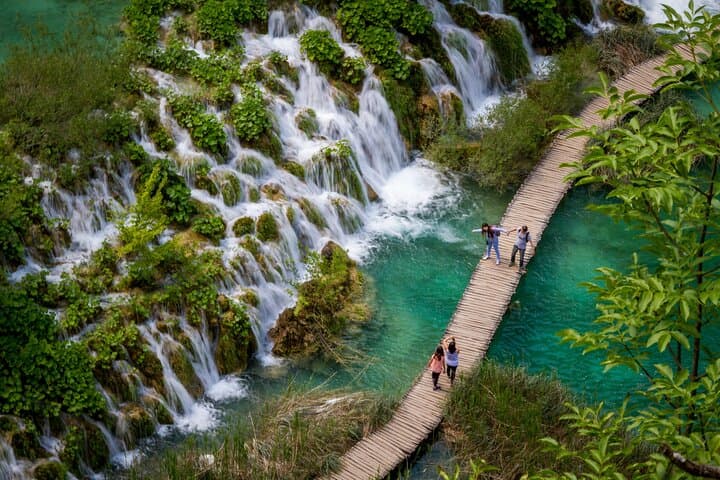
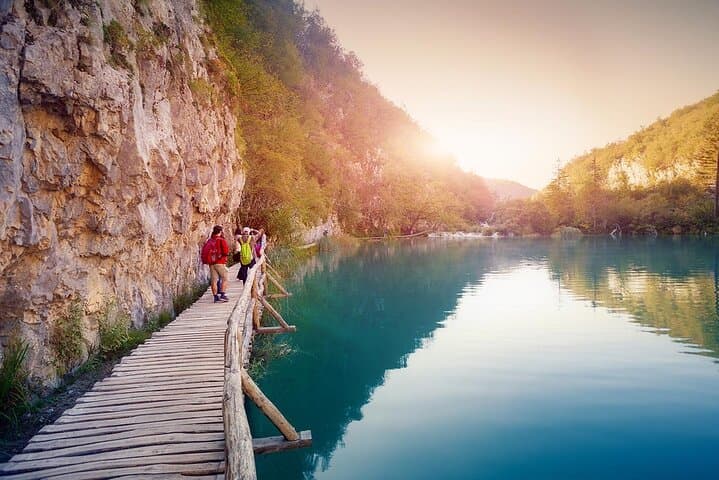
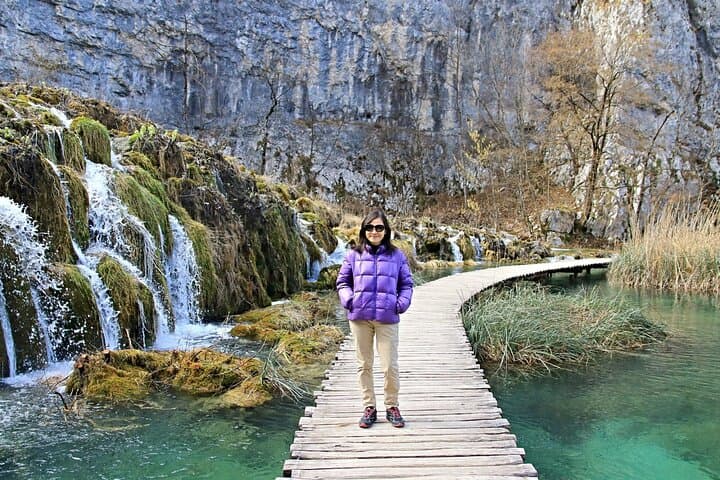
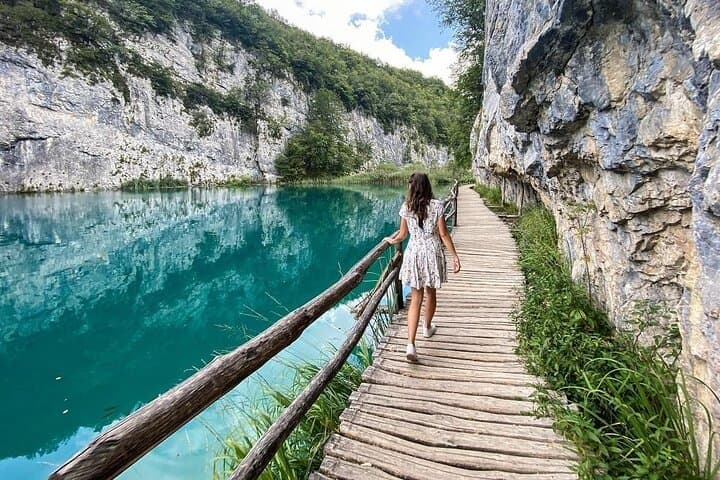
Plitvice National Park doesn’t reveal itself all at once; it stages its scenes. Your private tour starts with a 4‑hour walk across wooden boardwalks that thread over ribbons of water. The Great Waterfall announces itself with thunder: water plunges in curtains, a persistent force that shapes the park’s voice. Between cascades you’ll glide on a short boat ride across the opaque teal of Kozjak Lake, then cross the valley on an electric train that skims through fir-scented woods.
Geologically, Plitvice is sculpted by limestone and the slow work of tufa (travertine) deposition. Mineral-rich water builds dams that capture sediments and create the cascading lakes you see today. The process is alive — moss and plants trap minerals and the landscape keeps accreting, one thin shelf at a time.
The park sits in Lika, a region shaped by pastoral life and guerilla history. Protecting Plitvice has long been a national priority: it became Croatia’s first national park in 1949 and a UNESCO World Heritage Site in 1979. That legacy shows in the well-maintained boardwalks and strict rules — no swimming, no off-trail wandering — meant to preserve fragile travertine growth.
Practical edge: the tour is private and door‑to‑door from Zadar, but note that entrance fees are not included. Expect roughly 1.5–2 hours each way by road, and plan for a full day (about eight hours total). The walking loop covers uneven wooden paths, stone steps and occasional slick surfaces — moderate fitness is required. Bring a waterproof layer, grippy shoes and enough water for the day; there are cafés near the main entrances but service can be slow at peak times.
Timing matters. Early morning light and late afternoon reduce crowds and sharpen the falls’ shadows. The boat ride gives a different perspective — sit on the prow and let the lake’s hush reset your pace. Respect the conservation rules: stay on marked paths, pack out trash and keep noise low. The park is durable, but only if visitors are careful.
In short: this private day trip packages convenience with one of Europe’s most singular landscapes. It’s an efficient way to trade coastal heat for waterfalls, to walk timbered ledges and let the water push your sense of scale a little wider.
moderate.
8 hours (approx., including travel).
Should be comfortable walking 4 hours on uneven boardwalks and stairs; moderate cardio and balance helpful
No — the tour price covers private transport and guide; entrance tickets must be purchased separately at the park or online.
The itinerary includes approximately a 4‑hour walking circuit on boardwalks and trails, with moderate elevation changes and stairs.
Expect about 1.5–2 hours each way depending on traffic; the tour duration (8 hours) includes travel time.
Yes, if they can manage several hours of walking and stairs; inform the operator of mobility needs when booking for custom arrangements.
No — swimming is prohibited to protect the fragile travertine formations and aquatic ecosystem.
Stops for food and restrooms are included in the schedule but meals are not — bring snacks or plan to buy food at park cafés.
Plitvice became Croatia’s first national park in 1949 and was inscribed as a UNESCO World Heritage Site in 1979 due to its unique travertine landscape.
The park’s boardwalks and strict rules protect active tufa formation; visitors should stay on paths, avoid swimming and pack out waste to minimize impact.
Adriatic Vision operates guided outdoor trips and adventures with an emphasis on safety, stewardship, and memorable experiences.
The minivan slips away from Zadar’s raucous waterfront and the Adriatic shrinks behind you: terracotta roofs give way to karst ridges, punctuated by pines that lean into the inland breeze. Two hours later the air tastes different — cooler, mineral — and the first tiers of the lakes appear through the trees like a green-blue promise.
The minivan slips away from Zadar’s raucous waterfront and the Adriatic shrinks behind you: terracotta roofs give way to karst ridges, punctuated by pines that lean into the inland breeze. Two hours later the air tastes different — cooler, mineral — and the first tiers of the lakes appear through the trees like a green-blue promise.
Plitvice National Park doesn’t reveal itself all at once; it stages its scenes. Your private tour starts with a 4‑hour walk across wooden boardwalks that thread over ribbons of water. The Great Waterfall announces itself with thunder: water plunges in curtains, a persistent force that shapes the park’s voice. Between cascades you’ll glide on a short boat ride across the opaque teal of Kozjak Lake, then cross the valley on an electric train that skims through fir-scented woods.
Geologically, Plitvice is sculpted by limestone and the slow work of tufa (travertine) deposition. Mineral-rich water builds dams that capture sediments and create the cascading lakes you see today. The process is alive — moss and plants trap minerals and the landscape keeps accreting, one thin shelf at a time.
The park sits in Lika, a region shaped by pastoral life and guerilla history. Protecting Plitvice has long been a national priority: it became Croatia’s first national park in 1949 and a UNESCO World Heritage Site in 1979. That legacy shows in the well-maintained boardwalks and strict rules — no swimming, no off-trail wandering — meant to preserve fragile travertine growth.
Practical edge: the tour is private and door‑to‑door from Zadar, but note that entrance fees are not included. Expect roughly 1.5–2 hours each way by road, and plan for a full day (about eight hours total). The walking loop covers uneven wooden paths, stone steps and occasional slick surfaces — moderate fitness is required. Bring a waterproof layer, grippy shoes and enough water for the day; there are cafés near the main entrances but service can be slow at peak times.
Timing matters. Early morning light and late afternoon reduce crowds and sharpen the falls’ shadows. The boat ride gives a different perspective — sit on the prow and let the lake’s hush reset your pace. Respect the conservation rules: stay on marked paths, pack out trash and keep noise low. The park is durable, but only if visitors are careful.
In short: this private day trip packages convenience with one of Europe’s most singular landscapes. It’s an efficient way to trade coastal heat for waterfalls, to walk timbered ledges and let the water push your sense of scale a little wider.