THE ADVENTURE COLLECTIVE® · Independent discovery and booking for outdoor travel

A quick private cruise across Kotor Bay to Lustica’s Blue Cave delivers a moment of near-mystical blue, a hidden swim-through beach, and coastal history — all in three hours with free drinks. Perfect for travelers who want a short, high-reward sea adventure.
A quick private cruise across Kotor Bay to Lustica’s Blue Cave delivers a moment of near-mystical blue, a hidden swim-through beach, and coastal history — all in three hours with free drinks. Perfect for travelers who want a short, high-reward sea adventure.
The bow parts glass-calm water and the limestone spine of the Lustica Peninsula slides into view like a weathered wall. Sunlight pierces the Adriatic at a particular angle and, for a few small minutes each day, it turns the Blue Cave into a lantern: the water glows with a color that makes you check your perception.
Verified experiences and guided adventures in the surrounding area.
The bow parts glass-calm water and the limestone spine of the Lustica Peninsula slides into view like a weathered wall. Sunlight pierces the Adriatic at a particular angle and, for a few small minutes each day, it turns the Blue Cave into a lantern: the water glows with a color that makes you check your perception.
This is a short, exacting kind of beauty — the kind that rewards timing and curiosity. The three-hour private cruise out of Kotor threads the inner bay, brushes past fishing hamlets, and peels around Lustica’s rugged headland to the cave. The vessel will pause at the cave mouth so passengers can see that iridescent blue reflected on the cave’s ceiling and sometimes jump into warm, clear water to explore a hidden beach accessible only by swimming through a narrow tunnel.
Geologically, the cave and the surrounding coast are karst: fractured limestone shaped by millennia of wind and sea. The jagged cliff faces and underwater caverns are carved by chemical erosion and tectonic lift, which is why the cave’s entrance sits where it does — where the rock is thin enough for light to enter and reflect off the sand below.
Culturally, the Bay of Kotor is a layered place. Roman and Venetian walls still guard the bay towns; Austro-Hungarian batteries and World War relics punctuate the coast. Lustica itself keeps a quieter, maritime history — small-scale fishing, olive groves, and dashed-off stone houses that speak of an economy tied to the sea.
Practical guidance: the cave presents its best color from late morning to early afternoon when the sun is high and the beam reaches inside; mid-afternoon can still be beautiful but flatter. The tour includes free drinks and is private, so you can set the pace — ask the skipper about a longer swim or a detour to Žanjic beach if sea conditions allow. Bring swim shoes; the cave’s access points and the tiny beach have pebbly, sometimes slippery surfaces.
Safety and etiquette matter. Don’t anchor on Posidonia beds — these seagrass meadows are fragile and important to coastal biodiversity. Avoid using single-use plastics on board and rinse salt off gear quickly to prevent corrosion.
Who should go: travelers who want a compact, high-impact marine excursion with a local operator and a chance to swim and snorkel. It’s ideal as a half-day escape from Kotor or Herceg Novi and fits well into a longer Montenegro coastal itinerary.
moderate.
3 hours.
Light to moderate fitness—able to board a small boat and swim short distances to a shore or cave tunnel.
The full excursion is about three hours; actual travel time varies by boat speed and stops, but the cave is typically 20–40 minutes from central Kotor by private boat.
Yes — most operators pause at the cave mouth for swimming and snorkeling; there is also a small hidden beach reachable only by swimming through a narrow tunnel.
Families can do it, but watch for rocky entry points and supervise children in the water; life jackets should be worn when boarding and during swims if provided.
No — the vivid blue depends on sun angle and sea conditions; late morning to early afternoon on clear days produces the strongest effect.
This tour advertises free drinks — confirm specifics (water, soft drinks, or alcohol) with the operator at booking.
Avoid touching the cave walls, disturbing marine life, and leaving trash; also don’t anchor on seagrass meadows near the cave.
The Bay of Kotor has Venetian and Austro-Hungarian layers — Lustica’s coastline once hosted coastal batteries and small fishing communities whose livelihoods still tie to the sea.
Increased boat traffic pressures marine habitats; visitors should avoid anchoring on Posidonia seagrass, use reef-safe sunscreen, and pack out waste to protect the coastline.
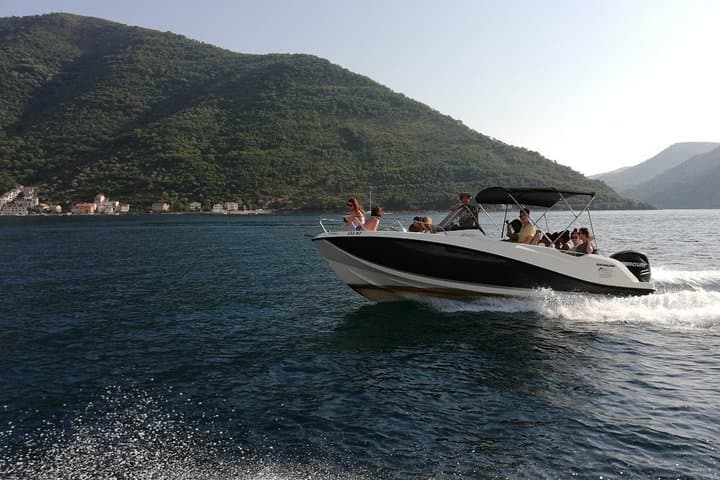
The bow parts glass-calm water and the limestone spine of the Lustica Peninsula slides into view like a weathered wall. Sunlight pierces the Adriatic at a particular angle and, for a few small minutes each day, it turns the Blue Cave into a lantern: the water glows with a color that makes you check your perception.
The bow parts glass-calm water and the limestone spine of the Lustica Peninsula slides into view like a weathered wall. Sunlight pierces the Adriatic at a particular angle and, for a few small minutes each day, it turns the Blue Cave into a lantern: the water glows with a color that makes you check your perception.
This is a short, exacting kind of beauty — the kind that rewards timing and curiosity. The three-hour private cruise out of Kotor threads the inner bay, brushes past fishing hamlets, and peels around Lustica’s rugged headland to the cave. The vessel will pause at the cave mouth so passengers can see that iridescent blue reflected on the cave’s ceiling and sometimes jump into warm, clear water to explore a hidden beach accessible only by swimming through a narrow tunnel.
Geologically, the cave and the surrounding coast are karst: fractured limestone shaped by millennia of wind and sea. The jagged cliff faces and underwater caverns are carved by chemical erosion and tectonic lift, which is why the cave’s entrance sits where it does — where the rock is thin enough for light to enter and reflect off the sand below.
Culturally, the Bay of Kotor is a layered place. Roman and Venetian walls still guard the bay towns; Austro-Hungarian batteries and World War relics punctuate the coast. Lustica itself keeps a quieter, maritime history — small-scale fishing, olive groves, and dashed-off stone houses that speak of an economy tied to the sea.
Practical guidance: the cave presents its best color from late morning to early afternoon when the sun is high and the beam reaches inside; mid-afternoon can still be beautiful but flatter. The tour includes free drinks and is private, so you can set the pace — ask the skipper about a longer swim or a detour to Žanjic beach if sea conditions allow. Bring swim shoes; the cave’s access points and the tiny beach have pebbly, sometimes slippery surfaces.
Safety and etiquette matter. Don’t anchor on Posidonia beds — these seagrass meadows are fragile and important to coastal biodiversity. Avoid using single-use plastics on board and rinse salt off gear quickly to prevent corrosion.
Who should go: travelers who want a compact, high-impact marine excursion with a local operator and a chance to swim and snorkel. It’s ideal as a half-day escape from Kotor or Herceg Novi and fits well into a longer Montenegro coastal itinerary.