THE ADVENTURE COLLECTIVE® · Independent discovery and booking for outdoor travel

Drive the classic Icelandic Golden Circle in a private, full‑day tour that links Þingvellir’s tectonic rift, the geyser field of Haukadalur, and the plunging tiers of Gullfoss. Expect short walks, powerful geology, and an English‑speaking driver‑guide who shapes the day to the weather.
Drive the classic Icelandic Golden Circle in a private, full‑day tour that links Þingvellir’s tectonic rift, the geyser field of Haukadalur, and the plunging tiers of Gullfoss. Expect short walks, powerful geology, and an English‑speaking driver‑guide who shapes the day to the weather.
A pale Arctic sun lifts off the rooftops of Reykjavík as the minivan pulls away, and the city’s neat geometry dissolves into open lava fields and scrub. Within an hour the road drops into Þingvellir’s rift valley—rock faces that seem to breathe, the Mid‑Atlantic Ridge visible as a wide fracture where two continents pull apart. The guide steps out, points to the fissures and the low stone assembly ground, and for a moment the wind feels like a remnant of the Viking centuries that made this place political ground as well as geological.
Verified experiences and guided adventures in the surrounding area.
Operated by Absorb Iceland · Reykjavik, Capital Region
A pale Arctic sun lifts off the rooftops of Reykjavík as the minivan pulls away, and the city’s neat geometry dissolves into open lava fields and scrub. Within an hour the road drops into Þingvellir’s rift valley—rock faces that seem to breathe, the Mid‑Atlantic Ridge visible as a wide fracture where two continents pull apart. The guide steps out, points to the fissures and the low stone assembly ground, and for a moment the wind feels like a remnant of the Viking centuries that made this place political ground as well as geological.
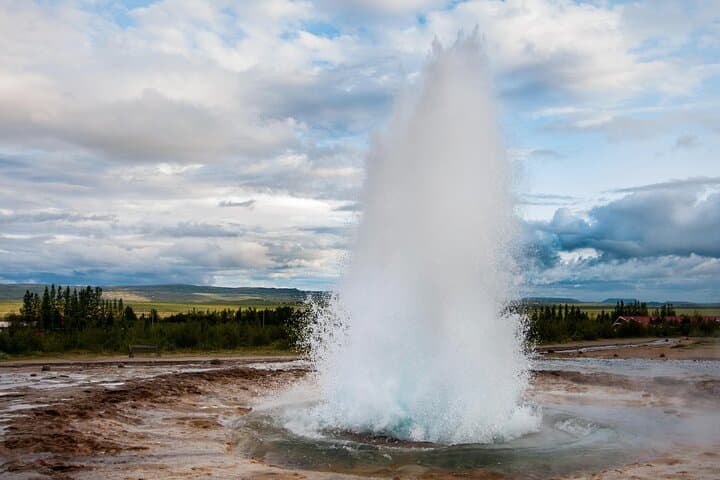
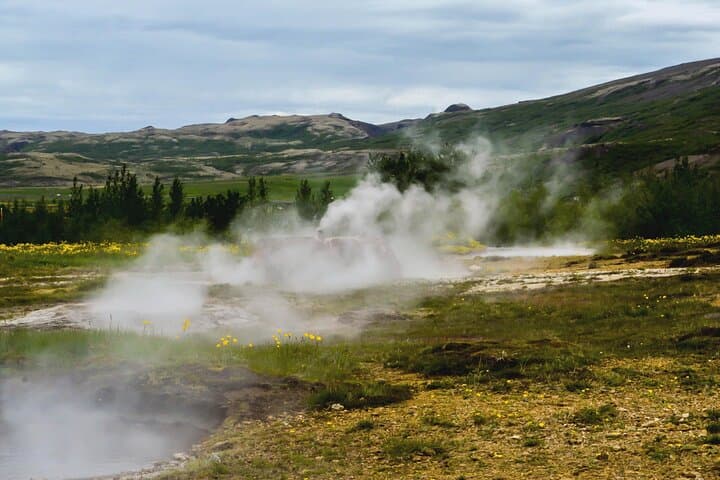
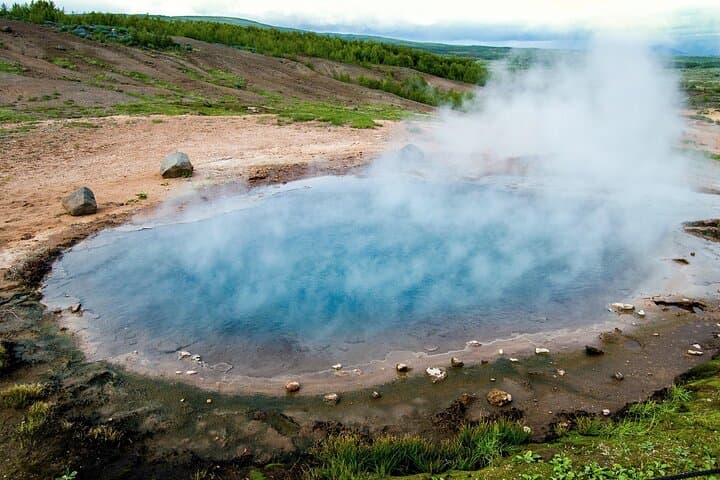
The tour moves like a well‑timed story: Þingvellir for history and quiet trails, Haukadalur to let the earth speak in steam, and then Gullfoss where the Hvítá river throws itself into basalt like it has a score to settle. Geology governs the route—rift valleys, geothermal fields, glacial rivers carving a narrow gorge—and each stop is compact: short boardwalks and lookout platforms rather than long scrambles. Þingvellir’s paths are generally flat with under 100 m of elevation change for casual walks to the viewing points; Geysir’s geothermal field is flat and ringed by safe boardwalks where Strokkur reliably hurls boiling water 20–30 meters skyward every 5–8 minutes; Gullfoss requires a few stair sections and gravel viewpoints, with exposed edges and occasional spray that can chill you even on a bright day.
Culturally the route ties modern Iceland to its origins. Þingvellir hosted Alþingi from AD 930—considered the oldest continuous parliament—where law and trade were debated on volcanic stone. Geysir lent its name to geysers worldwide and remains a reminder of the country’s living geology. Gullfoss’s conservation story adds a civic note: in the early 20th century, a campaign to save the falls helped define Icelandic environmental awareness.
Practicalities matter: expect an 8–10 hour day with pickup in the Reykjavík area, and roughly 200–300 km of driving depending on stops. The tour is private with an English‑speaking driver‑guide and includes park fees and hotel pickup. Wear layers and a wind‑proof shell; paths can be wet and uneven, and geothermal steam can surprise. Bring a charged camera battery, snacks, and a reusable water bottle—the bus stops for comfort breaks but the best photos happen from the viewpoints.
For timing, aim for early departures in summer to dodge crowds and late‑afternoon light for Gullfoss. In winter, road and weather conditions can shorten time at each site—confirm pickup and flexible scheduling. Above all, respect boardwalks and signage: these landscapes are active and fragile, and staying on paths protects both visitors and the features that brought them here.
easy.
8–10 hours.
Good for travelers with basic mobility; involves short walks (0–1 km) at each site and some stairs at Gullfoss.
The private tour runs about 8–10 hours and includes private transportation, an English‑speaking driver‑guide, park entrance fees, and pickup/drop‑off within the Reykjavík Capital Area.
Yes—paths at Þingvellir and Geysir are short and accessible; Gullfoss has stairs and rougher ground, so some mobility is helpful but overall it’s family‑friendly.
Meals are not included; the itinerary allows for stops at cafés or rest areas—pack snacks if you have dietary preferences or limited time between stops.
This is a private tour and the driver‑guide can often include nearby stops like Kerið crater or Brúarfoss if time and road conditions permit—confirm when booking.
Stay on marked boardwalks and viewing platforms—geothermal ground is fragile and boiling water can be hidden beneath crusts; obey signs and keep children close.
Pickup is available within the Reykjavík area and from nearby ports/airport by prior arrangement—provide your arrival details when booking.
Þingvellir hosted the Alþingi (Icelandic parliament) from AD 930; the site links the nation’s political origins to dramatic tectonic geography.
Geothermal areas and fragile moss on volcanic rock recover slowly—stick to paths, avoid taking stones, and support local guides who prioritize low‑impact visits.
Absorb Iceland operates guided outdoor trips and adventures with an emphasis on safety, stewardship, and memorable experiences.
A pale Arctic sun lifts off the rooftops of Reykjavík as the minivan pulls away, and the city’s neat geometry dissolves into open lava fields and scrub. Within an hour the road drops into Þingvellir’s rift valley—rock faces that seem to breathe, the Mid‑Atlantic Ridge visible as a wide fracture where two continents pull apart. The guide steps out, points to the fissures and the low stone assembly ground, and for a moment the wind feels like a remnant of the Viking centuries that made this place political ground as well as geological.
A pale Arctic sun lifts off the rooftops of Reykjavík as the minivan pulls away, and the city’s neat geometry dissolves into open lava fields and scrub. Within an hour the road drops into Þingvellir’s rift valley—rock faces that seem to breathe, the Mid‑Atlantic Ridge visible as a wide fracture where two continents pull apart. The guide steps out, points to the fissures and the low stone assembly ground, and for a moment the wind feels like a remnant of the Viking centuries that made this place political ground as well as geological.
The tour moves like a well‑timed story: Þingvellir for history and quiet trails, Haukadalur to let the earth speak in steam, and then Gullfoss where the Hvítá river throws itself into basalt like it has a score to settle. Geology governs the route—rift valleys, geothermal fields, glacial rivers carving a narrow gorge—and each stop is compact: short boardwalks and lookout platforms rather than long scrambles. Þingvellir’s paths are generally flat with under 100 m of elevation change for casual walks to the viewing points; Geysir’s geothermal field is flat and ringed by safe boardwalks where Strokkur reliably hurls boiling water 20–30 meters skyward every 5–8 minutes; Gullfoss requires a few stair sections and gravel viewpoints, with exposed edges and occasional spray that can chill you even on a bright day.
Culturally the route ties modern Iceland to its origins. Þingvellir hosted Alþingi from AD 930—considered the oldest continuous parliament—where law and trade were debated on volcanic stone. Geysir lent its name to geysers worldwide and remains a reminder of the country’s living geology. Gullfoss’s conservation story adds a civic note: in the early 20th century, a campaign to save the falls helped define Icelandic environmental awareness.
Practicalities matter: expect an 8–10 hour day with pickup in the Reykjavík area, and roughly 200–300 km of driving depending on stops. The tour is private with an English‑speaking driver‑guide and includes park fees and hotel pickup. Wear layers and a wind‑proof shell; paths can be wet and uneven, and geothermal steam can surprise. Bring a charged camera battery, snacks, and a reusable water bottle—the bus stops for comfort breaks but the best photos happen from the viewpoints.
For timing, aim for early departures in summer to dodge crowds and late‑afternoon light for Gullfoss. In winter, road and weather conditions can shorten time at each site—confirm pickup and flexible scheduling. Above all, respect boardwalks and signage: these landscapes are active and fragile, and staying on paths protects both visitors and the features that brought them here.