THE ADVENTURE COLLECTIVE® · Independent discovery and booking for outdoor travel

Drive one of the world’s most scenic coastal roads, meet a wild penguin colony, and walk to a cliff-top lighthouse on this private full-day tour of the Cape Peninsula. Tailored stops, an expert guide, and a luxury vehicle make this an accessible and flexible way to experience Cape Point and Boulders Beach.
Drive one of the world’s most scenic coastal roads, meet a wild penguin colony, and walk to a cliff-top lighthouse on this private full-day tour of the Cape Peninsula. Tailored stops, an expert guide, and a luxury vehicle make this an accessible and flexible way to experience Cape Point and Boulders Beach.
The road peels away from Cape Town and the Atlantic begins to claim the horizon — cool salt air pushing through an open window, cliffs folding into the sea. Your guide eases the vehicle onto Chapman’s Peak Drive, a ribbon of asphalt clinging to granite, and the day stretches like a map: beaches, a naval village, a colony of tuxedoed penguins, and the raw, exposed headland of Cape Point where ocean currents argue for territory.
Verified experiences and guided adventures in the surrounding area.
Operated by And Untamed Travel · Cape Town, Western Cape
The road peels away from Cape Town and the Atlantic begins to claim the horizon — cool salt air pushing through an open window, cliffs folding into the sea. Your guide eases the vehicle onto Chapman’s Peak Drive, a ribbon of asphalt clinging to granite, and the day stretches like a map: beaches, a naval village, a colony of tuxedoed penguins, and the raw, exposed headland of Cape Point where ocean currents argue for territory.
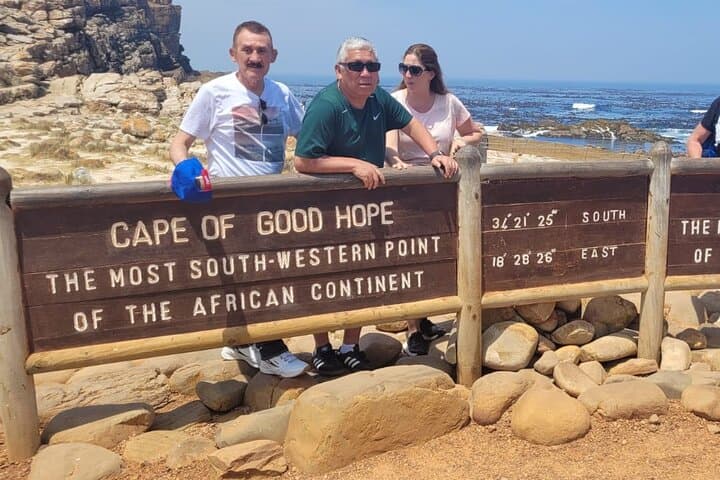
History here is blunt and maritime. The Cape of Good Hope has been a navigational fulcrum since European sailors rounded the tip in the 15th century; shipwrecks pockmark the coast and the old lighthouses bear the toll of fog and wind. Geologically the peninsula is ancient sandstone and granite—boulders at Simon’s Town, steep cliffs at Cape Point—and the soils support fynbos, a shrubland found nowhere else on Earth. Culturally, the Bo-Kaap quarter and Simon’s Town reveal layered histories: Malay cuisine, Cape Dutch architecture, and a naval heritage that shaped the towns scattered along False Bay.
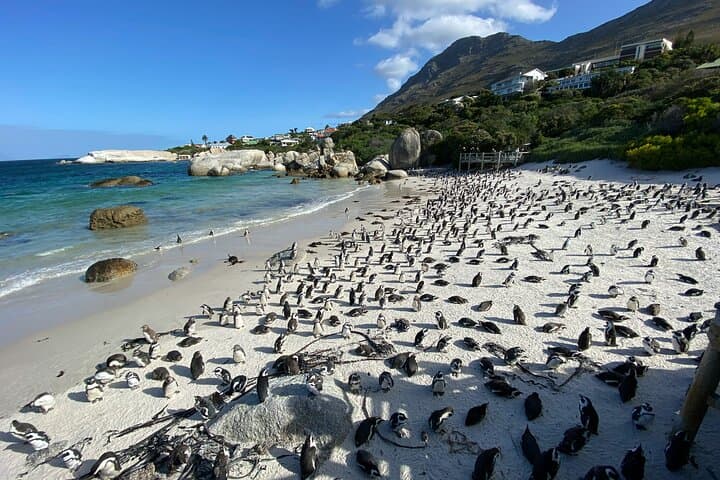
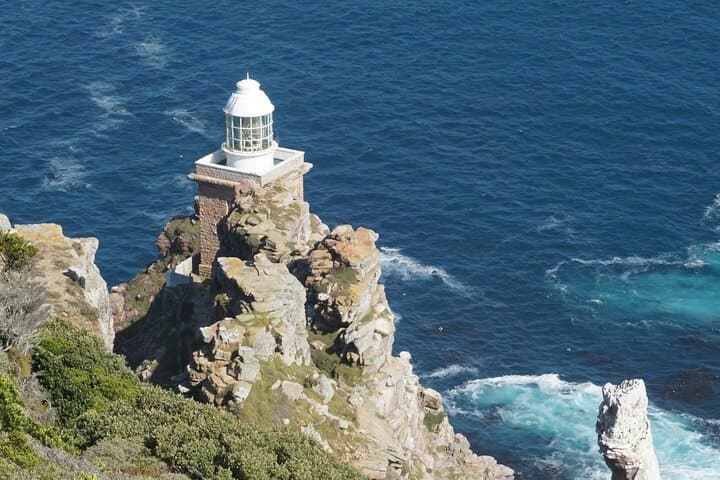
On a private full-day, the itinerary is flexible: snap panoramic photos from Chapman’s Peak, stroll the boardwalks at Boulders Beach among curious African penguins, tour Cape Point’s lighthouse trail (a steep 1–2 km round-trip with roughly 100–200 m of elevation change depending on your route), and pause for lunch in Simon’s Town where seafood and harbor views set the pace. The guide can detour to Groot Constantia or a seaside vineyard for a tasting — options that make this more a curated shoreline study than a fixed tour.
Practicalities are simple but matter. Expect roughly eight hours from hotel pickup to drop-off; much of that is scenic driving with frequent short walks. Wear sturdy walking shoes for the uneven paths at Cape Point and the sandy granite steps at Boulders. Windproof layers and sun protection are non-negotiable — the peninsula can switch from calm to gusting in minutes. Bring a refillable water bottle (one bottle is provided), a camera with a mid-range zoom for wildlife, and patience: penguins set their own schedule.
Conservation is part of the story; Cape Point lies within Table Mountain National Park and visitor behavior affects breeding penguins and fragile fynbos. Respect marked paths, obey signage for wildlife viewing, and follow your guide’s lead.
By late afternoon, the light softens on the ocean and the drive back toward Cape Town becomes a slow unwind: cliffs recede, towns reappear, and the day’s inventory of images — granite, sea, penguins, and lighthouse — settles into something practical and portable: memories you can return to.
easy.
8 hours.
Mostly seated with several short walks and one moderate hill climb; suitable for people comfortable with 1–2 km of walking and some stairs.
The tour runs approximately eight hours; pickup and drop-off times are flexible—guests are typically collected from their accommodation about 30 minutes before the scheduled start.
Admission to Cape Point and Boulders Beach is not included in the tour price; your guide will advise on where to purchase tickets or may handle them if arranged in advance.
You can observe penguins from designated boardwalks and viewing areas that allow close encounters without disturbing the birds; touching or feeding is prohibited.
Yes—this private tour is family-friendly and marked as wheelchair accessible for much of the transport and several sites; contact the operator about specific mobility needs.
Yes—the private format allows detours to vineyards, Groot Constantia, or extended stops for photography, subject to timing and entrance availability.
Wear layers, sun protection, comfortable shoes, and bring a refillable water bottle and waterproof cover for electronics—the weather can be changeable.
The Cape Peninsula has been a maritime crossroads since the 15th century; Simon’s Town was an important Royal Navy base and Groot Constantia is South Africa’s oldest wine estate.
Cape Point sits inside Table Mountain National Park—visitors are asked to stick to paths to protect endemic fynbos and to minimize disturbance to breeding penguins.
And Untamed Travel operates guided outdoor trips and adventures with an emphasis on safety, stewardship, and memorable experiences.
The road peels away from Cape Town and the Atlantic begins to claim the horizon — cool salt air pushing through an open window, cliffs folding into the sea. Your guide eases the vehicle onto Chapman’s Peak Drive, a ribbon of asphalt clinging to granite, and the day stretches like a map: beaches, a naval village, a colony of tuxedoed penguins, and the raw, exposed headland of Cape Point where ocean currents argue for territory.
The road peels away from Cape Town and the Atlantic begins to claim the horizon — cool salt air pushing through an open window, cliffs folding into the sea. Your guide eases the vehicle onto Chapman’s Peak Drive, a ribbon of asphalt clinging to granite, and the day stretches like a map: beaches, a naval village, a colony of tuxedoed penguins, and the raw, exposed headland of Cape Point where ocean currents argue for territory.
History here is blunt and maritime. The Cape of Good Hope has been a navigational fulcrum since European sailors rounded the tip in the 15th century; shipwrecks pockmark the coast and the old lighthouses bear the toll of fog and wind. Geologically the peninsula is ancient sandstone and granite—boulders at Simon’s Town, steep cliffs at Cape Point—and the soils support fynbos, a shrubland found nowhere else on Earth. Culturally, the Bo-Kaap quarter and Simon’s Town reveal layered histories: Malay cuisine, Cape Dutch architecture, and a naval heritage that shaped the towns scattered along False Bay.
On a private full-day, the itinerary is flexible: snap panoramic photos from Chapman’s Peak, stroll the boardwalks at Boulders Beach among curious African penguins, tour Cape Point’s lighthouse trail (a steep 1–2 km round-trip with roughly 100–200 m of elevation change depending on your route), and pause for lunch in Simon’s Town where seafood and harbor views set the pace. The guide can detour to Groot Constantia or a seaside vineyard for a tasting — options that make this more a curated shoreline study than a fixed tour.
Practicalities are simple but matter. Expect roughly eight hours from hotel pickup to drop-off; much of that is scenic driving with frequent short walks. Wear sturdy walking shoes for the uneven paths at Cape Point and the sandy granite steps at Boulders. Windproof layers and sun protection are non-negotiable — the peninsula can switch from calm to gusting in minutes. Bring a refillable water bottle (one bottle is provided), a camera with a mid-range zoom for wildlife, and patience: penguins set their own schedule.
Conservation is part of the story; Cape Point lies within Table Mountain National Park and visitor behavior affects breeding penguins and fragile fynbos. Respect marked paths, obey signage for wildlife viewing, and follow your guide’s lead.
By late afternoon, the light softens on the ocean and the drive back toward Cape Town becomes a slow unwind: cliffs recede, towns reappear, and the day’s inventory of images — granite, sea, penguins, and lighthouse — settles into something practical and portable: memories you can return to.