THE ADVENTURE COLLECTIVE® · Independent discovery and booking for outdoor travel

Cover Budapest’s essentials in a single, expertly guided day. This private eight‑hour tour by air‑conditioned car mixes short walks with panoramic stops—perfect for first‑time visitors who want history, views and local flavor without the rush.
Cover Budapest’s essentials in a single, expertly guided day. This private eight‑hour tour by air‑conditioned car mixes short walks with panoramic stops—perfect for first‑time visitors who want history, views and local flavor without the rush.
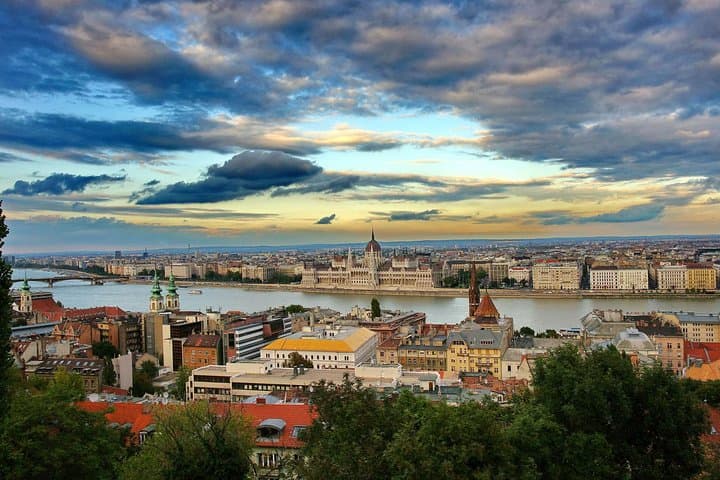
The morning fog lifts off the Danube and the city exhales. A clean, air‑conditioned minivan pulls up; the driver folds a map and the guide checks names. For eight hours Budapest opens itself in steady chapters: ornate façades on Andrássy Avenue, the parliamentary silhouette catching light along Kossuth Lajos Square, then the sudden switch to medieval cobbles and stone staircases on the Buda side. The rhythm of the day is alternately rolling kilometres by road and short, deliberate walks to viewpoints where the river dares you to look further.
Verified experiences and guided adventures in the surrounding area.
Operated by Gabor Dora · Budapest, Budapest
The morning fog lifts off the Danube and the city exhales. A clean, air‑conditioned minivan pulls up; the driver folds a map and the guide checks names. For eight hours Budapest opens itself in steady chapters: ornate façades on Andrássy Avenue, the parliamentary silhouette catching light along Kossuth Lajos Square, then the sudden switch to medieval cobbles and stone staircases on the Buda side. The rhythm of the day is alternately rolling kilometres by road and short, deliberate walks to viewpoints where the river dares you to look further.
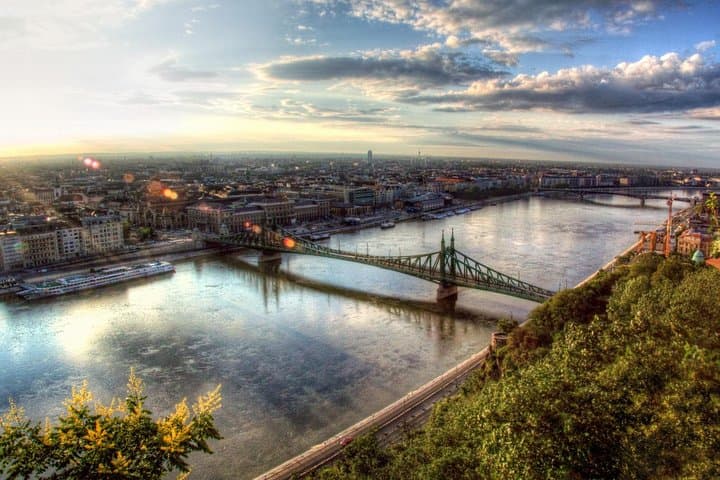
This is a city where geology and history intersect. The Danube, Europe’s second longest river, carved the line between Buda’s limestone hills and Pest’s flat floodplain; thermal springs pushed through for centuries, seeding Ottoman baths and, later, fin‑de‑siècle spa culture. Budapest coalesced from separate towns—Buda, Pest and Óbuda—into a single capital in 1873, and the architecture still reads like a timeline: Roman ruins underfoot, Ottoman baths, neo‑Renaissance boulevards and austere 20th‑century monuments.
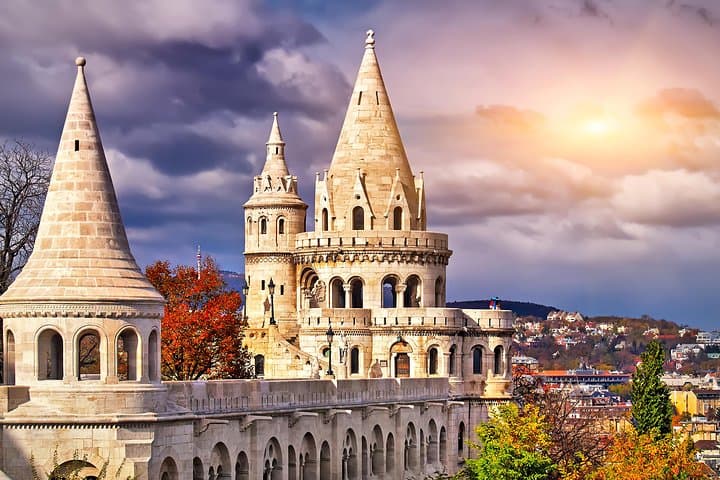
Culture here is practical and performative: markets bustle with paprika and lángos, ruin bars repurpose derelict interiors into late‑night social rooms, and memorials along the riverbank demand quiet attention. Local guides thread these layers together, pointing out the Parliament’s carved details, the story behind the Fisherman’s Bastion, and why the Citadel makes the city appear deliberate from above.
Practicalities are straightforward. The tour is eight hours of guided discovery by car with multiple short walks—plan on 0.5–2 km of walking total and several stair or cobbled sections with up to ~150 m of cumulative elevation at viewpoints. The pace suits travelers who want a comprehensive orientation without long, continuous hikes. Wear supportive shoes for cobbles and steps, and bring a lightweight jacket; the riverbank can be breezy year‑round. Carry water and euro or forint for small purchases and market snacks; many interiors require separate admission.
Timing matters: early starts beat tour‑bus congestion at key viewpoints; late‑day light transforms the bridges into a string of bulbs. Accessibility is good in the vehicle, but some stops (narrow streets, historic stairs) may be uneven. Book pickup details in advance—drivers collect from hotels, apartments, ports or the airport—and tell the operator if you need infant seats or wheelchair access.
This private, customizable day is a compact education in Budapest’s topography, politics and palate: it gives you the landmarks, the stories and the small places you’ll want to return to on your own.
easy.
8 hours.
Low; suitable for travelers comfortable with short urban walks and occasional steps
Pickup and drop‑off can be arranged from any Budapest hotel, apartment, port or the airport—confirm your exact pickup time with the local supplier after booking.
The vehicle is wheelchair accessible; however, some historic stops include uneven cobbles or stairs—inform the operator of accessibility needs so they can tailor the itinerary.
Basic transportation, guide service and taxes are included; individual admissions to museums, thermal baths or special attractions are typically paid on site unless otherwise noted.
Yes—infant seats are available on request; indicate child ages when booking so the supplier can prepare appropriate restraints.
Guides are commonly offered in English and Hungarian; confirm language availability when booking to ensure a match.
All sales are final—this tour provides no refunds for cancellations, so review terms before booking.
Budapest formed officially in 1873 from the merger of Buda, Pest and Óbuda; its layers include Roman settlements, Ottoman baths and Austro‑Hungarian imperial building projects.
Tourism concentrates at landmarks and riverbanks—respect memorial sites and use marked paths; using public transport or guided vehicles helps reduce localized foot traffic.
Gabor Dora operates guided outdoor trips and adventures with an emphasis on safety, stewardship, and memorable experiences.
The morning fog lifts off the Danube and the city exhales. A clean, air‑conditioned minivan pulls up; the driver folds a map and the guide checks names. For eight hours Budapest opens itself in steady chapters: ornate façades on Andrássy Avenue, the parliamentary silhouette catching light along Kossuth Lajos Square, then the sudden switch to medieval cobbles and stone staircases on the Buda side. The rhythm of the day is alternately rolling kilometres by road and short, deliberate walks to viewpoints where the river dares you to look further.
The morning fog lifts off the Danube and the city exhales. A clean, air‑conditioned minivan pulls up; the driver folds a map and the guide checks names. For eight hours Budapest opens itself in steady chapters: ornate façades on Andrássy Avenue, the parliamentary silhouette catching light along Kossuth Lajos Square, then the sudden switch to medieval cobbles and stone staircases on the Buda side. The rhythm of the day is alternately rolling kilometres by road and short, deliberate walks to viewpoints where the river dares you to look further.
This is a city where geology and history intersect. The Danube, Europe’s second longest river, carved the line between Buda’s limestone hills and Pest’s flat floodplain; thermal springs pushed through for centuries, seeding Ottoman baths and, later, fin‑de‑siècle spa culture. Budapest coalesced from separate towns—Buda, Pest and Óbuda—into a single capital in 1873, and the architecture still reads like a timeline: Roman ruins underfoot, Ottoman baths, neo‑Renaissance boulevards and austere 20th‑century monuments.
Culture here is practical and performative: markets bustle with paprika and lángos, ruin bars repurpose derelict interiors into late‑night social rooms, and memorials along the riverbank demand quiet attention. Local guides thread these layers together, pointing out the Parliament’s carved details, the story behind the Fisherman’s Bastion, and why the Citadel makes the city appear deliberate from above.
Practicalities are straightforward. The tour is eight hours of guided discovery by car with multiple short walks—plan on 0.5–2 km of walking total and several stair or cobbled sections with up to ~150 m of cumulative elevation at viewpoints. The pace suits travelers who want a comprehensive orientation without long, continuous hikes. Wear supportive shoes for cobbles and steps, and bring a lightweight jacket; the riverbank can be breezy year‑round. Carry water and euro or forint for small purchases and market snacks; many interiors require separate admission.
Timing matters: early starts beat tour‑bus congestion at key viewpoints; late‑day light transforms the bridges into a string of bulbs. Accessibility is good in the vehicle, but some stops (narrow streets, historic stairs) may be uneven. Book pickup details in advance—drivers collect from hotels, apartments, ports or the airport—and tell the operator if you need infant seats or wheelchair access.
This private, customizable day is a compact education in Budapest’s topography, politics and palate: it gives you the landmarks, the stories and the small places you’ll want to return to on your own.