THE ADVENTURE COLLECTIVE® · Independent discovery and booking for outdoor travel

Drive from Tokyo to two of Japan's most iconic landscapes: Mount Fuji's mirror-surface lakes and Hakone's volcanic shores. This private, English-guided photography tour combines curated viewpoints, cultural stops like Chureito Pagoda and Hakone Shrine, and flexible pacing for photographers and sightseers alike.
Drive from Tokyo to two of Japan's most iconic landscapes: Mount Fuji's mirror-surface lakes and Hakone's volcanic shores. This private, English-guided photography tour combines curated viewpoints, cultural stops like Chureito Pagoda and Hakone Shrine, and flexible pacing for photographers and sightseers alike.
You step into a private car outside Tokyo and the city hum drops away as roads funnel toward a mountain that seems to grow with every mile. Mount Fuji doesn't ask for attention; it commands it—its cone peeking through silhouetted cedar and pine, then revealing itself in firm, geometric clarity. This private Fuji and Hakone tour is built around those reveal moments: lakes that mirror the peak, a five-storied pagoda framed against sky, sulfur steam rising like breath from the earth.
Verified experiences and guided adventures in the surrounding area.
Operated by Explore japan together · Fujikawaguchiko, Yamanashi Prefecture
You step into a private car outside Tokyo and the city hum drops away as roads funnel toward a mountain that seems to grow with every mile. Mount Fuji doesn't ask for attention; it commands it—its cone peeking through silhouetted cedar and pine, then revealing itself in firm, geometric clarity. This private Fuji and Hakone tour is built around those reveal moments: lakes that mirror the peak, a five-storied pagoda framed against sky, sulfur steam rising like breath from the earth.
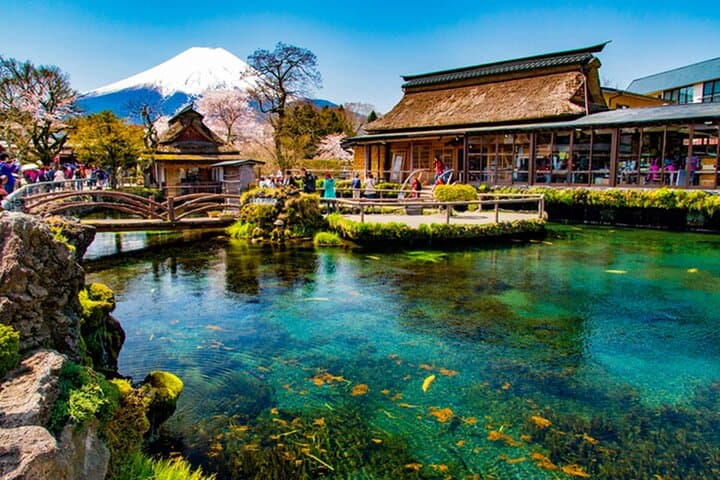
The route threads through two distinct landscapes. Around Fuji, the terrain is carved by lava and glacial melt—crater basins that became the Fuji Five Lakes and fertile lowlands dotted with villages like Oshino Hakkai, whose crystalline springs still feed local rice paddies. In Hakone, geology turns theatrical: a caldera lake formed by explosive eruptions, steaming vents at Owakudani, and hot springs that made the area a rest stop for travelers of the Edo era.
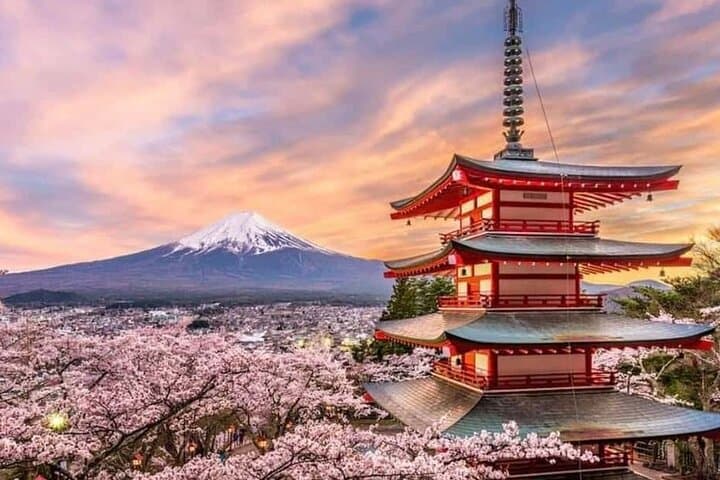
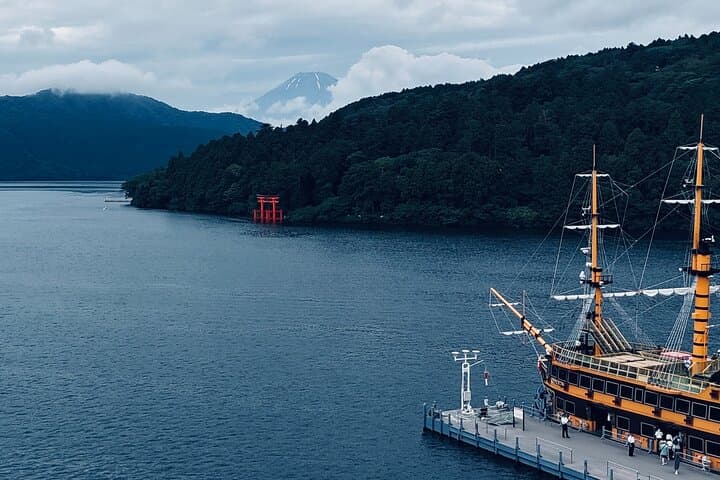
Culturally, the day is layered. Fujiyoshida’s Chureito Pagoda is a Shinto marker turned global image: climb the 400 steps and you get a composition photographers plan for—pagoda, torii of the nearby shrine, and Fuji beyond. Hakone’s red torii in Lake Ashinoko speaks to a different ritual: lakeshore worship and pilgrim routes that evolved into modern tourism. Guides on this private tour translate not only language but context, pointing out how volcanic forces shaped local crafts, cuisine, and hot-spring customs.
Practicality keeps the itinerary useful. Tours run 8–10 hours and are fully customizable: focus on Fuji viewpoints, Hakone’s geothermal sites, or a mixed day that balances both. Pickup from central Tokyo, airports, or select hotels is included, and vehicles offer onboard Wi‑Fi and space for camera gear.
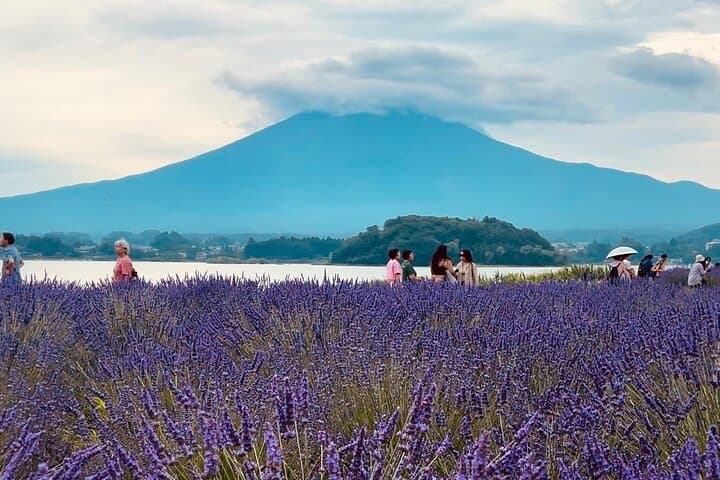
Timing is everything. Early morning or late afternoon yields the cleanest Fuji silhouettes and mirrorlike lakes; midday can be hazy. Expect multiple short walks—stone steps, lakeside promenades, and brief stair climbs—so pack layers and sensible shoes. Photography-wise, your guide helps stage shots at Kawaguchiko, Chureito Pagoda, Owakudani, and Lake Ashi; they know where crowds thin and where light sharpens the mountain’s lines.
For travelers who want a curated, low-stress way to see Japan’s most iconic landscape, this private tour delivers both, pairing local knowledge and logistical ease with the kind of photographic moments people travel across oceans to capture. Respect the sites—stay on paths, follow shrine etiquette, and you’ll leave with images and context that last longer than a postcard.
easy.
8–10 hours.
Light fitness for short walks and stair climbs; mobility-friendly options available for most stops
The tour runs approximately 8–10 hours (480–600 minutes) depending on itinerary choices and traffic.
Yes—pickup from Tokyo hotels, select airports, and custom locations is offered; confirm your pickup point when booking.
Absolutely; choose to focus on Fuji, Hakone, or a mix—your guide will adapt timing and stops based on weather and preferences.
The vehicle and many viewpoints are wheelchair accessible, but some sites (like Chureito Pagoda) require stair climbs—check with the operator for specific accessibility needs.
Parking fees are included; individual attraction admission fees or optional activities like ropeways may be extra—confirm with your guide or at booking.
The operator may adjust the route to maximize clear views elsewhere (lakes, Hakone vistas) and offers cancellation/refund policies if weather prevents core experiences.
Mount Fuji has been a sacred site and inspiration in Japanese art for centuries; Hakone developed as an Edo-period checkpoint and hot-spring rest stop for travelers between Kyoto and Edo.
Much of the Fuji-Hakone area is protected; follow marked paths, minimize drone use near sensitive sites, and pack out waste to limit visitor impact.
Explore japan together operates guided outdoor trips and adventures with an emphasis on safety, stewardship, and memorable experiences.
You step into a private car outside Tokyo and the city hum drops away as roads funnel toward a mountain that seems to grow with every mile. Mount Fuji doesn't ask for attention; it commands it—its cone peeking through silhouetted cedar and pine, then revealing itself in firm, geometric clarity. This private Fuji and Hakone tour is built around those reveal moments: lakes that mirror the peak, a five-storied pagoda framed against sky, sulfur steam rising like breath from the earth.
You step into a private car outside Tokyo and the city hum drops away as roads funnel toward a mountain that seems to grow with every mile. Mount Fuji doesn't ask for attention; it commands it—its cone peeking through silhouetted cedar and pine, then revealing itself in firm, geometric clarity. This private Fuji and Hakone tour is built around those reveal moments: lakes that mirror the peak, a five-storied pagoda framed against sky, sulfur steam rising like breath from the earth.
The route threads through two distinct landscapes. Around Fuji, the terrain is carved by lava and glacial melt—crater basins that became the Fuji Five Lakes and fertile lowlands dotted with villages like Oshino Hakkai, whose crystalline springs still feed local rice paddies. In Hakone, geology turns theatrical: a caldera lake formed by explosive eruptions, steaming vents at Owakudani, and hot springs that made the area a rest stop for travelers of the Edo era.
Culturally, the day is layered. Fujiyoshida’s Chureito Pagoda is a Shinto marker turned global image: climb the 400 steps and you get a composition photographers plan for—pagoda, torii of the nearby shrine, and Fuji beyond. Hakone’s red torii in Lake Ashinoko speaks to a different ritual: lakeshore worship and pilgrim routes that evolved into modern tourism. Guides on this private tour translate not only language but context, pointing out how volcanic forces shaped local crafts, cuisine, and hot-spring customs.
Practicality keeps the itinerary useful. Tours run 8–10 hours and are fully customizable: focus on Fuji viewpoints, Hakone’s geothermal sites, or a mixed day that balances both. Pickup from central Tokyo, airports, or select hotels is included, and vehicles offer onboard Wi‑Fi and space for camera gear.
Timing is everything. Early morning or late afternoon yields the cleanest Fuji silhouettes and mirrorlike lakes; midday can be hazy. Expect multiple short walks—stone steps, lakeside promenades, and brief stair climbs—so pack layers and sensible shoes. Photography-wise, your guide helps stage shots at Kawaguchiko, Chureito Pagoda, Owakudani, and Lake Ashi; they know where crowds thin and where light sharpens the mountain’s lines.
For travelers who want a curated, low-stress way to see Japan’s most iconic landscape, this private tour delivers both, pairing local knowledge and logistical ease with the kind of photographic moments people travel across oceans to capture. Respect the sites—stay on paths, follow shrine etiquette, and you’ll leave with images and context that last longer than a postcard.