THE ADVENTURE COLLECTIVE® · Independent discovery and booking for outdoor travel

A private Mercedes and an English‑speaking driver deliver you from Rome to three of southern Italy’s most compelling stops: the ash‑frozen streets of Pompeii, lemon-scented Sorrento and the cliffside glamour of Positano. This driver‑only day lets you self-tour at your pace while the coast dares you to look up at every turn.
A private Mercedes and an English‑speaking driver deliver you from Rome to three of southern Italy’s most compelling stops: the ash‑frozen streets of Pompeii, lemon-scented Sorrento and the cliffside glamour of Positano. This driver‑only day lets you self-tour at your pace while the coast dares you to look up at every turn.
The car slips out of Rome before dawn, a private Mercedes easing onto the autostrada while the city’s dome-scapes blur past. In the back seat, travelers trade maps and sleepy conversation as olive groves and vineyards stretch southward. By midmorning the air tastes different — warmer, salted by the nearby sea — and Mount Vesuvius reappears on the horizon, a dark, patient presence above the town that time forgot.
Verified experiences and guided adventures in the surrounding area.
Operated by Stefano Rome Day Tours · Pompeii, Campania
The car slips out of Rome before dawn, a private Mercedes easing onto the autostrada while the city’s dome-scapes blur past. In the back seat, travelers trade maps and sleepy conversation as olive groves and vineyards stretch southward. By midmorning the air tastes different — warmer, salted by the nearby sea — and Mount Vesuvius reappears on the horizon, a dark, patient presence above the town that time forgot.
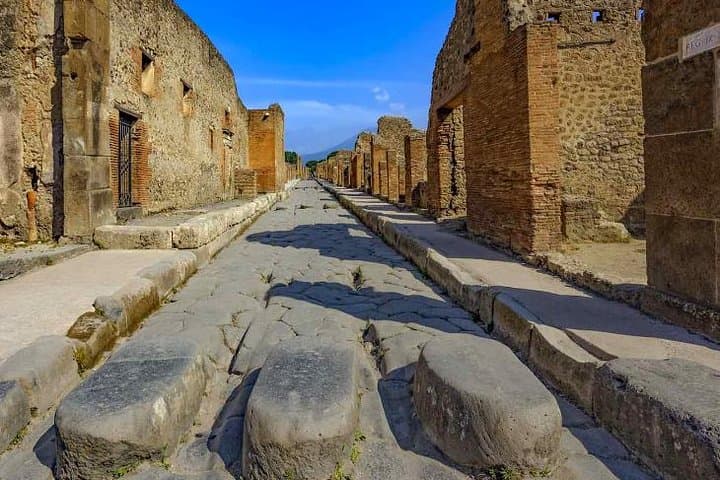
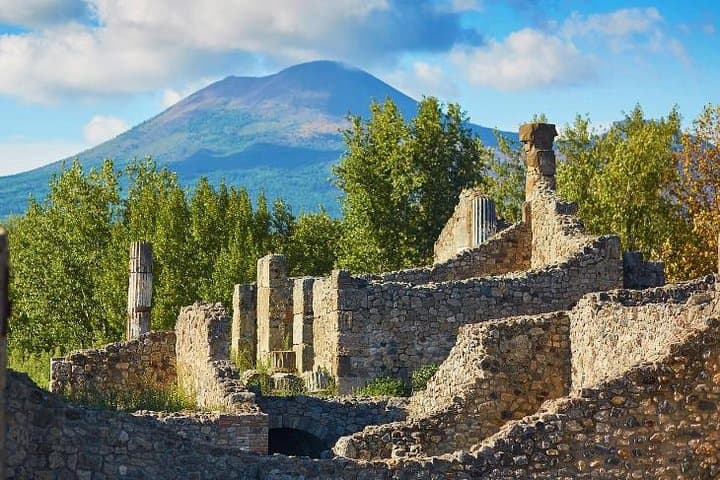
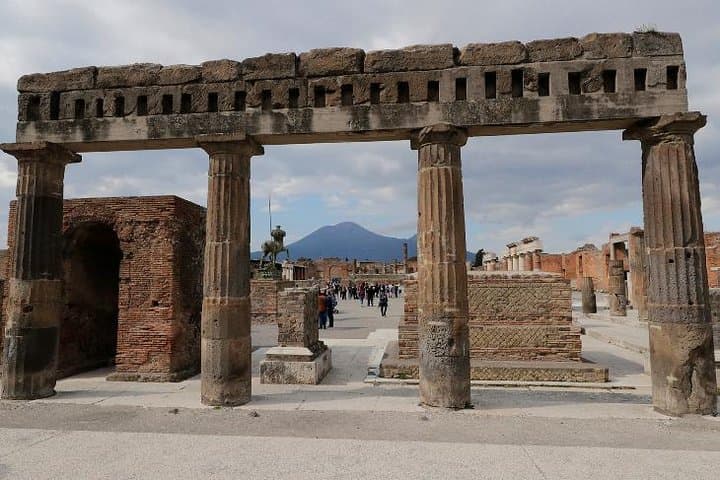
Pompeii arrives with the suddenness of a stage set. Streets of compacted volcanic ash and stone still hold the grooves of Roman cartwheels; frescoed villas, bakeries and baths stand half-exposed like archaeological film frames. Geologically, the site is a record of pyroclastic flows and fine pumice that preserved daily life in 79 AD, and the dust that buried it makes every worn threshold oddly intimate: the past is visible in the texture of the ground beneath your feet.
After two hours of self-guided exploration — the tour supplies the drive, not a guide — the itinerary moves to Sorrento, where lemon groves and carved wooden goods mark a shift from ruin to ritual. Sorrento’s piazzas invite a long lunch: citrus-scented marinades, seafood, and Limoncello produced from local Amalfi lemons. The final act is the Amalfi drive itself, a cinematic ribbon of cliff road that drops into Positano. Here pastel houses stack up from the sea in tight terraces, and narrow lanes lead to beaches, artisan shops and cafés.
Culturally the stretch between Pompeii and the Amalfi Coast is a collision of epochs: Roman engineering, medieval fishing communities and modern Italian hospitality. Practical realities matter — Italian law requires licensed guides for on-foot guided tours inside archaeological sites, so visitors should expect to self-tour Pompeii and buy the on-site admission (current price noted in the itinerary).
For travelers, this is a long, rewarding day. Expect early pickup from your Rome accommodation and a return in the evening; total time away can stretch to 10–11 hours depending on traffic. Wear sturdy shoes for uneven cobbles, bring a refillable water bottle (bottled water is included in the vehicle), and carry some euros for entrance fees and market purchases. If you’re prone to motion sickness, choose a seat in the vehicle that offers the steadiest view and consider travel medication for the Amalfi coastal road.
This driver-only option is ideal for independent explorers who want comfortable transport and flexible stops without committing to a walking guide. Time your visit for shoulder seasons if possible — spring and fall balance milder weather with lighter crowds — and plan lunch in Sorrento to break the day into manageable pieces. The route asks little of your technical skill but plenty of curiosity: the reward is a concentrated encounter with Italy’s layered history and coastal light that pushes you forward at every turn.
moderate.
8–11 hours.
Should be comfortable walking 1–2 hours at a stretch on uneven surfaces and able to manage a full day of travel.
No — the driver is not a licensed guide; Italian law requires licensed guides for guided on‑foot visits, so this booking is driver-only and you will self-tour Pompeii.
No — Pompeii entry is not included and is currently around €15 per person to be purchased on‑site.
Pickup is from your accommodation in Rome; pick up time is typically 8:00 am with return around 7:00 pm per the supplier notes.
No — lunch in Sorrento is at your own expense; the vehicle provides bottled water and transport.
Expect roughly 2.5–3 hours each way depending on traffic; total driving time varies with conditions on the autostrada.
Yes — infant seats are available and the vehicle can accommodate strollers, but keep in mind walking on uneven terrain at Pompeii and Positano is required.
Pompeii was buried by Mount Vesuvius’s 79 AD eruption; the town’s ash sealed homes, art and daily life, giving archaeologists a unique snapshot of Roman urban life.
High foot traffic threatens fragile frescoes and ruins; stick to marked paths in Pompeii and support local businesses that practice sustainable tourism on the Amalfi Coast.
Stefano Rome Day Tours operates guided outdoor trips and adventures with an emphasis on safety, stewardship, and memorable experiences.
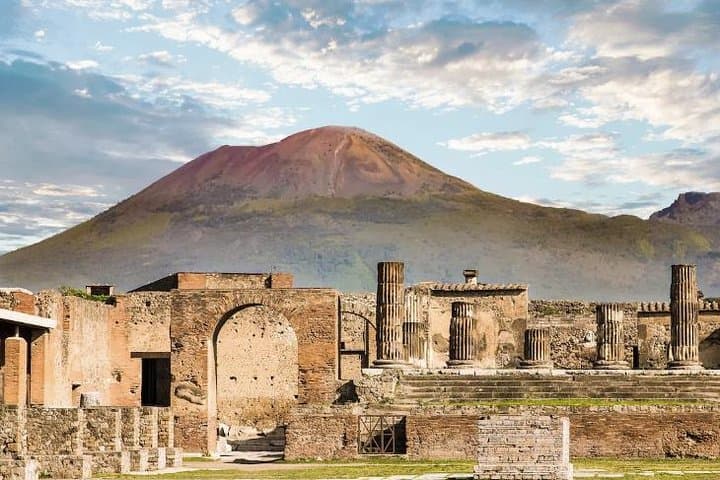
The car slips out of Rome before dawn, a private Mercedes easing onto the autostrada while the city’s dome-scapes blur past. In the back seat, travelers trade maps and sleepy conversation as olive groves and vineyards stretch southward. By midmorning the air tastes different — warmer, salted by the nearby sea — and Mount Vesuvius reappears on the horizon, a dark, patient presence above the town that time forgot.
The car slips out of Rome before dawn, a private Mercedes easing onto the autostrada while the city’s dome-scapes blur past. In the back seat, travelers trade maps and sleepy conversation as olive groves and vineyards stretch southward. By midmorning the air tastes different — warmer, salted by the nearby sea — and Mount Vesuvius reappears on the horizon, a dark, patient presence above the town that time forgot.
Pompeii arrives with the suddenness of a stage set. Streets of compacted volcanic ash and stone still hold the grooves of Roman cartwheels; frescoed villas, bakeries and baths stand half-exposed like archaeological film frames. Geologically, the site is a record of pyroclastic flows and fine pumice that preserved daily life in 79 AD, and the dust that buried it makes every worn threshold oddly intimate: the past is visible in the texture of the ground beneath your feet.
After two hours of self-guided exploration — the tour supplies the drive, not a guide — the itinerary moves to Sorrento, where lemon groves and carved wooden goods mark a shift from ruin to ritual. Sorrento’s piazzas invite a long lunch: citrus-scented marinades, seafood, and Limoncello produced from local Amalfi lemons. The final act is the Amalfi drive itself, a cinematic ribbon of cliff road that drops into Positano. Here pastel houses stack up from the sea in tight terraces, and narrow lanes lead to beaches, artisan shops and cafés.
Culturally the stretch between Pompeii and the Amalfi Coast is a collision of epochs: Roman engineering, medieval fishing communities and modern Italian hospitality. Practical realities matter — Italian law requires licensed guides for on-foot guided tours inside archaeological sites, so visitors should expect to self-tour Pompeii and buy the on-site admission (current price noted in the itinerary).
For travelers, this is a long, rewarding day. Expect early pickup from your Rome accommodation and a return in the evening; total time away can stretch to 10–11 hours depending on traffic. Wear sturdy shoes for uneven cobbles, bring a refillable water bottle (bottled water is included in the vehicle), and carry some euros for entrance fees and market purchases. If you’re prone to motion sickness, choose a seat in the vehicle that offers the steadiest view and consider travel medication for the Amalfi coastal road.
This driver-only option is ideal for independent explorers who want comfortable transport and flexible stops without committing to a walking guide. Time your visit for shoulder seasons if possible — spring and fall balance milder weather with lighter crowds — and plan lunch in Sorrento to break the day into manageable pieces. The route asks little of your technical skill but plenty of curiosity: the reward is a concentrated encounter with Italy’s layered history and coastal light that pushes you forward at every turn.