THE ADVENTURE COLLECTIVE® · Independent discovery and booking for outdoor travel

Leave the Adriatic hubbub behind for a private day trip into Plitvice Lakes National Park. Walk across rain-polished boardwalks, ride a short lake ferry and arrive at Veliki Slap—the park’s thunderous finale—before returning to Split in time for dinner.
Leave the Adriatic hubbub behind for a private day trip into Plitvice Lakes National Park. Walk across rain-polished boardwalks, ride a short lake ferry and arrive at Veliki Slap—the park’s thunderous finale—before returning to Split in time for dinner.
You set off before dawn along the Split Riva, the Adriatic still glassy and the promenade empty save for a few fishermen and the rumble of the minibus engine. The drive north climbs out of coastal light into the pale folds of karst country: limestone cliffs, scrub pines, and sinkholes that give away the geological story of this place. By mid-morning you’re at the park gates, and the calm of Plitvice settles around you — water finding its own lines, plunging and pooling, daring you to keep pace.
Verified experiences and guided adventures in the surrounding area.
Operated by Šugaman Tours · Plitvička Jezera, Lika-Senj County
You set off before dawn along the Split Riva, the Adriatic still glassy and the promenade empty save for a few fishermen and the rumble of the minibus engine. The drive north climbs out of coastal light into the pale folds of karst country: limestone cliffs, scrub pines, and sinkholes that give away the geological story of this place. By mid-morning you’re at the park gates, and the calm of Plitvice settles around you — water finding its own lines, plunging and pooling, daring you to keep pace.
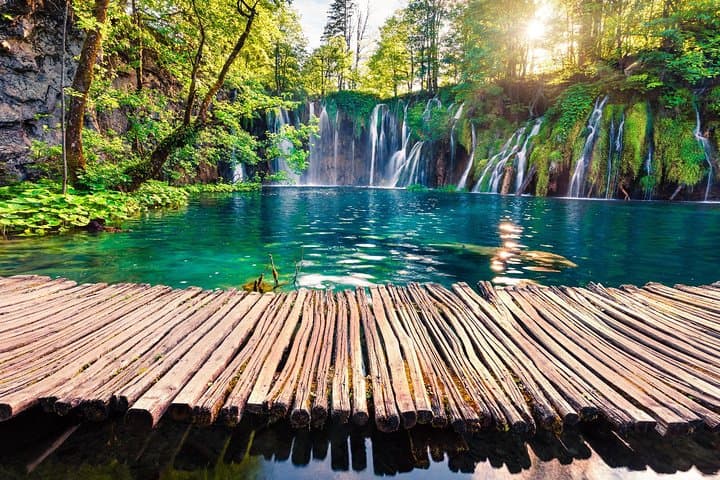
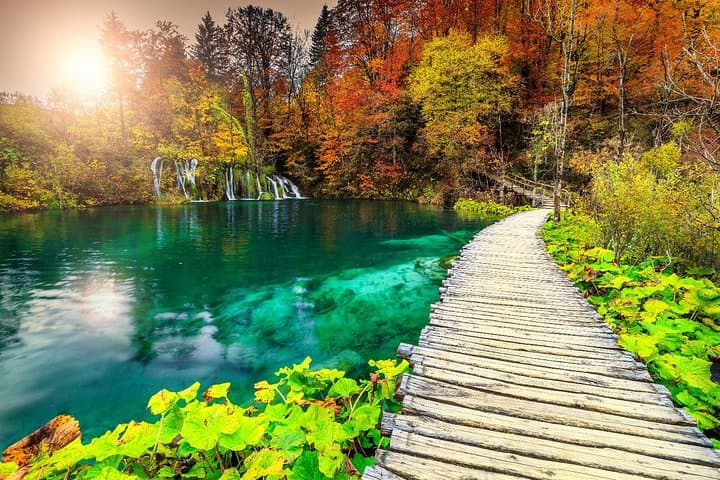
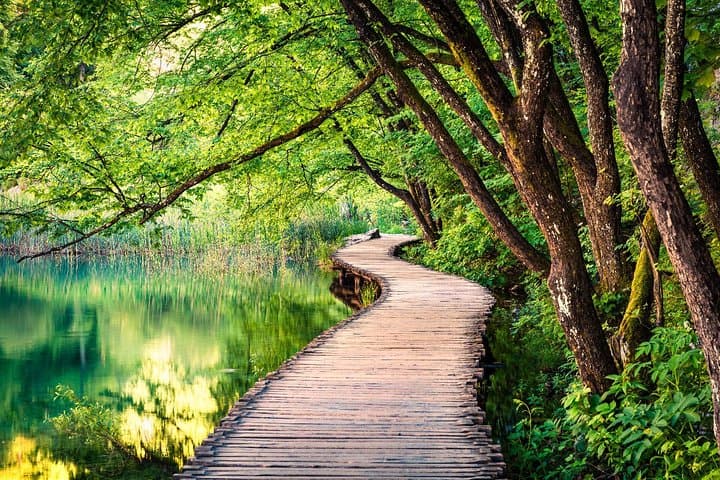
Walkways thread across emerald pools and under cliffs, wooden planks humming with the footsteps of other visitors. The park is divided into Upper and Lower Lakes, each offering distinct viewpoints: the Upper’s intimate cascades and the Lower’s cathedral-scale ledges and the park’s crown, Veliki Slap — a 78-meter fall that finishes the day with theatrical force. Boats skim between shores on Kozjak Lake and an internal shuttle train cuts through the forested ridge, making the network of trails comfortably manageable.
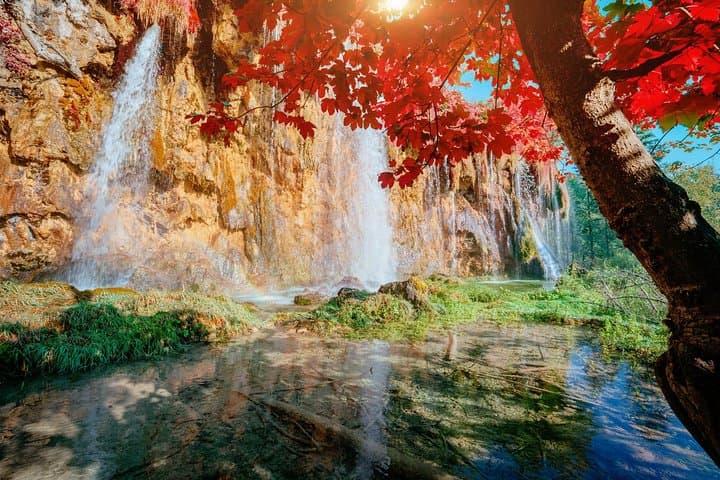
Geology and human history collide here. Over millennia, mineral-rich water deposited travertine barriers that built the terraces you walk on today; those same processes created the park’s UNESCO-worthy landscape. Culturally, the area sits within Lika, a region of hardy pastoral traditions and simple, seasonal plates—expect local cheeses and slow-cooked meats if your guide stops for lunch at a nearby restaurant.
Practicalities matter on a long day trip: the full private tour runs about 11 hours round-trip from Split, with roughly 6–8 kilometers of walking inside the park depending on the route and 100–200 meters cumulative elevation gain across boardwalks and switchbacks. Admission is not always included, so buy or reserve your park ticket in advance for peak months, and bring layered rain protection—weather can shift quickly in a karst landscape.
Move deliberately to avoid crowds: start with the Upper Lakes for intimate photo opportunities, then circle to the Lower Lakes before the afternoon, when coaches arrive. Wear sturdy shoes—the boardwalks are often wet and can be slippery—and carry water and snacks; restroom facilities are at trailheads but limited on routes.
A private guide rewrites the rhythm of the day: they time boat crossings, explain travertine formation, and point out rare flowers or kingfishers. Finish the day back on the Riva with a late plate of peka or grilled fish in Split—a grounded reward after a day spent following water’s patient, relentless logic through one of Europe’s most singular national parks.
moderate.
11 hours (approx.).
Moderate fitness required: expect several hours of walking on uneven boardwalks and light elevation changes.
Not always—this tour description notes admission is not included, so you should reserve or purchase park tickets separately in advance.
Expect about 6–8 km of walking on a typical full-day route, though your guide can adjust the itinerary for more or less walking.
Children are welcome, but strollers are impractical on many wooden boardwalks—consider a child carrier for toddlers and check with the operator about specific age guidance.
There are restaurants and snack bars near the main entrances, but options along trails are limited—bringing snacks is recommended for the walking sections.
Accessibility is limited: while some lower areas near main entrances are easier to access, many boardwalks and steps prevent full access for visitors with walking disabilities.
Tours can be canceled for extreme weather; standard cancellation terms usually allow a full refund if canceled at least 24 hours before departure—confirm with the operator.
Plitvice’s travertine terraces formed over millennia as mineral-rich waters deposited calcium carbonate; the park was Croatia’s first national park, established in 1949 and later added to UNESCO’s list in 1979.
Visitor numbers are managed seasonally to protect fragile travertine formations; stick to marked paths and avoid swimming to preserve the park’s delicate ecology.
Šugaman Tours operates guided outdoor trips and adventures with an emphasis on safety, stewardship, and memorable experiences.
You set off before dawn along the Split Riva, the Adriatic still glassy and the promenade empty save for a few fishermen and the rumble of the minibus engine. The drive north climbs out of coastal light into the pale folds of karst country: limestone cliffs, scrub pines, and sinkholes that give away the geological story of this place. By mid-morning you’re at the park gates, and the calm of Plitvice settles around you — water finding its own lines, plunging and pooling, daring you to keep pace.
You set off before dawn along the Split Riva, the Adriatic still glassy and the promenade empty save for a few fishermen and the rumble of the minibus engine. The drive north climbs out of coastal light into the pale folds of karst country: limestone cliffs, scrub pines, and sinkholes that give away the geological story of this place. By mid-morning you’re at the park gates, and the calm of Plitvice settles around you — water finding its own lines, plunging and pooling, daring you to keep pace.
Walkways thread across emerald pools and under cliffs, wooden planks humming with the footsteps of other visitors. The park is divided into Upper and Lower Lakes, each offering distinct viewpoints: the Upper’s intimate cascades and the Lower’s cathedral-scale ledges and the park’s crown, Veliki Slap — a 78-meter fall that finishes the day with theatrical force. Boats skim between shores on Kozjak Lake and an internal shuttle train cuts through the forested ridge, making the network of trails comfortably manageable.
Geology and human history collide here. Over millennia, mineral-rich water deposited travertine barriers that built the terraces you walk on today; those same processes created the park’s UNESCO-worthy landscape. Culturally, the area sits within Lika, a region of hardy pastoral traditions and simple, seasonal plates—expect local cheeses and slow-cooked meats if your guide stops for lunch at a nearby restaurant.
Practicalities matter on a long day trip: the full private tour runs about 11 hours round-trip from Split, with roughly 6–8 kilometers of walking inside the park depending on the route and 100–200 meters cumulative elevation gain across boardwalks and switchbacks. Admission is not always included, so buy or reserve your park ticket in advance for peak months, and bring layered rain protection—weather can shift quickly in a karst landscape.
Move deliberately to avoid crowds: start with the Upper Lakes for intimate photo opportunities, then circle to the Lower Lakes before the afternoon, when coaches arrive. Wear sturdy shoes—the boardwalks are often wet and can be slippery—and carry water and snacks; restroom facilities are at trailheads but limited on routes.
A private guide rewrites the rhythm of the day: they time boat crossings, explain travertine formation, and point out rare flowers or kingfishers. Finish the day back on the Riva with a late plate of peka or grilled fish in Split—a grounded reward after a day spent following water’s patient, relentless logic through one of Europe’s most singular national parks.