THE ADVENTURE COLLECTIVE® · Independent discovery and booking for outdoor travel

Spend a private day from Zagreb exploring the watermill charms of Rastoke and the jewel-like cascades of Plitvice Lakes National Park. This guided trip pairs cultural history with boardwalk hikes and an optional electric-boat crossing across Kozjak Lake.
Spend a private day from Zagreb exploring the watermill charms of Rastoke and the jewel-like cascades of Plitvice Lakes National Park. This guided trip pairs cultural history with boardwalk hikes and an optional electric-boat crossing across Kozjak Lake.
The morning light arrives like a curtain pulled back over karst ridges as a private minivan peels away from Zagreb and the landscape opens into rhythmic patchwork: limestone, fir, and the slow blue of rivers. By the time the driver eases into Rastoke, the village announces itself with the clack and splash of wooden mill wheels; water insists on being heard. Visitors move at the pace of flowing water here—curious, patient, precise.
Verified experiences and guided adventures in the surrounding area.
Operated by Petros d.o.o · Plitvička Jezera, Lika-Senj County
The morning light arrives like a curtain pulled back over karst ridges as a private minivan peels away from Zagreb and the landscape opens into rhythmic patchwork: limestone, fir, and the slow blue of rivers. By the time the driver eases into Rastoke, the village announces itself with the clack and splash of wooden mill wheels; water insists on being heard. Visitors move at the pace of flowing water here—curious, patient, precise.
A short walk through Rastoke introduces the mechanical history of rural Croatia: watermills perched where the Slunjčica meets the Korana, grain channels cut into bedrock, and small waterfalls that have powered local life for centuries. Your guide will trade stories about millwrights and seasonal floods before the drive toward Plitvice Lakes National Park, a UNESCO site whose terraced lakes and travertine barriers form one of Europe’s most unusual freshwater systems.
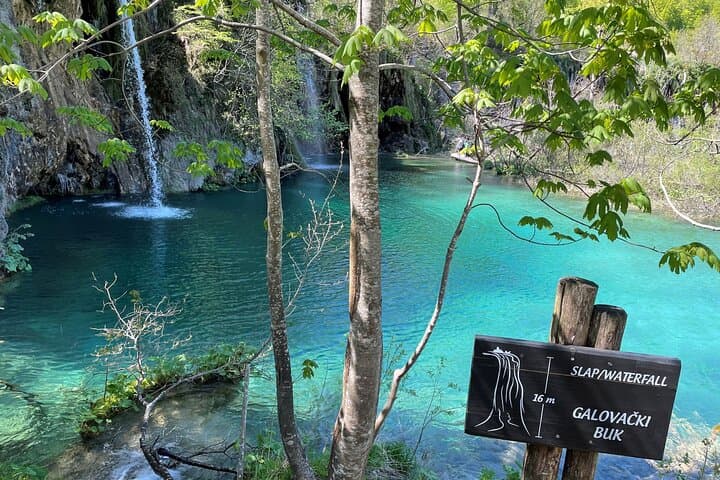
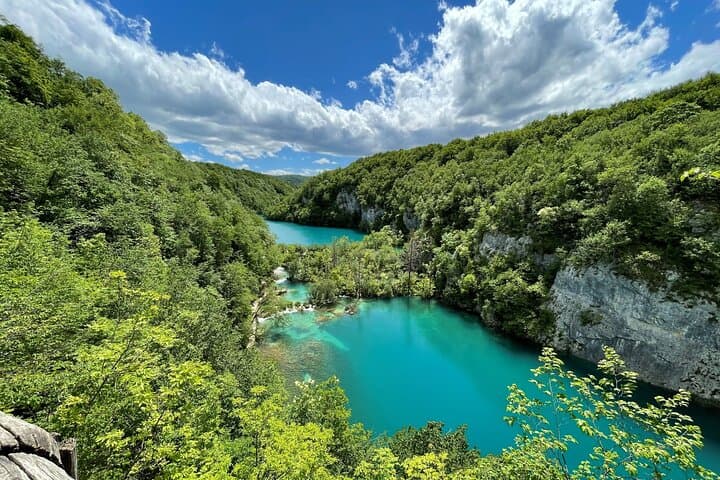
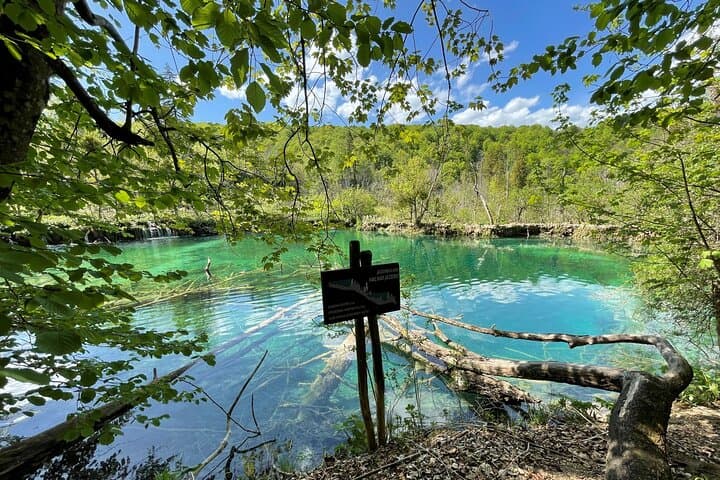
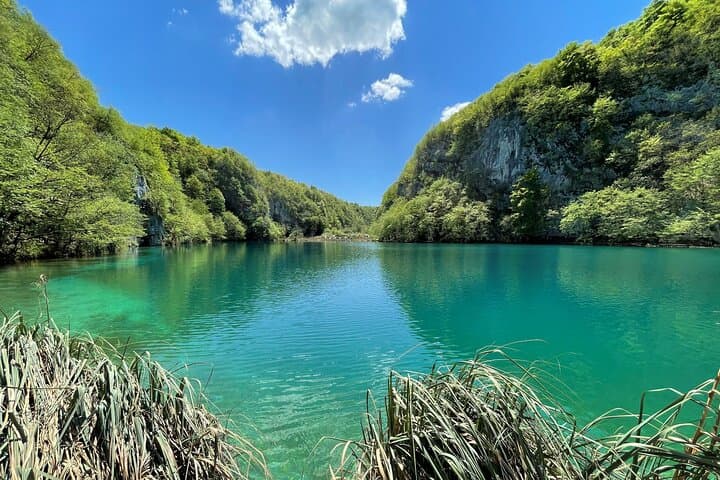
Geology does the heavy lifting here. Carbonate-saturated water deposits travertine (locally called tufa), building new barriers and rerouting streams over decades. The colors of the lakes—emerald, turquoise, deep blue—are less accident than chemistry, shifted by minerals, plankton, and the angle of light on limestone. Trails and wooden boardwalks thread between the pools, placing you inches from rushing water and under canopies of beech and spruce. In high season, electric boats glide across Kozjak Lake; in colder months the park tightens its movement to foot traffic and limits access to lower lakes.
Practical edge: expect 4–6 miles of walking inside the park on a full visit, including some steep steps and uneven wooden paths; your guide will tailor the route to fitness and interest. The electric boat across Kozjak is a short, photogenic crossing; when boats run it saves time and opens upper-lake views. Wild species are shy—look for roe deer at dawn and watch for kingfishers and otters near quieter tributaries.
Timing and logistics matter. The full private day runs about 11 hours round-trip from Zagreb (roughly two hours each way depending on traffic). Bring sturdy shoes, rain protection, water, and layers for sudden temperature shifts beneath the canopy. Respect park rules: stay on boardwalks, don’t feed wildlife, and swimming is prohibited to protect fragile travertine formations.
For photographers, sunrise and late afternoon cast the best colors on cascades; mid-day can be harsh but reveals underwater clarity. With a private guide and skip-the-line ticket, the day balances freedom and efficiency—enough time to sip coffee in Rastoke, hike the most scenic loops at Plitvice, and return to Zagreb as the region’s light softens behind the trees.
moderate.
11 hours.
Good for travelers who can walk 4–6 miles with some elevation change and stand for several hours.
Expect about two hours each way depending on traffic; the full tour is roughly 11 hours including transit and time at the sites.
This tour includes skip-the-line admission to Plitvice Lakes National Park as listed in the inclusions.
No—electric boats and the panoramic vehicle do not operate November–March and may be suspended in bad weather; during those periods the visit is on foot and may be limited to lower lakes.
The tour involves uneven surfaces and some steep sections; it is not recommended for children under 3 or visitors with significant mobility limitations.
Wildlife sightings are possible but not guaranteed; common sightings include birds, roe deer, and occasionally otters around quieter streams.
Yes—hotel pickup and drop-off are offered for selected central Zagreb hotels; confirm your pickup point when booking.
Rastoke’s watermills reflect centuries of rural industry where small-scale milling and woodwork harnessed river power; Plitvice’s travertine barriers have been forming and shifting for millennia due to carbonate deposition.
Stay on boardwalks and follow park rules—trampling and swimming damage travertine formation; the park uses controlled access and visitor education to protect fragile limestone ecosystems.
Petros d.o.o operates guided outdoor trips and adventures with an emphasis on safety, stewardship, and memorable experiences.
The morning light arrives like a curtain pulled back over karst ridges as a private minivan peels away from Zagreb and the landscape opens into rhythmic patchwork: limestone, fir, and the slow blue of rivers. By the time the driver eases into Rastoke, the village announces itself with the clack and splash of wooden mill wheels; water insists on being heard. Visitors move at the pace of flowing water here—curious, patient, precise.
The morning light arrives like a curtain pulled back over karst ridges as a private minivan peels away from Zagreb and the landscape opens into rhythmic patchwork: limestone, fir, and the slow blue of rivers. By the time the driver eases into Rastoke, the village announces itself with the clack and splash of wooden mill wheels; water insists on being heard. Visitors move at the pace of flowing water here—curious, patient, precise.
A short walk through Rastoke introduces the mechanical history of rural Croatia: watermills perched where the Slunjčica meets the Korana, grain channels cut into bedrock, and small waterfalls that have powered local life for centuries. Your guide will trade stories about millwrights and seasonal floods before the drive toward Plitvice Lakes National Park, a UNESCO site whose terraced lakes and travertine barriers form one of Europe’s most unusual freshwater systems.
Geology does the heavy lifting here. Carbonate-saturated water deposits travertine (locally called tufa), building new barriers and rerouting streams over decades. The colors of the lakes—emerald, turquoise, deep blue—are less accident than chemistry, shifted by minerals, plankton, and the angle of light on limestone. Trails and wooden boardwalks thread between the pools, placing you inches from rushing water and under canopies of beech and spruce. In high season, electric boats glide across Kozjak Lake; in colder months the park tightens its movement to foot traffic and limits access to lower lakes.
Practical edge: expect 4–6 miles of walking inside the park on a full visit, including some steep steps and uneven wooden paths; your guide will tailor the route to fitness and interest. The electric boat across Kozjak is a short, photogenic crossing; when boats run it saves time and opens upper-lake views. Wild species are shy—look for roe deer at dawn and watch for kingfishers and otters near quieter tributaries.
Timing and logistics matter. The full private day runs about 11 hours round-trip from Zagreb (roughly two hours each way depending on traffic). Bring sturdy shoes, rain protection, water, and layers for sudden temperature shifts beneath the canopy. Respect park rules: stay on boardwalks, don’t feed wildlife, and swimming is prohibited to protect fragile travertine formations.
For photographers, sunrise and late afternoon cast the best colors on cascades; mid-day can be harsh but reveals underwater clarity. With a private guide and skip-the-line ticket, the day balances freedom and efficiency—enough time to sip coffee in Rastoke, hike the most scenic loops at Plitvice, and return to Zagreb as the region’s light softens behind the trees.