THE ADVENTURE COLLECTIVE® · Independent discovery and booking for outdoor travel

Escape Munich for a private day through Bavarian hills to Neuschwanstein and Linderhof. This one-day tour pairs iconic castle views with practical tips for timing, tickets, and terrain.
Escape Munich for a private day through Bavarian hills to Neuschwanstein and Linderhof. This one-day tour pairs iconic castle views with practical tips for timing, tickets, and terrain.
Fog lifts off the valley as your private car slips out of Munich and into a landscape of folded fields and timbered villages. The road climbs toward the Alps; farmhouse roofs and church steeples pass by while the air tightens and the peaks draw nearer. At Neuschwanstein, the castle’s pale towers loom above spruce and limestone ridges — a constructed fantasy set against real alpine geology. Linderhof, smaller and more intimate, sits among formal gardens, waterfalls, and a grotto that echoes a baroque taste for theatrical nature.
Verified experiences and guided adventures in the surrounding area.
Operated by CE Transfers · Schwangau, Bavaria
Fog lifts off the valley as your private car slips out of Munich and into a landscape of folded fields and timbered villages. The road climbs toward the Alps; farmhouse roofs and church steeples pass by while the air tightens and the peaks draw nearer. At Neuschwanstein, the castle’s pale towers loom above spruce and limestone ridges — a constructed fantasy set against real alpine geology. Linderhof, smaller and more intimate, sits among formal gardens, waterfalls, and a grotto that echoes a baroque taste for theatrical nature.
Built in the 19th century for King Ludwig II, these sites blend Romantic-era architecture with engineering curiosities: early central heating, hydraulic stagecraft in the Venus Grotto, and marble façades quarried from the region. The surrounding landscape is young alpine terrain — steep valleys carved by glaciation and rivers that still push through gravels and moraine. Local culture is earthy and rooted: dairy farms, Benedictine history at nearby Ettal Abbey, and Bavarian culinary staples available in village inns.
Practical guidance: plan for a 9–10 hour day; most guests depart Munich early to beat crowds and secure on-site tickets. Wear durable walking shoes for gravel paths and staircases; Mary’s Bridge and the uphill walk demand stable footing. Expect variable mountain weather—pack layers and rain protection. Your driver handles logistics and photo stops, but admissions are generally not included, so bring printed or mobile tickets when available. For quieter photos, linger at viewpoints as the driver waits; for interiors, factor in timed-entry windows. This is a day built for curious walkers who want architecture, alpine air, and a steady rhythm of discovery.
easy.
9–10 hours.
Light fitness required: comfortable with several short uphill walks and staircases; mostly travel by vehicle.
No — admissions are typically not included. You should purchase Neuschwanstein and Linderhof tickets in advance when possible or arrive early to try for on-site availability.
Expect roughly 1.5–2 hours each way depending on traffic; the full experience lasts about 9–10 hours including stops.
The walk involves a steady uphill path and some uneven trail; it’s moderate and requires stable footwear but is short for most visitors.
Yes. Infant seats are available and small children can ride in strollers, though some castle approaches include stairs and uneven paths.
Both castles date to the 19th century and reflect King Ludwig II’s romantic and theatrical vision; Linderhof shows French rococo influence while Neuschwanstein is a German Romantic fantasy inspired by Wagnerian opera.
The region balances high tourist visitation with fragile alpine ecosystems; stick to marked paths, pack out waste, and avoid trampling meadow vegetation to reduce impact.
CE Transfers operates guided outdoor trips and adventures with an emphasis on safety, stewardship, and memorable experiences.

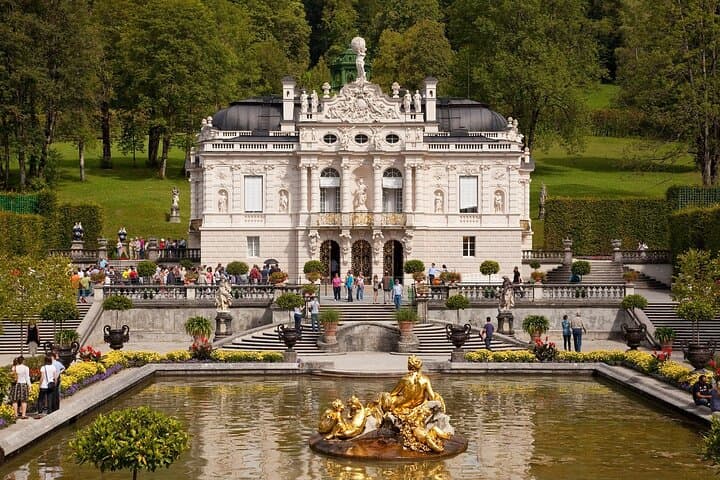
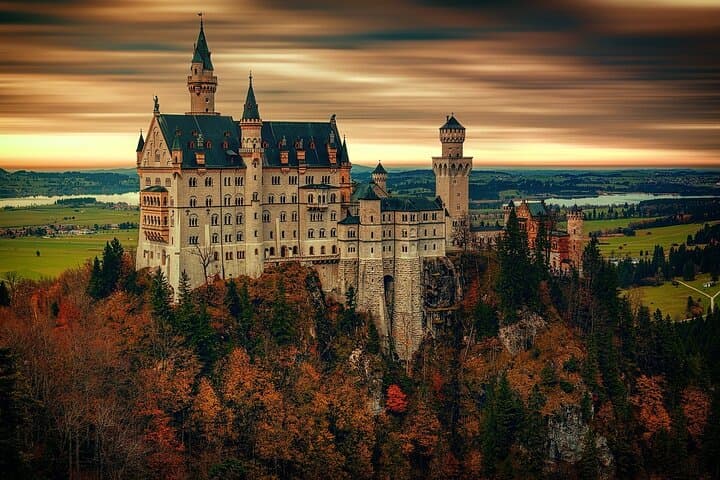
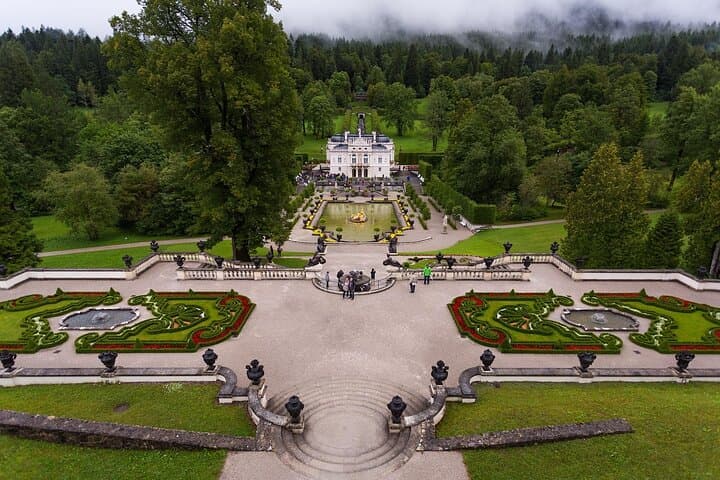
Fog lifts off the valley as your private car slips out of Munich and into a landscape of folded fields and timbered villages. The road climbs toward the Alps; farmhouse roofs and church steeples pass by while the air tightens and the peaks draw nearer. At Neuschwanstein, the castle’s pale towers loom above spruce and limestone ridges — a constructed fantasy set against real alpine geology. Linderhof, smaller and more intimate, sits among formal gardens, waterfalls, and a grotto that echoes a baroque taste for theatrical nature.
Fog lifts off the valley as your private car slips out of Munich and into a landscape of folded fields and timbered villages. The road climbs toward the Alps; farmhouse roofs and church steeples pass by while the air tightens and the peaks draw nearer. At Neuschwanstein, the castle’s pale towers loom above spruce and limestone ridges — a constructed fantasy set against real alpine geology. Linderhof, smaller and more intimate, sits among formal gardens, waterfalls, and a grotto that echoes a baroque taste for theatrical nature.
Built in the 19th century for King Ludwig II, these sites blend Romantic-era architecture with engineering curiosities: early central heating, hydraulic stagecraft in the Venus Grotto, and marble façades quarried from the region. The surrounding landscape is young alpine terrain — steep valleys carved by glaciation and rivers that still push through gravels and moraine. Local culture is earthy and rooted: dairy farms, Benedictine history at nearby Ettal Abbey, and Bavarian culinary staples available in village inns.
Practical guidance: plan for a 9–10 hour day; most guests depart Munich early to beat crowds and secure on-site tickets. Wear durable walking shoes for gravel paths and staircases; Mary’s Bridge and the uphill walk demand stable footing. Expect variable mountain weather—pack layers and rain protection. Your driver handles logistics and photo stops, but admissions are generally not included, so bring printed or mobile tickets when available. For quieter photos, linger at viewpoints as the driver waits; for interiors, factor in timed-entry windows. This is a day built for curious walkers who want architecture, alpine air, and a steady rhythm of discovery.