THE ADVENTURE COLLECTIVE® · Independent discovery and booking for outdoor travel

Drive through a landscape carved by time on a private full-day tour from Göreme. Visit Göreme Open-Air Museum, Kaymakli Underground City, Avanos pottery workshops, and the iconic valleys with an expert local guide.
Drive through a landscape carved by time on a private full-day tour from Göreme. Visit Göreme Open-Air Museum, Kaymakli Underground City, Avanos pottery workshops, and the iconic valleys with an expert local guide.
You meet your guide in Göreme just after dawn and the town is still rubbing sleep from its stone face. The car slips onto the road and the landscape opens — low, pumiced plateaus give way to fingerlike spires of tuff that the wind has patiently carved. Fairy chimneys stand like patient storytellers; valleys inhale and exhale dust and light as you move between them.
Verified experiences and guided adventures in the surrounding area.
Operated by Cappadocia Visitor · Göreme, Nevşehir
You meet your guide in Göreme just after dawn and the town is still rubbing sleep from its stone face. The car slips onto the road and the landscape opens — low, pumiced plateaus give way to fingerlike spires of tuff that the wind has patiently carved. Fairy chimneys stand like patient storytellers; valleys inhale and exhale dust and light as you move between them.
This private full-day tour stitches together the region’s richest chapters. Göreme Open-Air Museum was a monastic neighborhood from the 4th to the 13th century, where frescoed chapels were carved directly into soft volcanic rock. Kaymakli Underground City descends into the earth — a cool, claustrophobic hive where entire communities hid during invasions, carving stables, kitchens, and tunnels through stable tuff.
Geology here writes the itinerary. Millions of years of volcanic ash compacted into tuff, and the erosive choreography of wind and rain sculpted cones, pillars, and mushroom caps. Avanos sits on the Kızılırmak riverbanks; its pottery tradition traces to Chalcolithic times, the same red clay that made this town a craft center for millennia. In Paşabağ and Devrent Valley, the rock forms mock animals and columns, daring your imagination to keep pace.
A local guide turns landmarks into narratives: why a church faces a certain direction, how groundwater influenced cave dwellings, and where locals still fire kilns. The tour balances walking at viewpoints with slow drives between sites, so the day feels expansive rather than rushed.
Practical side: the tour runs roughly 6–7 hours and is private, with an air-conditioned car and guide included; entrance fees and lunch are not. Bring cash for small admission booths and pottery shops. Footwear should handle uneven rock and short staircases; some sites require downhill or stepped approaches. Start early in summer to dodge heat; in winter, pack warm layers — exposed viewpoints can be brutally cold.
Photography is straightforward: golden-hour light softens the tuff, midday reveals details in cave frescoes, and sunset paints the valleys in warm ochre. Ask your guide for quieter vantage points to avoid tour buses, and plan Avanos either midday for pottery demonstrations or later when workshops quiet.
This is a day designed to orient you: a compact primer on Cappadocia’s geology, history, and living craft traditions, delivered at a pace that leaves room to breathe, to photograph, and to ask the questions that turn a sightseeing checklist into a memorable conversation with place.
easy.
6–7 hours.
Light walking ability required—comfortable on stairs and uneven surfaces; suitable for most fitness levels.
No—entrance fees to sites like Kaymakli and the Göreme Open-Air Museum are not included; bring local currency or card where accepted.
Pickup and drop-off are available in Göreme; the tour typically departs from Cappadocia Visitor Head Office or your hotel if arranged.
Yes—physical demands are light, but underground passages in Kaymakli can be narrow and require careful movement.
Balloon flights must be booked separately; guides can arrange timing recommendations but the ride itself is not included.
Lunch is not included—your guide will recommend local restaurants or you can request a stop for a meal.
Tipping is customary in Turkey; 5–10% of the tour price or a reasonable local amount for good service is appreciated.
Cappadocia’s cave churches and underground cities reflect centuries of monastic life and defensive adaptations to invasion, particularly between the 4th and 13th centuries.
Erosion and visitor pressure threaten fragile tuff formations and frescoes; follow marked paths, avoid touching frescoes, and support local conservation initiatives through responsible tourism.
Cappadocia Visitor operates guided outdoor trips and adventures with an emphasis on safety, stewardship, and memorable experiences.
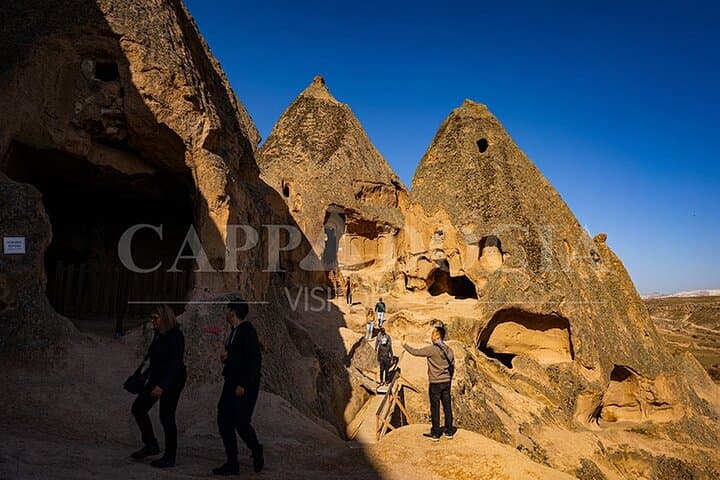
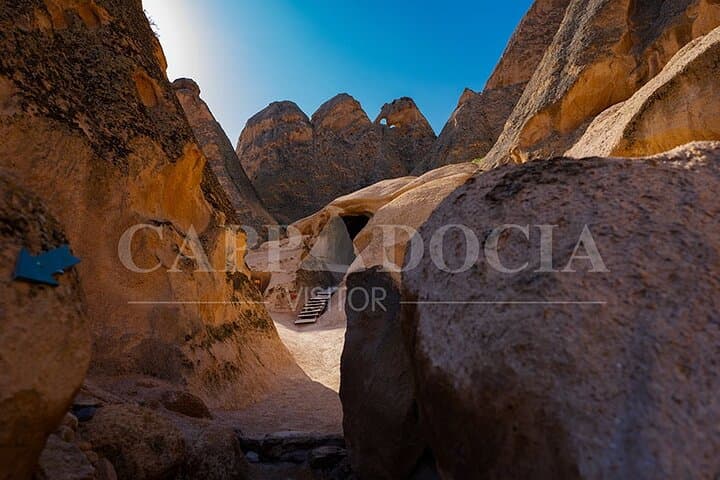
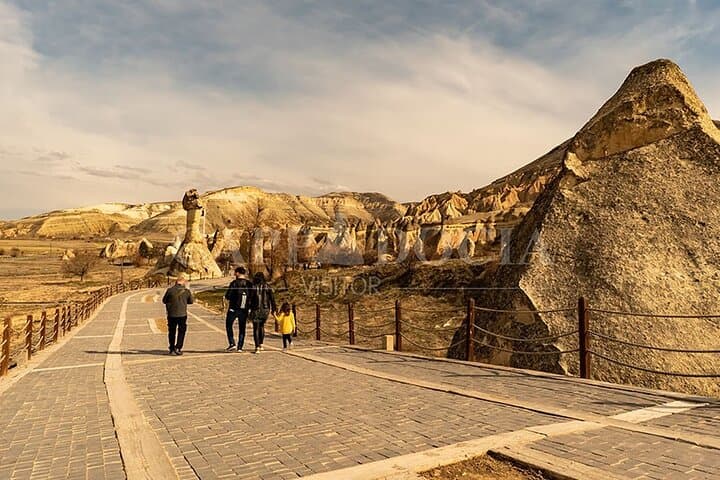
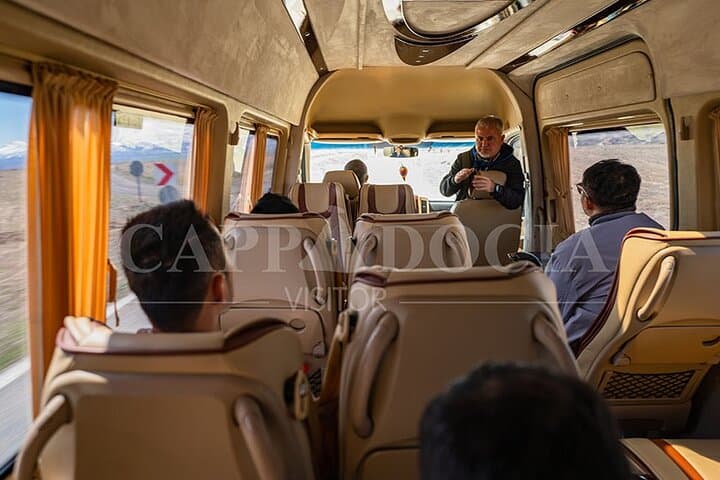
You meet your guide in Göreme just after dawn and the town is still rubbing sleep from its stone face. The car slips onto the road and the landscape opens — low, pumiced plateaus give way to fingerlike spires of tuff that the wind has patiently carved. Fairy chimneys stand like patient storytellers; valleys inhale and exhale dust and light as you move between them.
You meet your guide in Göreme just after dawn and the town is still rubbing sleep from its stone face. The car slips onto the road and the landscape opens — low, pumiced plateaus give way to fingerlike spires of tuff that the wind has patiently carved. Fairy chimneys stand like patient storytellers; valleys inhale and exhale dust and light as you move between them.
This private full-day tour stitches together the region’s richest chapters. Göreme Open-Air Museum was a monastic neighborhood from the 4th to the 13th century, where frescoed chapels were carved directly into soft volcanic rock. Kaymakli Underground City descends into the earth — a cool, claustrophobic hive where entire communities hid during invasions, carving stables, kitchens, and tunnels through stable tuff.
Geology here writes the itinerary. Millions of years of volcanic ash compacted into tuff, and the erosive choreography of wind and rain sculpted cones, pillars, and mushroom caps. Avanos sits on the Kızılırmak riverbanks; its pottery tradition traces to Chalcolithic times, the same red clay that made this town a craft center for millennia. In Paşabağ and Devrent Valley, the rock forms mock animals and columns, daring your imagination to keep pace.
A local guide turns landmarks into narratives: why a church faces a certain direction, how groundwater influenced cave dwellings, and where locals still fire kilns. The tour balances walking at viewpoints with slow drives between sites, so the day feels expansive rather than rushed.
Practical side: the tour runs roughly 6–7 hours and is private, with an air-conditioned car and guide included; entrance fees and lunch are not. Bring cash for small admission booths and pottery shops. Footwear should handle uneven rock and short staircases; some sites require downhill or stepped approaches. Start early in summer to dodge heat; in winter, pack warm layers — exposed viewpoints can be brutally cold.
Photography is straightforward: golden-hour light softens the tuff, midday reveals details in cave frescoes, and sunset paints the valleys in warm ochre. Ask your guide for quieter vantage points to avoid tour buses, and plan Avanos either midday for pottery demonstrations or later when workshops quiet.
This is a day designed to orient you: a compact primer on Cappadocia’s geology, history, and living craft traditions, delivered at a pace that leaves room to breathe, to photograph, and to ask the questions that turn a sightseeing checklist into a memorable conversation with place.