THE ADVENTURE COLLECTIVE® · Independent discovery and booking for outdoor travel

Move through Cappadocia at a human pace with a private guide: caves, chimneys, pottery demos and panoramic lookouts across six to seven relaxed hours. This boutique tour pairs geology and living craft for travelers who want depth without rush.
Move through Cappadocia at a human pace with a private guide: caves, chimneys, pottery demos and panoramic lookouts across six to seven relaxed hours. This boutique tour pairs geology and living craft for travelers who want depth without rush.
Morning in Cappadocia arrives like a slow exhale: cool air sliding over lunar ridgelines, the first balloons lifting like floating villages above a landscape that refuses to be ordinary. On a private boutique tour from Göreme, a local guide leads the day at a human pace — no herd, no stopwatch — routing guests through rock-cut monasteries, potters' workshops and the sculpted valleys that made the region famous.
Verified experiences and guided adventures in the surrounding area.
Operated by Turkey Boutique Tour- Private Tours · Göreme, Nevşehir
Morning in Cappadocia arrives like a slow exhale: cool air sliding over lunar ridgelines, the first balloons lifting like floating villages above a landscape that refuses to be ordinary. On a private boutique tour from Göreme, a local guide leads the day at a human pace — no herd, no stopwatch — routing guests through rock-cut monasteries, potters' workshops and the sculpted valleys that made the region famous.
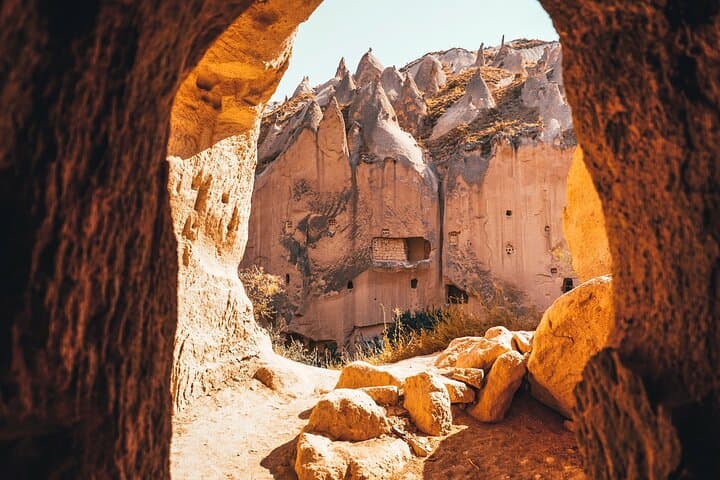
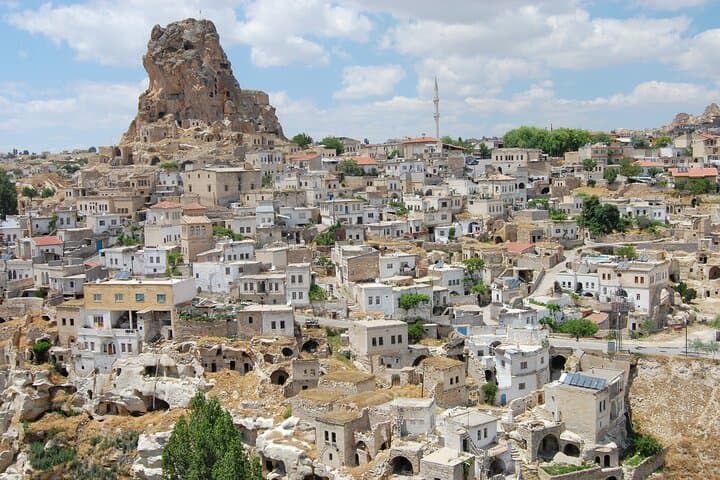
The land itself is the story. Millions of years of volcanic ash hardened into tuff; wind and winter rain carved the soft stone into pillars and caps now called fairy chimneys. In Göreme and surrounding valleys, early Christians carved cells and chapels into that same rock. The itinerary stops at monastic sites where 4th–13th century ascetics left frescoed rooms and carved niches, and at Uçhisar Castle, the high point used for centuries as lookout and shelter.
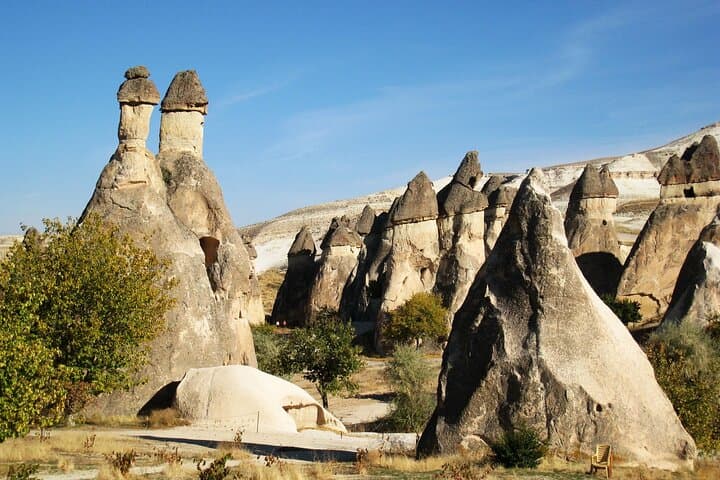
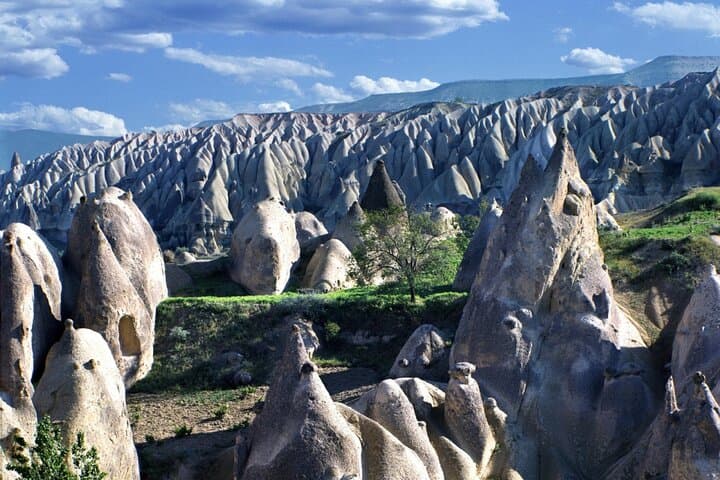
Cultural notes thread through the tour. In Avanos, pottery remains a living craft: local artisans still use clay from the Kızılırmak River and a traditional kick wheel to shape bowls unchanged since Hittite times. Pasabag’s mushroom-shaped chimneys are the region’s geological showpieces, while Love and Devrent Valleys reward the patient photographer with odd silhouettes and surprising panoramas.
Practical realities keep the day comfortable. Expect 6–7 hours in the field with private, air-conditioned transport and hotel pickup across Cappadocia. The route mixes easy walks on dusty tracks, short stair climbs into cave churches, and several panoramic stops for photos — moderate fitness is recommended. The region sits around 1,200–1,400 meters in elevation, which can make sunny afternoons feel deceptively dry; hydrate early and often.
Timing matters: sunrise charms the balloons and softens the stone; late afternoon pulls long shadows through the chimneys and cools the air for easier walking. Your guide will pace visits to avoid crowds at the Open-Air Museum and position you at Avanos for an intimate pottery demo.
Bring layered clothing, stout shoes, sun protection and a camera with a wide-angle lens. If you want to explore a cave home or chapel interior, wear a headlamp or use your phone light. Guides typically handle entrances and parking fees; ask ahead about any site-specific tickets. For travelers who want the region’s highlights without the push and shove, a private boutique tour is the most direct way to meet Cappadocia — its geology testing your sense of scale, its history inviting curiosity, and its local crafts a tactile link to centuries of desert life.
moderate.
6–7 hours.
Moderate fitness: comfortable walking on uneven ground and short climbs; suitable for most active travelers.
The tour runs approximately 6–7 hours (360–420 minutes) including transport and stops.
Yes—private pickup and drop-off from hotels across Cappadocia are included; confirm your pickup point when booking.
Admission to some sites like the Göreme Open-Air Museum is not always included—confirm with the operator ahead of time.
Yes—families are welcome though infants must sit on laps during transport; moderate walking is required.
Yes—guides typically stop for panoramic views at Uçhisar and enter select rock-cut churches where access is permitted.
Spring and fall offer mild temperatures and softer light; sunrise is ideal for balloon views while late afternoon is best for valley colors.
Cappadocia’s rock churches date to early Christian monastic communities; the region was also home to the influential 4th-century Cappadocian Fathers and preserves pottery techniques that trace back to the Hittites.
Many visitors concentrate at a few sites—stick to marked trails, avoid touching frescoes and support local craftspeople to keep tourism benefits circulating in the community.
Turkey Boutique Tour- Private Tours operates guided outdoor trips and adventures with an emphasis on safety, stewardship, and memorable experiences.
Morning in Cappadocia arrives like a slow exhale: cool air sliding over lunar ridgelines, the first balloons lifting like floating villages above a landscape that refuses to be ordinary. On a private boutique tour from Göreme, a local guide leads the day at a human pace — no herd, no stopwatch — routing guests through rock-cut monasteries, potters' workshops and the sculpted valleys that made the region famous.
Morning in Cappadocia arrives like a slow exhale: cool air sliding over lunar ridgelines, the first balloons lifting like floating villages above a landscape that refuses to be ordinary. On a private boutique tour from Göreme, a local guide leads the day at a human pace — no herd, no stopwatch — routing guests through rock-cut monasteries, potters' workshops and the sculpted valleys that made the region famous.
The land itself is the story. Millions of years of volcanic ash hardened into tuff; wind and winter rain carved the soft stone into pillars and caps now called fairy chimneys. In Göreme and surrounding valleys, early Christians carved cells and chapels into that same rock. The itinerary stops at monastic sites where 4th–13th century ascetics left frescoed rooms and carved niches, and at Uçhisar Castle, the high point used for centuries as lookout and shelter.
Cultural notes thread through the tour. In Avanos, pottery remains a living craft: local artisans still use clay from the Kızılırmak River and a traditional kick wheel to shape bowls unchanged since Hittite times. Pasabag’s mushroom-shaped chimneys are the region’s geological showpieces, while Love and Devrent Valleys reward the patient photographer with odd silhouettes and surprising panoramas.
Practical realities keep the day comfortable. Expect 6–7 hours in the field with private, air-conditioned transport and hotel pickup across Cappadocia. The route mixes easy walks on dusty tracks, short stair climbs into cave churches, and several panoramic stops for photos — moderate fitness is recommended. The region sits around 1,200–1,400 meters in elevation, which can make sunny afternoons feel deceptively dry; hydrate early and often.
Timing matters: sunrise charms the balloons and softens the stone; late afternoon pulls long shadows through the chimneys and cools the air for easier walking. Your guide will pace visits to avoid crowds at the Open-Air Museum and position you at Avanos for an intimate pottery demo.
Bring layered clothing, stout shoes, sun protection and a camera with a wide-angle lens. If you want to explore a cave home or chapel interior, wear a headlamp or use your phone light. Guides typically handle entrances and parking fees; ask ahead about any site-specific tickets. For travelers who want the region’s highlights without the push and shove, a private boutique tour is the most direct way to meet Cappadocia — its geology testing your sense of scale, its history inviting curiosity, and its local crafts a tactile link to centuries of desert life.