THE ADVENTURE COLLECTIVE® · Independent discovery and booking for outdoor travel

A focused half-day, private drive that stitches Table Mountain, Camps Bay and the colorful Bo-Kaap into a single sightseeing loop — ideal for travelers who want geological drama and cultural context without the full-day commitment. Expect coastal panoramas, short walks on cobbles, and an expert local guide.
A focused half-day, private drive that stitches Table Mountain, Camps Bay and the colorful Bo-Kaap into a single sightseeing loop — ideal for travelers who want geological drama and cultural context without the full-day commitment. Expect coastal panoramas, short walks on cobbles, and an expert local guide.
You step out at The Silo with a chill from the Atlantic and Table Mountain looming like an old, flat-topped guard above the harbor. The city unfolds in a sequence of frames — shoreline, mountain, and neighborhoods that wear history on their facades. Your private vehicle eases onto the coastal ribbon, passing blue-flag beaches and glass-fronted homes; the guide points to paragliders on Lion’s Head and to the faint outline of Robben Island across the water.
Verified experiences and guided adventures in the surrounding area.
Operated by Raw African Safaris · Cape Town, Western Cape
You step out at The Silo with a chill from the Atlantic and Table Mountain looming like an old, flat-topped guard above the harbor. The city unfolds in a sequence of frames — shoreline, mountain, and neighborhoods that wear history on their facades. Your private vehicle eases onto the coastal ribbon, passing blue-flag beaches and glass-fronted homes; the guide points to paragliders on Lion’s Head and to the faint outline of Robben Island across the water.
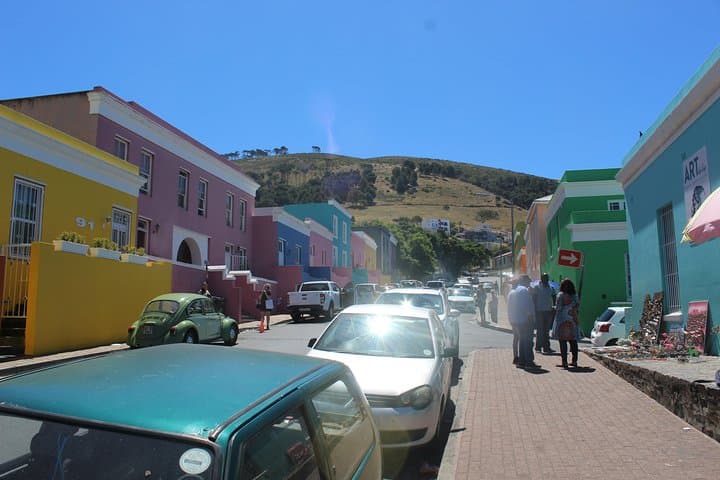
This four- to five-hour half-day tour compresses Cape Town’s defining geology and colonial history into a single loop. Table Mountain, a sandstone plateau formed 300 million years ago, dominates every view; its sheer cliffs were a navigation landmark long before the Dutch East India Company dropped anchor here in 1652. Bo-Kaap’s candy-colored houses tell a parallel story — a living Malay neighborhood shaped by the arrival of slaves, indentured laborers and exiles from Southeast Asia and their descendants who made a distinctive, Muslim cultural quarter.
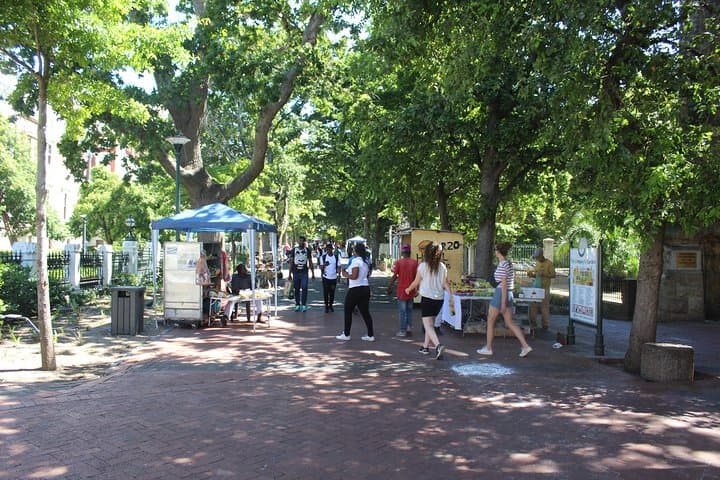
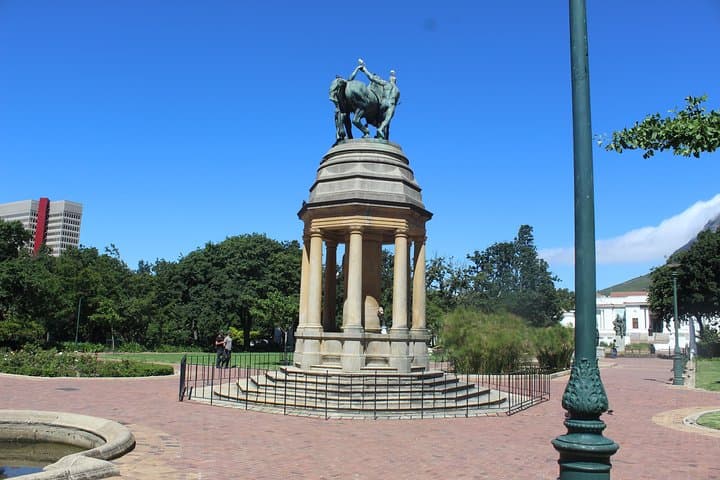
Stops are practical and curated: a cable car visit to the Table Mountain foot and optional ascent for those who want vertiginous panoramas; a drive and photo-stop at Camps Bay with the Twelve Apostles as backdrop; a stroll through the cobbled streets of Bo-Kaap where the cobbles keep the rhythm of the neighborhood; and a reflective walk in the Company’s Garden where ginkgo and ancient rubber trees shade the South African Museum and Parliament.
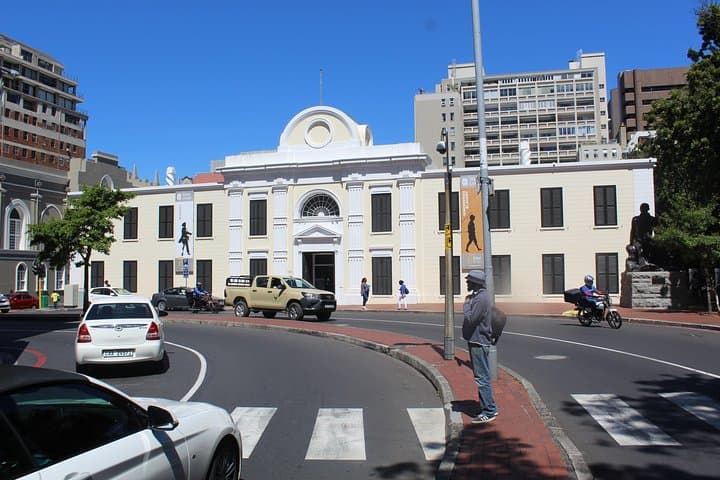
The tour also threads in modern Cape Town — the World Cup stadium, Signal Hill (where a noon cannon still fires), and a complimentary, time-permitting peek into the Diamond Museum. Guides contextualize apartheid-era removals at the District Six Museum and the city’s role as a global maritime node on the route between Europe and the East.
Practical notes: allow 4–5 hours, wear sturdy shoes for cobbles and short uphill sections, and bring layers — ocean winds can chill even on sunny days. Cable car tickets and Table Mountain National Park fees are usually extra; check weather and cableway operations in advance (the cable closes in high winds). The tour is private and offers hotel pickup from most central locations; bottled water and an accredited guide are included.
If you want a quieter experience, schedule this tour first thing in the morning to avoid crowds at the cable car and Camps Bay. Keep a small cache of cash for local stalls in Bo-Kaap, and bring a refillable bottle — Cape Town’s tap water is safe. The half-day format makes this an efficient introduction for first-time visitors and a precise way for repeat travelers to reconnect with the city’s layered landscape.
easy.
4–5 hours.
Suitable for most fitness levels; expect light walking on uneven paving and short inclines.
Cable car tickets are usually not included—confirm at booking; if weather closes the cableway, guides often substitute additional city stops.
Pick-up is typically at The Silo Hotel/V&A Waterfront or from participating hotels in central Cape Town; confirm your pickup location when you book.
Much of the route is drive-by and accessible, but some stops (Bo-Kaap cobbles, brief garden walks) have uneven surfaces—advise the operator of mobility needs in advance.
Yes; infants must sit on laps but infant seats are available—note this on booking and check vehicle capacity for larger groups.
Some attractions (like the District Six Museum) may charge admission and are typically not included—ask your guide which stops have extra fees.
Tipping is customary in South Africa; 10–15% of the tour cost or a small cash tip per person is standard for good service.
Cape Town began as a refreshment station for Dutch ships in 1652 and later evolved into a colonial administrative center—its neighborhoods reflect layers of settlement, slavery and migration.
Table Mountain National Park protects the unique fynbos ecosystem; visitors are asked to stay on paths and avoid disturbing fragile vegetation and birdlife.
Raw African Safaris operates guided outdoor trips and adventures with an emphasis on safety, stewardship, and memorable experiences.
You step out at The Silo with a chill from the Atlantic and Table Mountain looming like an old, flat-topped guard above the harbor. The city unfolds in a sequence of frames — shoreline, mountain, and neighborhoods that wear history on their facades. Your private vehicle eases onto the coastal ribbon, passing blue-flag beaches and glass-fronted homes; the guide points to paragliders on Lion’s Head and to the faint outline of Robben Island across the water.
You step out at The Silo with a chill from the Atlantic and Table Mountain looming like an old, flat-topped guard above the harbor. The city unfolds in a sequence of frames — shoreline, mountain, and neighborhoods that wear history on their facades. Your private vehicle eases onto the coastal ribbon, passing blue-flag beaches and glass-fronted homes; the guide points to paragliders on Lion’s Head and to the faint outline of Robben Island across the water.
This four- to five-hour half-day tour compresses Cape Town’s defining geology and colonial history into a single loop. Table Mountain, a sandstone plateau formed 300 million years ago, dominates every view; its sheer cliffs were a navigation landmark long before the Dutch East India Company dropped anchor here in 1652. Bo-Kaap’s candy-colored houses tell a parallel story — a living Malay neighborhood shaped by the arrival of slaves, indentured laborers and exiles from Southeast Asia and their descendants who made a distinctive, Muslim cultural quarter.
Stops are practical and curated: a cable car visit to the Table Mountain foot and optional ascent for those who want vertiginous panoramas; a drive and photo-stop at Camps Bay with the Twelve Apostles as backdrop; a stroll through the cobbled streets of Bo-Kaap where the cobbles keep the rhythm of the neighborhood; and a reflective walk in the Company’s Garden where ginkgo and ancient rubber trees shade the South African Museum and Parliament.
The tour also threads in modern Cape Town — the World Cup stadium, Signal Hill (where a noon cannon still fires), and a complimentary, time-permitting peek into the Diamond Museum. Guides contextualize apartheid-era removals at the District Six Museum and the city’s role as a global maritime node on the route between Europe and the East.
Practical notes: allow 4–5 hours, wear sturdy shoes for cobbles and short uphill sections, and bring layers — ocean winds can chill even on sunny days. Cable car tickets and Table Mountain National Park fees are usually extra; check weather and cableway operations in advance (the cable closes in high winds). The tour is private and offers hotel pickup from most central locations; bottled water and an accredited guide are included.
If you want a quieter experience, schedule this tour first thing in the morning to avoid crowds at the cable car and Camps Bay. Keep a small cache of cash for local stalls in Bo-Kaap, and bring a refillable bottle — Cape Town’s tap water is safe. The half-day format makes this an efficient introduction for first-time visitors and a precise way for repeat travelers to reconnect with the city’s layered landscape.