THE ADVENTURE COLLECTIVE® · Independent discovery and booking for outdoor travel

Float into a cobalt chamber where sunlight becomes color and certified instructors guide every breath. This private Blue Cave boat dive in Onna pairs safety-focused instruction with 4K photos and easy boat access — ideal for first-time divers and photographers.
Float into a cobalt chamber where sunlight becomes color and certified instructors guide every breath. This private Blue Cave boat dive in Onna pairs safety-focused instruction with 4K photos and easy boat access — ideal for first-time divers and photographers.
You step off a low-profile dive boat and the sea opens like a different language — an electric blue that seems to come from inside the water itself. In Onna’s famous “Blue Cave,” sunlight refracts through a narrow mouth and washes the chamber in a surreal cobalt glow. The guide, a nationally certified instructor, checks straps and gives a thumbs-up; everything is deliberate, practiced, small gestures that turn nervousness into readiness.
Verified experiences and guided adventures in the surrounding area.
You step off a low-profile dive boat and the sea opens like a different language — an electric blue that seems to come from inside the water itself. In Onna’s famous “Blue Cave,” sunlight refracts through a narrow mouth and washes the chamber in a surreal cobalt glow. The guide, a nationally certified instructor, checks straps and gives a thumbs-up; everything is deliberate, practiced, small gestures that turn nervousness into readiness.
This stretch of Okinawa’s west coast grew important in both maritime trade and modern tourism. The limestone ledges around Cape Maeda — where many Blue Cave excursions launch — record millions of years of reef growth and uplift. Underwater, coral bommies and ancient terraces create shelves and pockets where fish congregate; above, the low cliffs bear scars of typhoon seasons and the slow scrape of salt and wind.
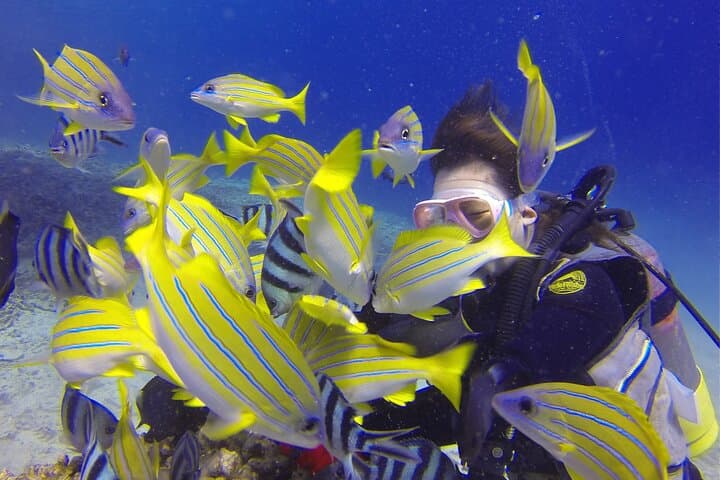
Culture here is quietly present: local dive shops operate family-owned businesses, and many guides are lifelong islanders who read tides and currents like a neighbor reads the morning. Feeding sessions are deliberate and environmental—small amounts of food used to attract fish for photos while avoiding long-term behavioral changes.
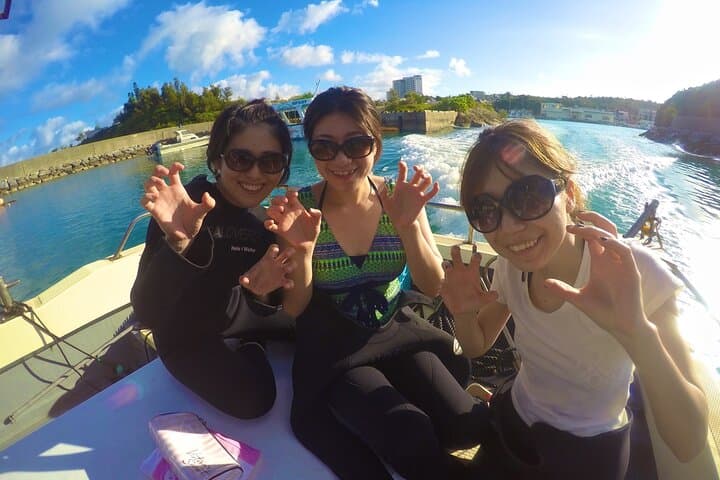
The experience itself is practical and private. Guests meet at the store on Route 58 — easy to find next to a 7-Eleven — then board a small boat for a short run to the cave. Guides are certified, equipment is provided, and a 4K action camera documents the dive; files are handed back on microSD after the trip. For beginners the tour is paced: surface instruction, a shallow guided dive inside the cave and along adjacent reefs, and time for underwater photos.
Visibility and crowding vary by season; early morning departures are recommended for calmer seas and cleaner light. The boat access removes the need to navigate stairs or a rocky shoreline, which keeps the focus on breathing and buoyancy rather than logistics.
Practical notes: participants should be in moderate physical condition, be free of conditions that contraindicate diving (ask your doctor if unsure), and be prepared to wait 18 hours after diving before flying. Bring reef-safe sunscreen, a towel, and something warm to change into after the dive. If you’re prone to motion sickness, take precautions — the boat run is short but the ocean can change fast.
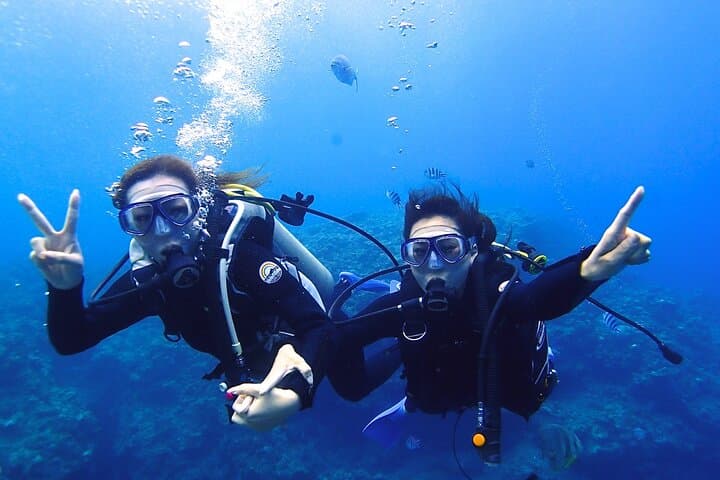
For photographers, the cave’s blue comes alive with a wide-angle lens and strobes turned low; for first-timers, the memory of floating in that luminous chamber under a guide’s careful watch is the real reward. The private format means you set the pace: linger on a colorful patch of reef, nudge a hand toward a curious parrotfish, or simply let the guide capture footage of your first breath under the surface.
moderate.
2–3 hours.
Should be comfortable swimming short distances and able to perform basic equalization; moderate fitness for boat and water activity.
No — private guided dives are often designed for beginners; instructors provide step-by-step training and accompany you throughout.
Diving participants are typically accepted from age 10 to 60 for this operator; snorkeling has a wider age range down to 2 years old.
Yes — guides shoot 4K photos and video and return a microSD card with your media after the course.
Certain cardiovascular, respiratory, ear, and neurological conditions can disqualify you; the operator provides a detailed medical list and will reconfirm on the day.
The shop on Route 58 is the launch point — boat runs to the Blue Cave are short (typically under 20 minutes) depending on sea conditions.
Full refunds are available if you cancel at least 24 hours before departure; trips may be canceled for bad weather with the same refund terms.
The limestone platforms around Onna formed from ancient reef accretion and uplift; local fishing communities have long used small boats to access these productive waters.
Operators emphasize reef-safe feeding practices and limited baiting to avoid habituating wildlife; visitors are asked not to touch corals and to use biodegradable sunscreen.
シーラバーズ沖縄 operates guided outdoor trips and adventures with an emphasis on safety, stewardship, and memorable experiences.
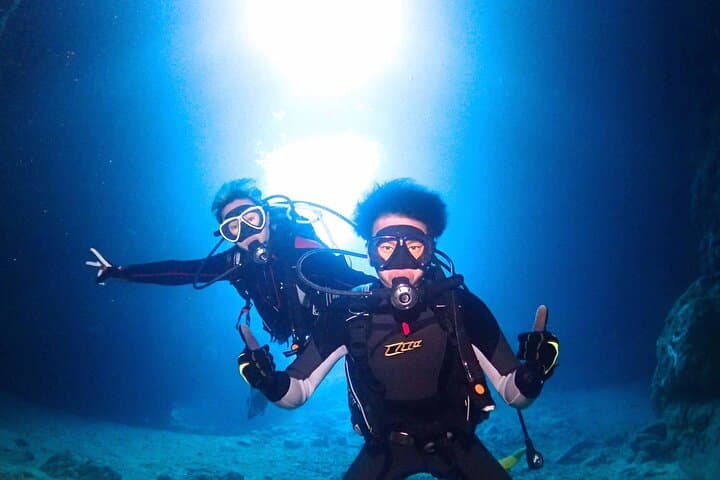
You step off a low-profile dive boat and the sea opens like a different language — an electric blue that seems to come from inside the water itself. In Onna’s famous “Blue Cave,” sunlight refracts through a narrow mouth and washes the chamber in a surreal cobalt glow. The guide, a nationally certified instructor, checks straps and gives a thumbs-up; everything is deliberate, practiced, small gestures that turn nervousness into readiness.
You step off a low-profile dive boat and the sea opens like a different language — an electric blue that seems to come from inside the water itself. In Onna’s famous “Blue Cave,” sunlight refracts through a narrow mouth and washes the chamber in a surreal cobalt glow. The guide, a nationally certified instructor, checks straps and gives a thumbs-up; everything is deliberate, practiced, small gestures that turn nervousness into readiness.
This stretch of Okinawa’s west coast grew important in both maritime trade and modern tourism. The limestone ledges around Cape Maeda — where many Blue Cave excursions launch — record millions of years of reef growth and uplift. Underwater, coral bommies and ancient terraces create shelves and pockets where fish congregate; above, the low cliffs bear scars of typhoon seasons and the slow scrape of salt and wind.
Culture here is quietly present: local dive shops operate family-owned businesses, and many guides are lifelong islanders who read tides and currents like a neighbor reads the morning. Feeding sessions are deliberate and environmental—small amounts of food used to attract fish for photos while avoiding long-term behavioral changes.
The experience itself is practical and private. Guests meet at the store on Route 58 — easy to find next to a 7-Eleven — then board a small boat for a short run to the cave. Guides are certified, equipment is provided, and a 4K action camera documents the dive; files are handed back on microSD after the trip. For beginners the tour is paced: surface instruction, a shallow guided dive inside the cave and along adjacent reefs, and time for underwater photos.
Visibility and crowding vary by season; early morning departures are recommended for calmer seas and cleaner light. The boat access removes the need to navigate stairs or a rocky shoreline, which keeps the focus on breathing and buoyancy rather than logistics.
Practical notes: participants should be in moderate physical condition, be free of conditions that contraindicate diving (ask your doctor if unsure), and be prepared to wait 18 hours after diving before flying. Bring reef-safe sunscreen, a towel, and something warm to change into after the dive. If you’re prone to motion sickness, take precautions — the boat run is short but the ocean can change fast.
For photographers, the cave’s blue comes alive with a wide-angle lens and strobes turned low; for first-timers, the memory of floating in that luminous chamber under a guide’s careful watch is the real reward. The private format means you set the pace: linger on a colorful patch of reef, nudge a hand toward a curious parrotfish, or simply let the guide capture footage of your first breath under the surface.