THE ADVENTURE COLLECTIVE® · Independent discovery and booking for outdoor travel

Glide from Ljubljana into the Julian Alps for a day of castle views, glacial lakes, and the thundering Savica Waterfall. This private tour balances scenic highlights with easy walks and local flavor—think kremšnita by the shore and alpine air that keeps you moving.
Glide from Ljubljana into the Julian Alps for a day of castle views, glacial lakes, and the thundering Savica Waterfall. This private tour balances scenic highlights with easy walks and local flavor—think kremšnita by the shore and alpine air that keeps you moving.
Sunlight slides over the Julian Alps as Lake Bled stirs awake, its tiny island church drifting into focus like a secret. From the ramparts of Bled Castle, the water looks impossibly still while the Karavanke ridgeline nudges the horizon. On a private day trip from Ljubljana, the tempo is unhurried: one hour to the lake, then up to the castle where stone courtyards and a glassy panorama lay out your day’s geography—Bled’s emerald bowl to the east, Bohinj’s wilder basin tucked deeper under Triglav’s watch.
Verified experiences and guided adventures in the surrounding area.
Operated by Palma Travel DMC · Bled, Upper Carniola
Sunlight slides over the Julian Alps as Lake Bled stirs awake, its tiny island church drifting into focus like a secret. From the ramparts of Bled Castle, the water looks impossibly still while the Karavanke ridgeline nudges the horizon. On a private day trip from Ljubljana, the tempo is unhurried: one hour to the lake, then up to the castle where stone courtyards and a glassy panorama lay out your day’s geography—Bled’s emerald bowl to the east, Bohinj’s wilder basin tucked deeper under Triglav’s watch.
This is glacial country. Both lakes—Bled and Bohinj—are remnants of ice-sculpted valleys, fed by cold springs and hemmed by limestone peaks. History runs as deep as the water. Bled Castle, first mentioned in 1011, keeps watch from its crag while traditional pletna boats have ferried visitors to the island for centuries. Down-valley, the Savica Waterfall crashes from a karst spring into a turquoise pool, the same waters that grow into the Sava Bohinjka. Slovenia’s national poet France Prešeren set his epic “The Baptism at the Savica” here; the cascade still whispers that story, urging you up the steps.
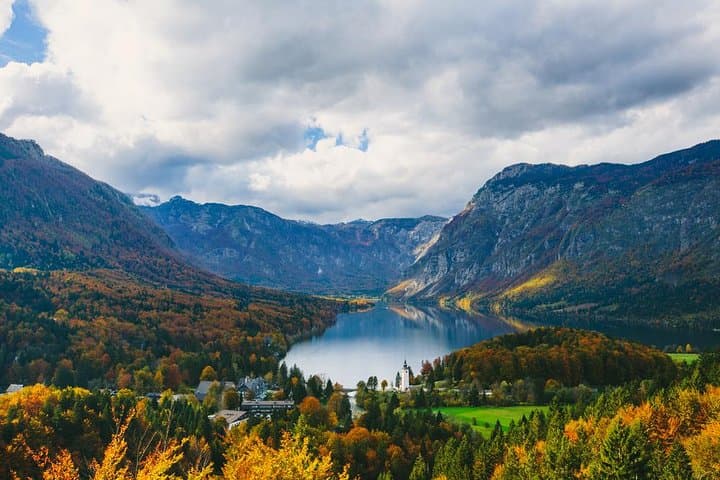
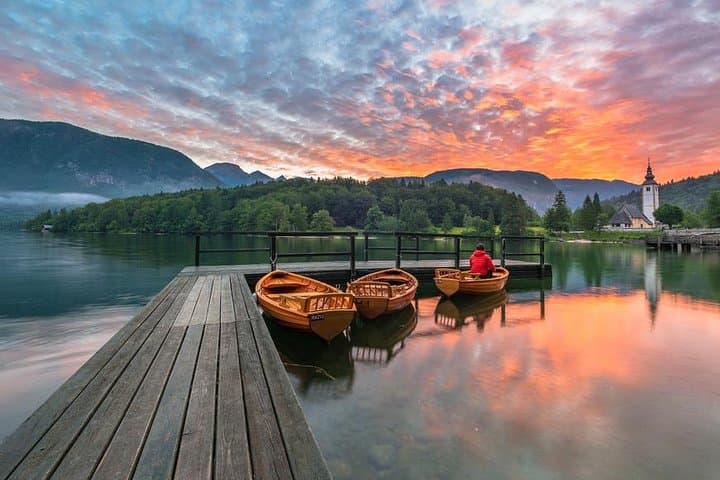
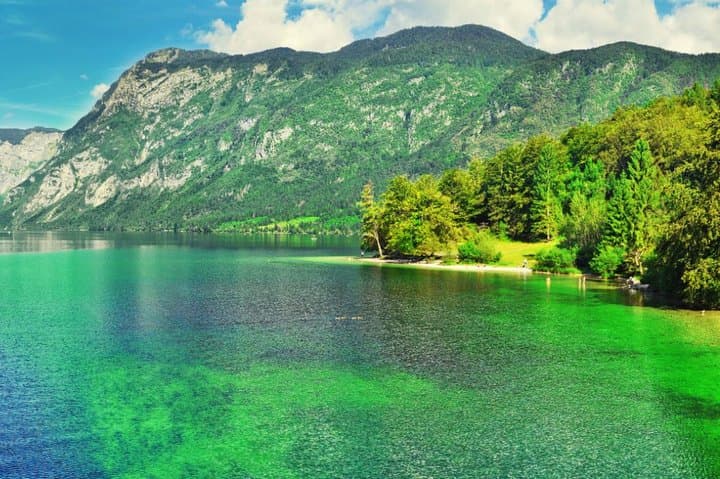
The route flows smoothly: Ljubljana to Bled for castle views and lakeside strolling (save time for the famous kremšnita cream cake), then west into Triglav National Park. Expect a 20–25 minute climb to Savica on roughly 550 stone steps with handrails, gaining about 120 meters before the waterfall appears in a cleft of rock, pushing forward even on dry days. Afterward, Lake Bohinj spreads wide and quiet at Ribčev Laz. The stone bridge and the Church of St. John the Baptist frame some of the most honest alpine scenery in Slovenia; the lake often mirrors clouds that drift like slow-moving thoughts.
Practicalities are straightforward. Total driving is modest, broken by frequent stops. Walking is mostly on paved paths and stone steps, with optional add-ons—like a pletna ride to Bled Island—if time and conditions allow. Weather changes quickly; even in summer, mountain breezes can keep the shade cool. In winter, paths may be icy near Savica and the lakeshore. Pack layers, wear sturdy shoes, and bring water. The guide’s timing typically places you at the castle before midday crowds, then farther into the valley where the pace calms and the scenery does the talking.
By day’s end, the lakes will have worked their quiet spell: Bled offering polish and pageantry, Bohinj answering with raw space. Between them, the Alps keep the rhythm—sometimes gentle, sometimes insistent—inviting you to return for a longer look.
easy.
9–10 hours.
Comfortable walking on paved paths and stairs; suitable for most travelers able to handle short climbs.
Plan on 9–10 hours total with about one hour to Bled, 30–40 minutes to Bohinj, and a short drive to the Savica trailhead, plus sightseeing stops.
It’s a 20–25 minute climb up approximately 550 stone steps with handrails and about 120 m of elevation gain; most visitors manage it at a steady pace.
No, it’s optional and depends on timing and conditions; boatmen accept cash and the ride typically takes 15–20 minutes each way.
Meals aren’t included. You’ll have free time around the lakes to choose a café or restaurant—save room for the classic Bled kremšnita.
Comfortable walking shoes and layered clothing work best. Bring a light rain shell and, in winter, consider traction cleats for icy paths.
Yes, in summer many visitors swim from designated areas. The water stays cool and you must follow Triglav National Park rules and leave no trace.
Bled Castle dates to at least 1011, anchoring centuries of trade and pilgrimage. Prešeren’s poem “The Baptism at the Savica” weaves national identity into the very waterfall you’ll visit.
You’re within Triglav National Park around Bohinj and Savica—stay on signed paths, don’t pick alpine flowers, and pack out all waste. Drone use is restricted; check current regulations.
Palma Travel DMC operates guided outdoor trips and adventures with an emphasis on safety, stewardship, and memorable experiences.
Sunlight slides over the Julian Alps as Lake Bled stirs awake, its tiny island church drifting into focus like a secret. From the ramparts of Bled Castle, the water looks impossibly still while the Karavanke ridgeline nudges the horizon. On a private day trip from Ljubljana, the tempo is unhurried: one hour to the lake, then up to the castle where stone courtyards and a glassy panorama lay out your day’s geography—Bled’s emerald bowl to the east, Bohinj’s wilder basin tucked deeper under Triglav’s watch.
Sunlight slides over the Julian Alps as Lake Bled stirs awake, its tiny island church drifting into focus like a secret. From the ramparts of Bled Castle, the water looks impossibly still while the Karavanke ridgeline nudges the horizon. On a private day trip from Ljubljana, the tempo is unhurried: one hour to the lake, then up to the castle where stone courtyards and a glassy panorama lay out your day’s geography—Bled’s emerald bowl to the east, Bohinj’s wilder basin tucked deeper under Triglav’s watch.
This is glacial country. Both lakes—Bled and Bohinj—are remnants of ice-sculpted valleys, fed by cold springs and hemmed by limestone peaks. History runs as deep as the water. Bled Castle, first mentioned in 1011, keeps watch from its crag while traditional pletna boats have ferried visitors to the island for centuries. Down-valley, the Savica Waterfall crashes from a karst spring into a turquoise pool, the same waters that grow into the Sava Bohinjka. Slovenia’s national poet France Prešeren set his epic “The Baptism at the Savica” here; the cascade still whispers that story, urging you up the steps.
The route flows smoothly: Ljubljana to Bled for castle views and lakeside strolling (save time for the famous kremšnita cream cake), then west into Triglav National Park. Expect a 20–25 minute climb to Savica on roughly 550 stone steps with handrails, gaining about 120 meters before the waterfall appears in a cleft of rock, pushing forward even on dry days. Afterward, Lake Bohinj spreads wide and quiet at Ribčev Laz. The stone bridge and the Church of St. John the Baptist frame some of the most honest alpine scenery in Slovenia; the lake often mirrors clouds that drift like slow-moving thoughts.
Practicalities are straightforward. Total driving is modest, broken by frequent stops. Walking is mostly on paved paths and stone steps, with optional add-ons—like a pletna ride to Bled Island—if time and conditions allow. Weather changes quickly; even in summer, mountain breezes can keep the shade cool. In winter, paths may be icy near Savica and the lakeshore. Pack layers, wear sturdy shoes, and bring water. The guide’s timing typically places you at the castle before midday crowds, then farther into the valley where the pace calms and the scenery does the talking.
By day’s end, the lakes will have worked their quiet spell: Bled offering polish and pageantry, Bohinj answering with raw space. Between them, the Alps keep the rhythm—sometimes gentle, sometimes insistent—inviting you to return for a longer look.