THE ADVENTURE COLLECTIVE® · Independent discovery and booking for outdoor travel

Explore Asheville’s architectural gems and cultural touchstones on a private two-hour walk tailored for two. From the Basilica’s soaring dome to the Grove Arcade’s skylit corridors and Pritchard Park’s lively square, this route blends history, design, and local color at an easy pace.
Explore Asheville’s architectural gems and cultural touchstones on a private two-hour walk tailored for two. From the Basilica’s soaring dome to the Grove Arcade’s skylit corridors and Pritchard Park’s lively square, this route blends history, design, and local color at an easy pace.
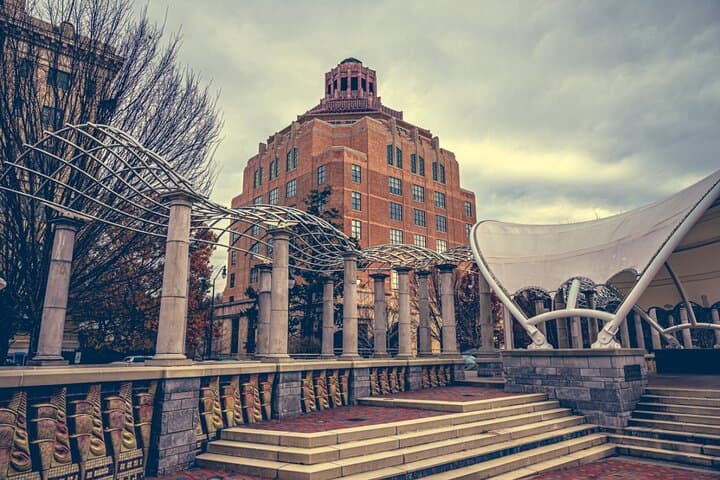
Stone and brick greet you first—the Basilica of Saint Lawrence rising in warm terracotta, its great dome shouldering the sky as church bells test the morning. On this private two-hour stroll built for two, Asheville’s downtown opens like a well-thumbed novel. The route winds across smooth sidewalks and old brickwork, inviting an easy pace that leaves time for conversation, photographs, and the city’s layered stories.
Verified experiences and guided adventures in the surrounding area.
Operated by Opatrip.com USA · Asheville, North Carolina
Stone and brick greet you first—the Basilica of Saint Lawrence rising in warm terracotta, its great dome shouldering the sky as church bells test the morning. On this private two-hour stroll built for two, Asheville’s downtown opens like a well-thumbed novel. The route winds across smooth sidewalks and old brickwork, inviting an easy pace that leaves time for conversation, photographs, and the city’s layered stories.
The guide sets the tone with the Basilica’s Spanish Renaissance flair, designed in part by master builder Rafael Guastavino. Inside, light sifts through stained glass while the massive freestanding elliptical dome seems to breathe—an audacious piece of engineering from 1909 that still draws quiet awe. From there, the sidewalks usher you to the Grove Arcade, Asheville’s 1929 ode to glamour. Under its skylit corridors, local artisans sell jewelry, paper goods, and small-batch treats; the building once housed federal offices during World War II, and today the mezzanines continue to hum with everyday life.
A few blocks later, Pritchard Park invites a pause. On summer evenings, drums rally the square and the rhythm practically marches your feet; by day, the park offers shade, murals, and the soft chatter of fountains. The current of the city gathers here—buskers working a riff, locals trading news, visitors plotting their next stop. The walk pivots toward the Thomas Wolfe Memorial, where Asheville’s most famous author mined family and place for American literature. The Victorian home stands remarkably intact, a reminder that art often starts where you grow up.
You finish around Pack Square and the YMI Cultural Center, a cornerstone of Black history and achievement dating to 1893, originally built to serve skilled African American craftsmen employed at the Biltmore Estate. Asheville’s cultural arc shows in these blocks: ambition expressed in architecture, voices carried forward through public art, and a culinary scene never more than a corner away.
Practically speaking, this tour covers roughly 1 to 1.5 miles over flat city terrain with a few gentle grades. Sturdy walking shoes beat sandals on uneven brick. Bring a light layer in spring and fall; summer afternoons run warm, while winter mornings can nip at fingers. Crowds thin early or toward late afternoon, when the light turns golden and building facades glow.
This is a relaxed, conversation-friendly way to read Asheville in full sentences—architecture with attitude, parks that coax you to linger, and history that still walks beside you. With a private guide, the pace is yours: step slower for photos, step quicker for coffee, and let downtown meet you on your terms.
easy.
2 hours.
Comfortable for most travelers who can walk 1–1.5 miles at a relaxed pace with brief stops.
Plan on 1–1.5 miles over two hours with frequent stops for stories and photos.
Most stops are accessible with curb cuts and ramps; some historic interiors may have limitations—notify the operator in advance for best routing.
Yes, the tour operates in most weather conditions; bring a rain layer or umbrella for spring and summer showers.
Because it’s private, the guide can adjust pacing and add nearby highlights like Wall Street or local galleries.
Public restrooms and cafe options exist along the route—ask your guide for the nearest stop.
Outdoor photography is welcome; some interiors may restrict flash or tripod use—follow posted guidelines.
The Basilica of Saint Lawrence features one of North America’s largest free-standing elliptical domes. The YMI Cultural Center, built in 1893, supported Black craftsmen working on the Biltmore Estate and remains a hub for arts and community.
Help preserve historic sites by avoiding climbing on monuments and respecting posted rules. Consider walking or using public transit to reduce congestion in the compact downtown core.
Opatrip.com USA operates guided outdoor trips and adventures with an emphasis on safety, stewardship, and memorable experiences.

Stone and brick greet you first—the Basilica of Saint Lawrence rising in warm terracotta, its great dome shouldering the sky as church bells test the morning. On this private two-hour stroll built for two, Asheville’s downtown opens like a well-thumbed novel. The route winds across smooth sidewalks and old brickwork, inviting an easy pace that leaves time for conversation, photographs, and the city’s layered stories.
Stone and brick greet you first—the Basilica of Saint Lawrence rising in warm terracotta, its great dome shouldering the sky as church bells test the morning. On this private two-hour stroll built for two, Asheville’s downtown opens like a well-thumbed novel. The route winds across smooth sidewalks and old brickwork, inviting an easy pace that leaves time for conversation, photographs, and the city’s layered stories.
The guide sets the tone with the Basilica’s Spanish Renaissance flair, designed in part by master builder Rafael Guastavino. Inside, light sifts through stained glass while the massive freestanding elliptical dome seems to breathe—an audacious piece of engineering from 1909 that still draws quiet awe. From there, the sidewalks usher you to the Grove Arcade, Asheville’s 1929 ode to glamour. Under its skylit corridors, local artisans sell jewelry, paper goods, and small-batch treats; the building once housed federal offices during World War II, and today the mezzanines continue to hum with everyday life.
A few blocks later, Pritchard Park invites a pause. On summer evenings, drums rally the square and the rhythm practically marches your feet; by day, the park offers shade, murals, and the soft chatter of fountains. The current of the city gathers here—buskers working a riff, locals trading news, visitors plotting their next stop. The walk pivots toward the Thomas Wolfe Memorial, where Asheville’s most famous author mined family and place for American literature. The Victorian home stands remarkably intact, a reminder that art often starts where you grow up.
You finish around Pack Square and the YMI Cultural Center, a cornerstone of Black history and achievement dating to 1893, originally built to serve skilled African American craftsmen employed at the Biltmore Estate. Asheville’s cultural arc shows in these blocks: ambition expressed in architecture, voices carried forward through public art, and a culinary scene never more than a corner away.
Practically speaking, this tour covers roughly 1 to 1.5 miles over flat city terrain with a few gentle grades. Sturdy walking shoes beat sandals on uneven brick. Bring a light layer in spring and fall; summer afternoons run warm, while winter mornings can nip at fingers. Crowds thin early or toward late afternoon, when the light turns golden and building facades glow.
This is a relaxed, conversation-friendly way to read Asheville in full sentences—architecture with attitude, parks that coax you to linger, and history that still walks beside you. With a private guide, the pace is yours: step slower for photos, step quicker for coffee, and let downtown meet you on your terms.