THE ADVENTURE COLLECTIVE® · Independent discovery and booking for outdoor travel

Swim through canyon pools, watch green turtles nest under starlight, and ride 4x4 tracks across the Wahiba Sands before climbing to the cool terraces of Jabal Akhdar and the vast rim of Jabal Shams. This private 6‑day loop from Muscat blends coastal geology, deep history, and mountain drama with comfortable stays and expert guidance.
Swim through canyon pools, watch green turtles nest under starlight, and ride 4x4 tracks across the Wahiba Sands before climbing to the cool terraces of Jabal Akhdar and the vast rim of Jabal Shams. This private 6‑day loop from Muscat blends coastal geology, deep history, and mountain drama with comfortable stays and expert guidance.
Dawn slides over Muscat’s whitewashed corniche as the Gulf shimmers to life and the Al Hajar Mountains shrug off the night. This private six-day circuit wastes no time: the coast beckons, the desert hums, and the mountains are already pulling the light uphill.
Verified experiences and guided adventures in the surrounding area.
Operated by Address Tours Oman · Muscat, Muscat Governorate
Dawn slides over Muscat’s whitewashed corniche as the Gulf shimmers to life and the Al Hajar Mountains shrug off the night. This private six-day circuit wastes no time: the coast beckons, the desert hums, and the mountains are already pulling the light uphill.
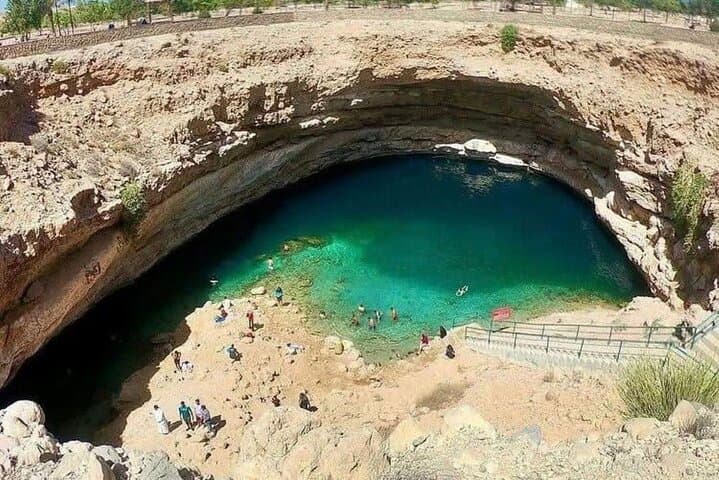
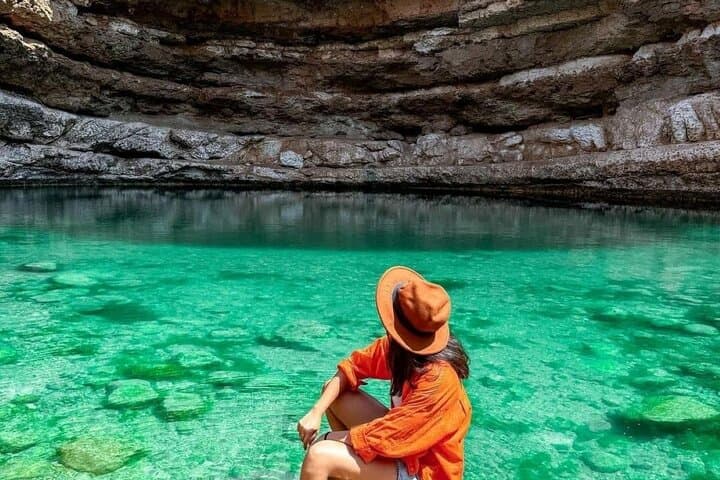
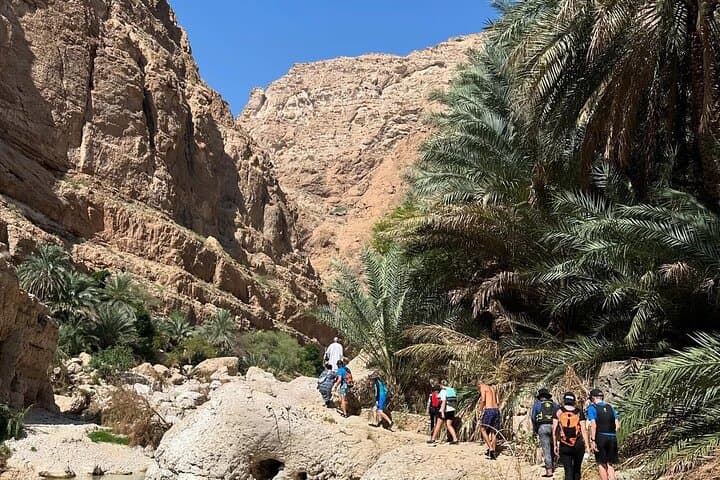
South along the coast, the earth opens into Bimmah Sinkhole where limestone gave way to turquoise water. Fins Beach glints silver, and Wadi Shab draws you inland—its palms whispering shade while the canyon dares you forward. Expect a 35–40 minute approach on a rocky path, then pools that invite a swim through cool corridors to a pocket cave where sunlight threads the water. In Sur, the city’s dhow yards clink with tools; wood remembers voyages that once tied Oman to Africa and India. Night falls at Ras Al Jinz, where the beach becomes a nursery. Green sea turtles heave ashore with single-minded purpose; you follow a ranger, lights dim, voices low.
The route turns inland to Wadi Bani Khalid, a string of deep, clear pools that reward a short walk with long swims. By afternoon the Wahiba Sands rise—a sea of apricot dunes shaped by a breeze that never quits. Your 4x4 climbs and carves; the sand answers back with a soft roar. Sunset from a high ridge is clean and unhurried. Under a sky punched with stars, the desert keeps time by the glow of camp.
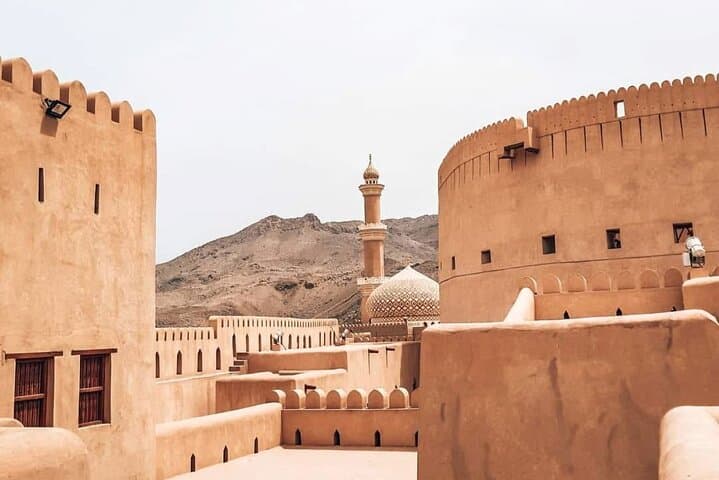
History rides the next day: Al Mudhaireb’s watchtowers line the ridge; Ibra’s mud-brick alleys hold the heat; the beehive tombs of Zukait—cylinders of stacked stone—reach back to the third millennium BCE. Nizwa follows, its 17th‑century fort anchoring a souq where silverwork, clay pots, halwa, and dates change hands under the same arcades that have served caravans for centuries. Up on Jabal Akhdar, terraced gardens catch water from UNESCO‑listed falaj channels; pomegranates, roses, and apricots cling to steep villages like Bani Habib.
Westward the mountains grow stern. Jabreen Castle shows Omani artistry in carved ceilings and quiet chambers. Misfat Al Abriyeen runs with falaj water under date fronds. Then the land breaks open at Jabal Shams—Oman’s “Grand Canyon.” The rim steals your breath and gives it back thinner, crisper. On the final day, the track drops through Wadi Bani Awf, past the improbable green of Balad Sayt and the squeeze of Snake Canyon, before flattening at Nakhal Fort—stone rising straight from bedrock, palms waving below.
This is a journey for the curious and reasonably fit: short hikes, swims in wadis, some bumpy off‑road. Bring respect for the heat, patience for the road, and a camera ready for sand, stone, and sea. Oman does the rest.
moderate.
6 days / 5 nights.
Comfortable walking on uneven terrain for 45–90 minutes, able to handle heat and a few short climbs; swimming in wadis is optional but rewarding.
October to April offers cooler hiking temps and clearer skies in the mountains; May–September is hotter on the coast and desert but coincides with peak turtle nesting.
Swimming is optional, but to reach the final cave you’ll need to swim several short sections; life vests are sometimes rentable at the trailhead and your guide can advise.
Expect comfortable local hotels, a desert camp in Wahiba Sands, and a mountain lodge near Jabal Shams—private rooms with en-suite or shared baths depending on property and availability.
Yes for active families; children should be comfortable with heat, short hikes, and quiet turtle viewing after dark. The guide can tailor distances and stops.
In towns and souqs, shoulders and knees covered is courteous; swimwear is fine at wadis, and a quick-dry T‑shirt over swimwear is appreciated when walking near villages.
Five nights’ accommodation, breakfasts (5) and select dinners, bottled water, all taxes, and private 4WD transportation with hotel/airport pickup in Muscat are included.
Nizwa Fort reflects the 17th‑century Yaruba era, while the beehive tombs of Zukait date to the Early Bronze Age. Oman’s aflaj irrigation systems, seen at Birkat Al Mouz and Misfat, are UNESCO‑listed.
Follow ranger guidance at Ras Al Jinz to protect nesting turtles, and pack out all waste. Stay on established paths near aflaj channels to avoid damaging fragile irrigation walls.
Address Tours Oman operates guided outdoor trips and adventures with an emphasis on safety, stewardship, and memorable experiences.
Dawn slides over Muscat’s whitewashed corniche as the Gulf shimmers to life and the Al Hajar Mountains shrug off the night. This private six-day circuit wastes no time: the coast beckons, the desert hums, and the mountains are already pulling the light uphill.
Dawn slides over Muscat’s whitewashed corniche as the Gulf shimmers to life and the Al Hajar Mountains shrug off the night. This private six-day circuit wastes no time: the coast beckons, the desert hums, and the mountains are already pulling the light uphill.
South along the coast, the earth opens into Bimmah Sinkhole where limestone gave way to turquoise water. Fins Beach glints silver, and Wadi Shab draws you inland—its palms whispering shade while the canyon dares you forward. Expect a 35–40 minute approach on a rocky path, then pools that invite a swim through cool corridors to a pocket cave where sunlight threads the water. In Sur, the city’s dhow yards clink with tools; wood remembers voyages that once tied Oman to Africa and India. Night falls at Ras Al Jinz, where the beach becomes a nursery. Green sea turtles heave ashore with single-minded purpose; you follow a ranger, lights dim, voices low.
The route turns inland to Wadi Bani Khalid, a string of deep, clear pools that reward a short walk with long swims. By afternoon the Wahiba Sands rise—a sea of apricot dunes shaped by a breeze that never quits. Your 4x4 climbs and carves; the sand answers back with a soft roar. Sunset from a high ridge is clean and unhurried. Under a sky punched with stars, the desert keeps time by the glow of camp.
History rides the next day: Al Mudhaireb’s watchtowers line the ridge; Ibra’s mud-brick alleys hold the heat; the beehive tombs of Zukait—cylinders of stacked stone—reach back to the third millennium BCE. Nizwa follows, its 17th‑century fort anchoring a souq where silverwork, clay pots, halwa, and dates change hands under the same arcades that have served caravans for centuries. Up on Jabal Akhdar, terraced gardens catch water from UNESCO‑listed falaj channels; pomegranates, roses, and apricots cling to steep villages like Bani Habib.
Westward the mountains grow stern. Jabreen Castle shows Omani artistry in carved ceilings and quiet chambers. Misfat Al Abriyeen runs with falaj water under date fronds. Then the land breaks open at Jabal Shams—Oman’s “Grand Canyon.” The rim steals your breath and gives it back thinner, crisper. On the final day, the track drops through Wadi Bani Awf, past the improbable green of Balad Sayt and the squeeze of Snake Canyon, before flattening at Nakhal Fort—stone rising straight from bedrock, palms waving below.
This is a journey for the curious and reasonably fit: short hikes, swims in wadis, some bumpy off‑road. Bring respect for the heat, patience for the road, and a camera ready for sand, stone, and sea. Oman does the rest.