THE ADVENTURE COLLECTIVE® · Independent discovery and booking for outdoor travel

Board a private sailing boat in Corralejo for a four‑hour cruise through La Bocaina channel to Lobos Island. Expect sheltered anchorages, snorkeling, kayaks and SUPs, plus close views of volcanic calderas and the Corralejo dunes.
Board a private sailing boat in Corralejo for a four‑hour cruise through La Bocaina channel to Lobos Island. Expect sheltered anchorages, snorkeling, kayaks and SUPs, plus close views of volcanic calderas and the Corralejo dunes.
The gangway thunks, the harbor chatter thins and the Atlantic takes over—cool wind filling canvas, the boat tilting like a living thing that wants to show you something. On a four‑hour private sail from Corralejo, Captain Julian trims the sheets and the coastline slips away: first the white ribbon of the Corralejo dunes, then the low volcanic spine of Fuerteventura, and finally the squat silhouette of Lobos Island rising from the channel.
Verified experiences and guided adventures in the surrounding area.
Operated by Sail Experience Fuerteventura · Corralejo, Fuerteventura
The gangway thunks, the harbor chatter thins and the Atlantic takes over—cool wind filling canvas, the boat tilting like a living thing that wants to show you something. On a four‑hour private sail from Corralejo, Captain Julian trims the sheets and the coastline slips away: first the white ribbon of the Corralejo dunes, then the low volcanic spine of Fuerteventura, and finally the squat silhouette of Lobos Island rising from the channel.
Lobos is small—about 6 km²—with a caldera that reaches roughly 127 meters. The voyage threads La Bocaina, the five‑kilometer channel that separates Fuerteventura from Lanzarote and rarely exceeds 10 meters deep. The shallow channel and steady winds have long made this a working waterway for fishermen and a proving ground for sailors; today it also offers calm anchorages, clear water for snorkeling and a front‑row view of Calderón Hondo’s crater and the Great Dunes Natural Park.
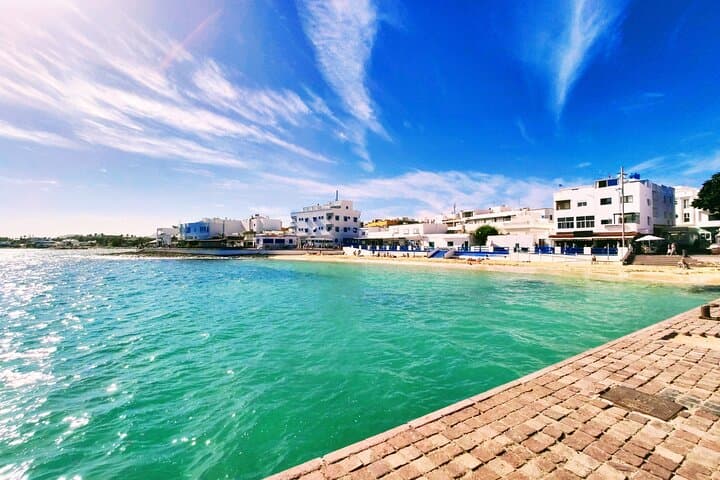
Geology here reads like a primer: wind‑sculpted sands meet exposed volcanic rock, the dunes’ bleached grains contrasting with red ochre lava outcrops. Culturally, Corralejo grew from a fishing village into a resort town, but aboard a small sailing vessel the pace reverts to something older—logs of local conversation, the occasional shout of a seabird, and the steady clink of rigging.
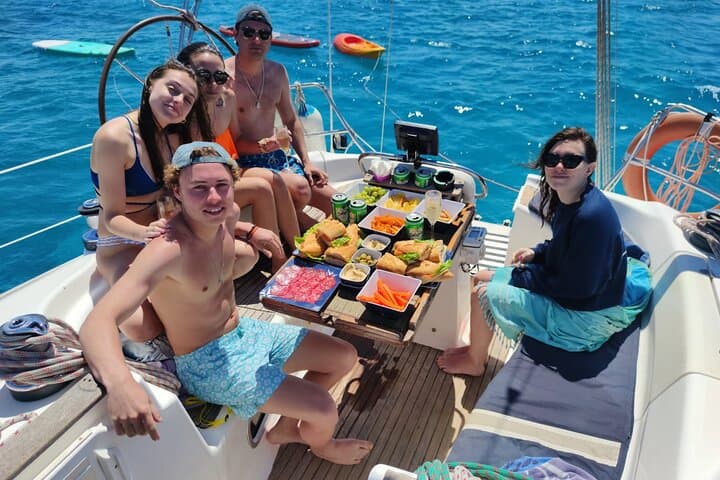
The trip is configured for variety: a panoramic sail, an anchorage on Lobos’ sheltered south side, and a block of water time for snorkeling, kayaking and stand‑up paddleboarding. Equipment—masks, fins, kayaks and a SUP—comes with the boat; bottled water, coffee and a light lunch are provided, and there’s a modest bar for cold drinks.
Practical edge: this is easy, social boating rather than blue‑water crossing. Still, check wind and swell before you book; mornings are calmer for snorkeling and photography, late afternoons offer warmer light over the dunes. Motion‑sickness medication is a simple insurance policy if you’re prone to rolling. Wear reef shoes for rocky entries and a lightweight windbreaker for the breezy return leg.
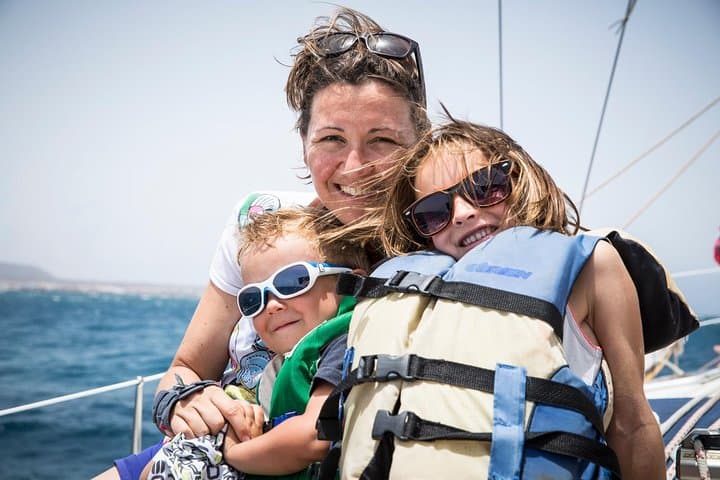
Families and mixed‑ability groups find it accessible—infants can ride in strollers onshore and the crew accommodates beginners in paddle sports. For sailors, the captain will offer pointers if you want to help trim sails and steer.
Conservation note: Lobos is a protected natural area—stay within designated swim zones, avoid anchoring on seagrass beds and use reef‑safe sunscreen. Book a private tour to control group size and minimize impact, and you’ll leave with salt in your hair, a clearer head and a sharper understanding of how wind, water and volcanic rock shape this pocket of the Canary Islands.
easy.
4 hours.
Suitable for most fitness levels; basic swimming ability recommended for snorkeling and water activities.
The tour meets at Corralejo Port; plan to arrive 15 minutes early for boarding and a safety briefing.
Yes—masks, snorkels and fins are included; you can also rent kayaks and a SUP during the trip.
Yes; the tour is family‑friendly. Infants may need to sit on laps per operator policy and life jackets are provided.
Conditions are usually calm but the Bocaina channel can be choppy; bring or take motion‑sickness medication if you’re sensitive.
Non‑swimmers can remain on board or use flotation devices during water activities, but basic swimming ability is recommended for snorkeling.
Full refund is available if you cancel at least 24 hours before departure; trips may be canceled for weather or insufficient bookings.
Lobos has been intermittently inhabited as a fishing and goat‑grazing islet; its volcanic caldera and proximity to trade routes shaped local maritime traditions.
Isla de Lobos is a protected natural park—avoid stepping on dunes or seagrass, take all trash back, and use reef‑safe products to reduce impact.
Sail Experience Fuerteventura operates guided outdoor trips and adventures with an emphasis on safety, stewardship, and memorable experiences.
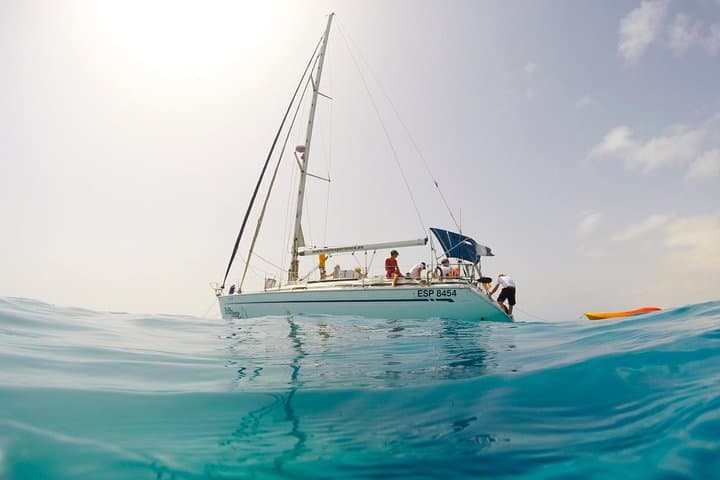
The gangway thunks, the harbor chatter thins and the Atlantic takes over—cool wind filling canvas, the boat tilting like a living thing that wants to show you something. On a four‑hour private sail from Corralejo, Captain Julian trims the sheets and the coastline slips away: first the white ribbon of the Corralejo dunes, then the low volcanic spine of Fuerteventura, and finally the squat silhouette of Lobos Island rising from the channel.
The gangway thunks, the harbor chatter thins and the Atlantic takes over—cool wind filling canvas, the boat tilting like a living thing that wants to show you something. On a four‑hour private sail from Corralejo, Captain Julian trims the sheets and the coastline slips away: first the white ribbon of the Corralejo dunes, then the low volcanic spine of Fuerteventura, and finally the squat silhouette of Lobos Island rising from the channel.
Lobos is small—about 6 km²—with a caldera that reaches roughly 127 meters. The voyage threads La Bocaina, the five‑kilometer channel that separates Fuerteventura from Lanzarote and rarely exceeds 10 meters deep. The shallow channel and steady winds have long made this a working waterway for fishermen and a proving ground for sailors; today it also offers calm anchorages, clear water for snorkeling and a front‑row view of Calderón Hondo’s crater and the Great Dunes Natural Park.
Geology here reads like a primer: wind‑sculpted sands meet exposed volcanic rock, the dunes’ bleached grains contrasting with red ochre lava outcrops. Culturally, Corralejo grew from a fishing village into a resort town, but aboard a small sailing vessel the pace reverts to something older—logs of local conversation, the occasional shout of a seabird, and the steady clink of rigging.
The trip is configured for variety: a panoramic sail, an anchorage on Lobos’ sheltered south side, and a block of water time for snorkeling, kayaking and stand‑up paddleboarding. Equipment—masks, fins, kayaks and a SUP—comes with the boat; bottled water, coffee and a light lunch are provided, and there’s a modest bar for cold drinks.
Practical edge: this is easy, social boating rather than blue‑water crossing. Still, check wind and swell before you book; mornings are calmer for snorkeling and photography, late afternoons offer warmer light over the dunes. Motion‑sickness medication is a simple insurance policy if you’re prone to rolling. Wear reef shoes for rocky entries and a lightweight windbreaker for the breezy return leg.
Families and mixed‑ability groups find it accessible—infants can ride in strollers onshore and the crew accommodates beginners in paddle sports. For sailors, the captain will offer pointers if you want to help trim sails and steer.
Conservation note: Lobos is a protected natural area—stay within designated swim zones, avoid anchoring on seagrass beds and use reef‑safe sunscreen. Book a private tour to control group size and minimize impact, and you’ll leave with salt in your hair, a clearer head and a sharper understanding of how wind, water and volcanic rock shape this pocket of the Canary Islands.