THE ADVENTURE COLLECTIVE® · Independent discovery and booking for outdoor travel

See Budapest’s top sights in four hours with a private guide and a comfortable van. This customizable city tour bridges Buda and Pest — from Parliament and Gellért Hill to the Jewish Quarter and market halls — with hotel pickup and flexible stops.
See Budapest’s top sights in four hours with a private guide and a comfortable van. This customizable city tour bridges Buda and Pest — from Parliament and Gellért Hill to the Jewish Quarter and market halls — with hotel pickup and flexible stops.
You slide into an air‑conditioned minivan and the city unfolds like a map coming to life: the Danube cutting a cool, decisive line through stone and copper roofs; Parliament’s spires prick the skyline; Gellért Hill watches with an old, mossy patience. For four hours a local guide pilots you through Buda and Pest, stopping where the story is sharpest — the castle’s medieval terraces, the onion domes of churches, and the frenetic color of the Central Market Hall.
Verified experiences and guided adventures in the surrounding area.
Operated by Budapest Locals · Budapest, Budapest
You slide into an air‑conditioned minivan and the city unfolds like a map coming to life: the Danube cutting a cool, decisive line through stone and copper roofs; Parliament’s spires prick the skyline; Gellért Hill watches with an old, mossy patience. For four hours a local guide pilots you through Buda and Pest, stopping where the story is sharpest — the castle’s medieval terraces, the onion domes of churches, and the frenetic color of the Central Market Hall.
Budapest is a city of layers. The modern route follows routes carved by empires: Roman outposts on the Buda side, Ottoman baths still steaming beneath baroque façades, and the grand boulevards from the Austro‑Hungarian era. Geology plays a quiet role — the Danube shaped the floodplain that made Pest a trading hub, while the Buda Hills (limestone and sandstone) gave rise to citadels and thermal springs whose heat has fed the city’s famous baths for centuries.
Culturally, the tour moves from stately monuments to lived‑in neighborhoods. You’ll glide past Heroes’ Square and into City Park, where the Széchenyi Baths huff steam on chilly mornings. The Jewish Quarter is next: synagogue courtyards, memorials, and the layered history of commerce and religion. Guides here don’t just point — they stitch anecdotes about 19th‑century coffeehouses, ruin pubs that adopted abandoned buildings in the 2000s, and the post‑war rebuilding that still shapes daily life.
Practical: this is a private, door‑to‑door excursion, so pick‑up can be arranged at your hotel or a city location of choice. Expect several short walks (5–15 minutes) at viewpoints like Gellért Hill and the Castle District; total on‑foot distance is moderate — plan for roughly 2–3 km of walking broken into short sections. Admissions to museums or baths are not included, but your guide can advise on skip‑the‑line options. The route is wheelchair accessible where roads permit, though some historic cobbles in the Castle District can be uneven.
Timing matters. Early morning avoids tram and bus congestion and gives you cleaner light for photos along the river; late afternoon brings warm tones on Parliament and fewer crowds in the Market Hall. Pack a light jacket (the Danube drafts cold in winter), comfortable shoes for cobbles, and a charged phone or small camera. Ask your guide to tailor the stops — whether you want architectural history, Jewish heritage, or a thermal‑bath primer, this private four‑hour loop makes Budapest feel like a city you could walk home in.
easy.
4 hours.
Suitable for travelers of average mobility; short moderate walks of 5–15 minutes at stops.
Yes — hotel pickup and drop‑off within central Budapest are included; you can specify an alternative meeting point.
No — entrance fees (museums, baths) are not included, but your guide can arrange recommendations or tickets.
Generally yes — the van and many stops are accessible, but some historic areas have uneven cobbles; advise the operator of specific needs when booking.
Yes — it’s a private tour designed to be tailored to your interests; let the operator know preferences before departure.
Guides are typically local and multilingual options are frequently available; confirm language when booking.
Full refunds are available if you cancel at least 24 hours before the scheduled departure time, per the standard policy.
Buda and Pest were officially unified into Budapest in 1873; the city’s layout still reflects Roman, Ottoman and Austro‑Hungarian periods.
Tours aim to reduce impact by consolidating drives and encouraging short walks; support Danube clean‑up and local businesses to keep heritage sites sustainable.
Budapest Locals operates guided outdoor trips and adventures with an emphasis on safety, stewardship, and memorable experiences.

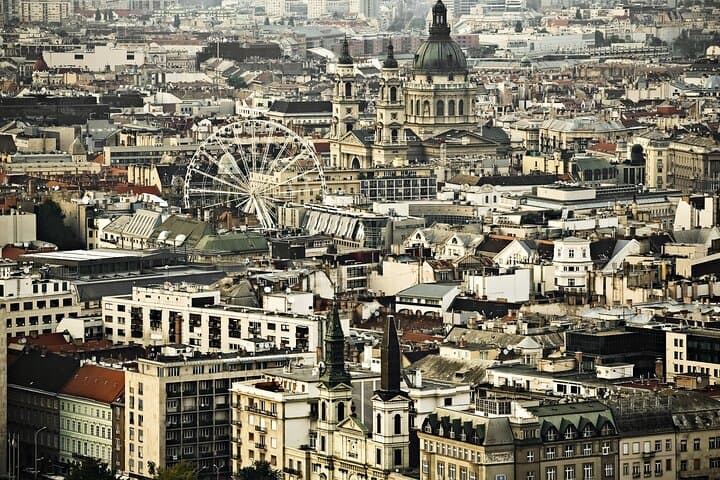
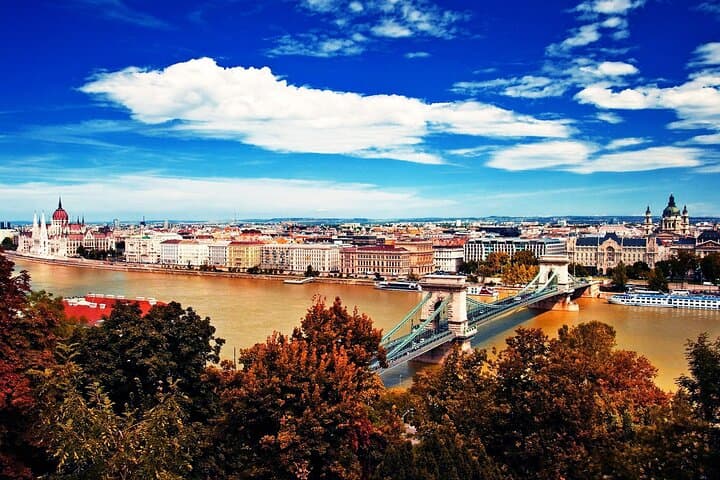
You slide into an air‑conditioned minivan and the city unfolds like a map coming to life: the Danube cutting a cool, decisive line through stone and copper roofs; Parliament’s spires prick the skyline; Gellért Hill watches with an old, mossy patience. For four hours a local guide pilots you through Buda and Pest, stopping where the story is sharpest — the castle’s medieval terraces, the onion domes of churches, and the frenetic color of the Central Market Hall.
You slide into an air‑conditioned minivan and the city unfolds like a map coming to life: the Danube cutting a cool, decisive line through stone and copper roofs; Parliament’s spires prick the skyline; Gellért Hill watches with an old, mossy patience. For four hours a local guide pilots you through Buda and Pest, stopping where the story is sharpest — the castle’s medieval terraces, the onion domes of churches, and the frenetic color of the Central Market Hall.
Budapest is a city of layers. The modern route follows routes carved by empires: Roman outposts on the Buda side, Ottoman baths still steaming beneath baroque façades, and the grand boulevards from the Austro‑Hungarian era. Geology plays a quiet role — the Danube shaped the floodplain that made Pest a trading hub, while the Buda Hills (limestone and sandstone) gave rise to citadels and thermal springs whose heat has fed the city’s famous baths for centuries.
Culturally, the tour moves from stately monuments to lived‑in neighborhoods. You’ll glide past Heroes’ Square and into City Park, where the Széchenyi Baths huff steam on chilly mornings. The Jewish Quarter is next: synagogue courtyards, memorials, and the layered history of commerce and religion. Guides here don’t just point — they stitch anecdotes about 19th‑century coffeehouses, ruin pubs that adopted abandoned buildings in the 2000s, and the post‑war rebuilding that still shapes daily life.
Practical: this is a private, door‑to‑door excursion, so pick‑up can be arranged at your hotel or a city location of choice. Expect several short walks (5–15 minutes) at viewpoints like Gellért Hill and the Castle District; total on‑foot distance is moderate — plan for roughly 2–3 km of walking broken into short sections. Admissions to museums or baths are not included, but your guide can advise on skip‑the‑line options. The route is wheelchair accessible where roads permit, though some historic cobbles in the Castle District can be uneven.
Timing matters. Early morning avoids tram and bus congestion and gives you cleaner light for photos along the river; late afternoon brings warm tones on Parliament and fewer crowds in the Market Hall. Pack a light jacket (the Danube drafts cold in winter), comfortable shoes for cobbles, and a charged phone or small camera. Ask your guide to tailor the stops — whether you want architectural history, Jewish heritage, or a thermal‑bath primer, this private four‑hour loop makes Budapest feel like a city you could walk home in.