THE ADVENTURE COLLECTIVE® · Independent discovery and booking for outdoor travel

A private, skip-the-line day from Zagreb that pairs the mill-lined village of Rastoke with the turquoise cascades of Plitvice Lakes National Park. Expect guided trail choices, a Kozjak boat ride, and practical local insight for an efficient, immersive visit.
A private, skip-the-line day from Zagreb that pairs the mill-lined village of Rastoke with the turquoise cascades of Plitvice Lakes National Park. Expect guided trail choices, a Kozjak boat ride, and practical local insight for an efficient, immersive visit.
The day begins before sunrise in Zagreb, when a private, air-conditioned vehicle eases out of the city and into a patchwork of fields and low karst ridges. Windows frame villages still half-asleep; the river valleys ahead are already practicing their most photogenic trick—mist lifting off the water in horizontal ribbons. Your English-speaking driver-guide breaks the quiet with a clear, practical briefing: the schedule, the ticket details, and which loop through Plitvice’s tiers of lakes will suit your group.
Verified experiences and guided adventures in the surrounding area.
Operated by IN travel International d.o.o. · Plitvička Jezera, Lika-Senj County
The day begins before sunrise in Zagreb, when a private, air-conditioned vehicle eases out of the city and into a patchwork of fields and low karst ridges. Windows frame villages still half-asleep; the river valleys ahead are already practicing their most photogenic trick—mist lifting off the water in horizontal ribbons. Your English-speaking driver-guide breaks the quiet with a clear, practical briefing: the schedule, the ticket details, and which loop through Plitvice’s tiers of lakes will suit your group.
Rastoke, the first stop, is compact and honest: a cluster of wooden watermills perched where the Slunjčica meets the Korana, water demanding attention as it works its way through channels and planks. The guide points out the original mechanisms and recounts how these mills powered local life for centuries, turning grain and cut timber long before tourism arrived.
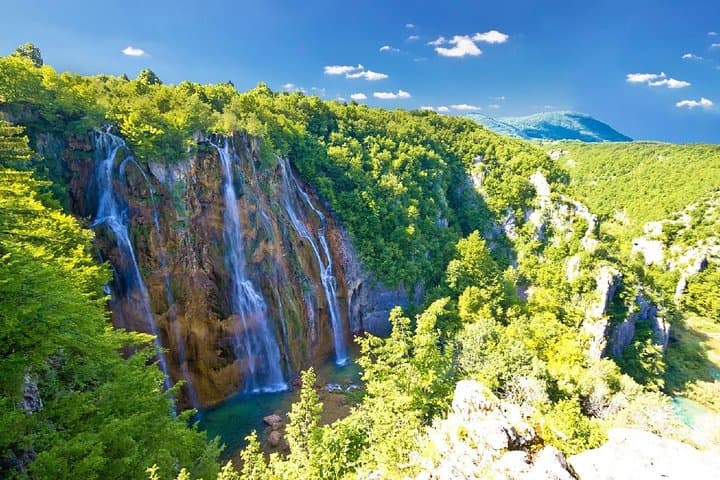
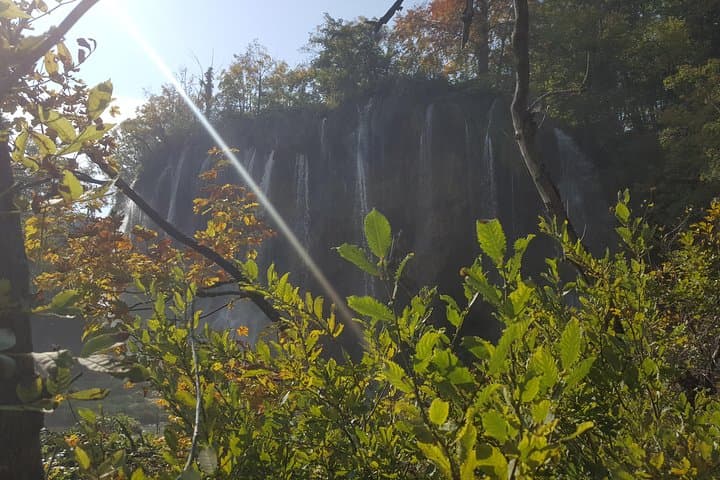
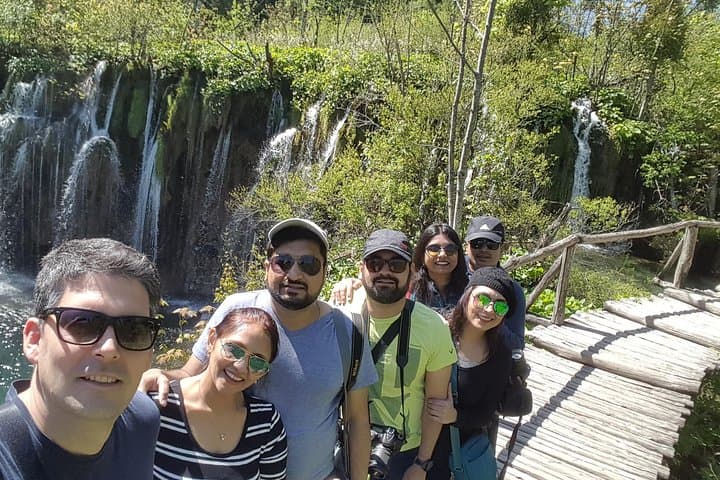
A half-hour drive takes you deeper into the karst—limestone shaped by time into basins and sinkholes that hold a chain of 16 lakes. Plitvice Lakes National Park reads like a geology primer written in water: tufa barriers building from mineral-laden springs, waterfalls that cut new channels, and terraces of turquoise that change hue depending on algae, light, and the river’s mood. The park’s wooden boardwalks thread along the edges and across the water, close enough to hear the water daring you to lean in and imagine where it came from.
Culturally, the region sits at a crossroads. Karlovac’s fortress town and Lika’s rural settlements have been trade and transit points for centuries; Plitvice itself gained international attention after Yugoslav-era conservation made it a national park in 1949, and since then it has been both a refuge for biodiversity and—during peak season—a carefully managed magnet for visitors.
Practically: the tour lasts about eight hours door-to-door, includes private transport and a guide, but entrance to Plitvice is paid separately on the day (seasonal rates apply). Expect three hours inside the park, a scenic boat across Kozjak Lake, and a short panoramic bus transfer to reach the canyon viewpoints above the lower lakes. Wear comfortable walking shoes—the boardwalks are easy but can be wet and slippery—and bring layers: mornings can be cool, afternoons warm.
Timing matters. Spring and autumn offer dramatic light and fewer crowds; summer delivers the warmest water tones but larger visitor flows. Hydrate on the move, protect your electronics from spray at the waterfalls, and leave room in the itinerary for unplanned pauses—an unexpected cascade, a village bakery in Rastoke, a late-afternoon glow on the Upper Lakes.
moderate.
8 hours (door-to-door).
Moderate fitness needed: several hours of walking on variable surfaces and some stairs.
No; entrance fees are paid directly to the guide on the day and vary by season—check the price list provided at booking.
Expect around 3 hours of guided walking inside the park on wooden boardwalks and trails with some stairs; routes are chosen to match the group's fitness.
Yes, children are welcome but must be accompanied by an adult; entrance fees differ by age and are charged on the day.
Some lower lake areas and boat routes are accessible, but many wooden boardwalks and trails have steps—contact the operator to plan for mobility needs.
Meals are not included; there will be time for a short break or lunch in park cafes or at Rastoke—bring snacks if you prefer.
The standard guide is English-speaking; a French-speaking driver/guide can be arranged on request.
Rastoke’s wooden mills are traditional structures that powered local agriculture for centuries; Plitvice became Croatia’s first national park in 1949, protecting karst lakes and tufa formations.
Visitor numbers are managed seasonally to protect fragile tufa barriers; stick to boardwalks and avoid touching formations to reduce algae growth and erosion.
IN travel International d.o.o. operates guided outdoor trips and adventures with an emphasis on safety, stewardship, and memorable experiences.
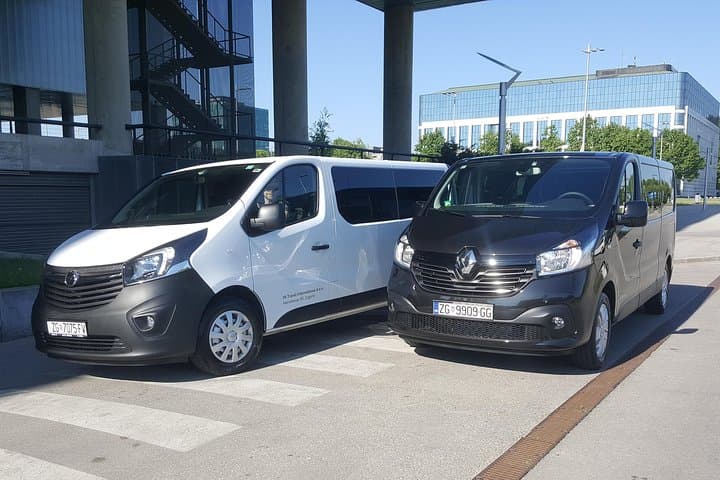
The day begins before sunrise in Zagreb, when a private, air-conditioned vehicle eases out of the city and into a patchwork of fields and low karst ridges. Windows frame villages still half-asleep; the river valleys ahead are already practicing their most photogenic trick—mist lifting off the water in horizontal ribbons. Your English-speaking driver-guide breaks the quiet with a clear, practical briefing: the schedule, the ticket details, and which loop through Plitvice’s tiers of lakes will suit your group.
The day begins before sunrise in Zagreb, when a private, air-conditioned vehicle eases out of the city and into a patchwork of fields and low karst ridges. Windows frame villages still half-asleep; the river valleys ahead are already practicing their most photogenic trick—mist lifting off the water in horizontal ribbons. Your English-speaking driver-guide breaks the quiet with a clear, practical briefing: the schedule, the ticket details, and which loop through Plitvice’s tiers of lakes will suit your group.
Rastoke, the first stop, is compact and honest: a cluster of wooden watermills perched where the Slunjčica meets the Korana, water demanding attention as it works its way through channels and planks. The guide points out the original mechanisms and recounts how these mills powered local life for centuries, turning grain and cut timber long before tourism arrived.
A half-hour drive takes you deeper into the karst—limestone shaped by time into basins and sinkholes that hold a chain of 16 lakes. Plitvice Lakes National Park reads like a geology primer written in water: tufa barriers building from mineral-laden springs, waterfalls that cut new channels, and terraces of turquoise that change hue depending on algae, light, and the river’s mood. The park’s wooden boardwalks thread along the edges and across the water, close enough to hear the water daring you to lean in and imagine where it came from.
Culturally, the region sits at a crossroads. Karlovac’s fortress town and Lika’s rural settlements have been trade and transit points for centuries; Plitvice itself gained international attention after Yugoslav-era conservation made it a national park in 1949, and since then it has been both a refuge for biodiversity and—during peak season—a carefully managed magnet for visitors.
Practically: the tour lasts about eight hours door-to-door, includes private transport and a guide, but entrance to Plitvice is paid separately on the day (seasonal rates apply). Expect three hours inside the park, a scenic boat across Kozjak Lake, and a short panoramic bus transfer to reach the canyon viewpoints above the lower lakes. Wear comfortable walking shoes—the boardwalks are easy but can be wet and slippery—and bring layers: mornings can be cool, afternoons warm.
Timing matters. Spring and autumn offer dramatic light and fewer crowds; summer delivers the warmest water tones but larger visitor flows. Hydrate on the move, protect your electronics from spray at the waterfalls, and leave room in the itinerary for unplanned pauses—an unexpected cascade, a village bakery in Rastoke, a late-afternoon glow on the Upper Lakes.