THE ADVENTURE COLLECTIVE® · Independent discovery and booking for outdoor travel

Spend a day tracing rivers from the mill houses of Rastoke to the travertine terraces of Plitvice Lakes. This small-group tour from Zagreb combines guided walks, a train and an electric boat crossing to make the park’s waterfalls and lakes accessible in one memorable day.
Spend a day tracing rivers from the mill houses of Rastoke to the travertine terraces of Plitvice Lakes. This small-group tour from Zagreb combines guided walks, a train and an electric boat crossing to make the park’s waterfalls and lakes accessible in one memorable day.
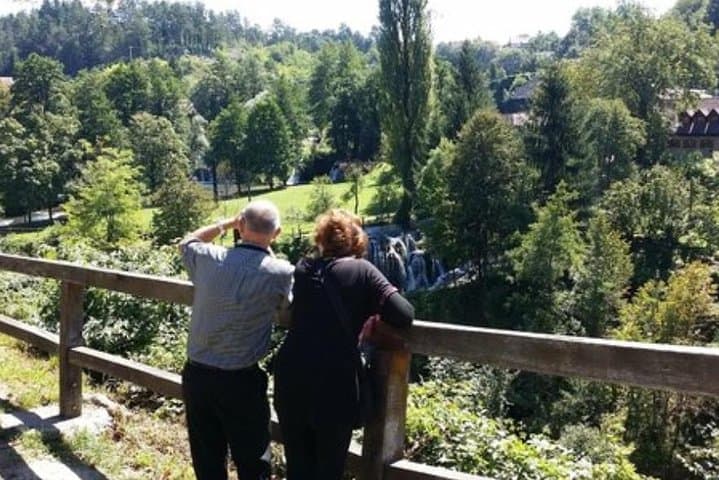
A minivan hums out of Zagreb before dawn, folding the lowlands into ridges and beech forest. By midmorning the road opens to a valley where water keeps busy—rivers threading over limestone, tumbling through wooden mills, then widening into a chain of glass-green lakes. The first stop, Rastoke, announces itself with the steady percussion of mill wheels and small waterfalls that crowd cobbled channels. Guides point to old stone houses clinging to the banks; you feel the human scale against an impatient landscape that has been moving for millennia.
Verified experiences and guided adventures in the surrounding area.
Operated by Zico Tours · Plitvička Jezera, Lika-Senj County
A minivan hums out of Zagreb before dawn, folding the lowlands into ridges and beech forest. By midmorning the road opens to a valley where water keeps busy—rivers threading over limestone, tumbling through wooden mills, then widening into a chain of glass-green lakes. The first stop, Rastoke, announces itself with the steady percussion of mill wheels and small waterfalls that crowd cobbled channels. Guides point to old stone houses clinging to the banks; you feel the human scale against an impatient landscape that has been moving for millennia.
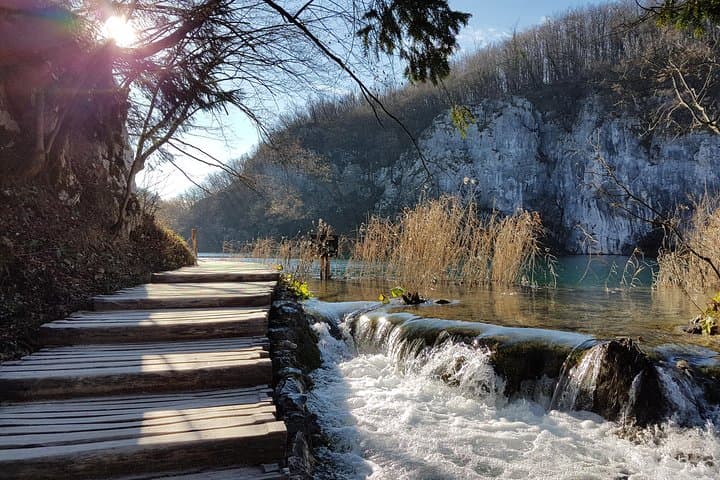
From Rastoke the group continues to Plitvice Lakes National Park, where travertine—the calcium carbonate that builds the park’s stepping terraces—takes on architectural ambition. Water does the constructing here: it carves, deposits and redirects, creating curtains and bowls that catch light like glass. The park’s protected status (established in the mid-20th century and a UNESCO site since 1979) preserves both the geology and a way of life in nearby villages that once depended on the rivers for power and transport.
The guided circuit covers boardwalks, forested switchbacks and a short train ride between the Upper and Lower Lakes, plus a crossing on the park’s electric boat across Kozjak Lake. Expect roughly 6–8 km of walking over 3–4 hours with modest elevation changes—stone steps and wooden planks rather than exposed ridgelines. In spring the falls are loud and full; summer softens the water’s color to tropical greens; autumn frames the terraces in burnt gold; winter can lace the waterfalls in ice and close some paths.
Practically: the tour is a full-day outing (around nine hours total, pick-up from Zagreb included) and the park entrance fee is not included—payable in Croatian kuna to the guide at departure (cards are occasionally accepted but bring cash for exact change). Comfortable walking shoes, a waterproof layer and a refillable water bottle will keep the day moving. The guide times the route to hit major viewpoints—Big Waterfall (Veliki Slap), the boardwalk over the Lower Lakes and the Kozjak crossing—while avoiding the heaviest midafternoon crowds where possible.
For photographers, mornings and late afternoons reward soft light and reflections; for families, the relatively flat boardwalks make the site accessible though some stair sections remain. Above all, respect the park rules: stay on marked paths, keep a distance from wildlife and pack out what you bring in—the entire system of travertine and fauna depends on low-impact visitation. This is a day where the landscape doesn’t just frame the visit; it moves it forward, insisting you keep pace with water.
moderate.
9 hours (including transport).
Suitable for travelers who can comfortably walk 6–8 km with some stairs and uneven surfaces
No. The tour operator will purchase tickets for the group, but you pay the entrance fee directly to the guide in Croatian kuna on departure day.
The guided circuit is about 3–4 hours of walking, covering boardwalks, a short train ride and an electric boat crossing across Kozjak Lake.
Children can enjoy the tour and many boardwalks are stroller-accessible, but some stair sections and uneven paths may require a carrier or to be skipped.
Parts of the park offer level boardwalk access, but not all routes are wheelchair-friendly; contact the operator ahead to discuss accessible options.
Peak season (June–September) brings heavy visitation—early mornings and shoulder seasons offer a quieter experience.
Bring cash in HRK for the most reliable payment; some vendors accept cards but cash ensures smooth transactions for entrance fees.
Plitvice Lakes was protected as a national park in 1949 and became a UNESCO World Heritage site in 1979, preserving its unique travertine formations and traditional water-powered villages.
Visitor fees and regulated paths fund park management; staying on marked trails and avoiding feeding wildlife help protect the fragile travertine and local ecosystems.
Zico Tours operates guided outdoor trips and adventures with an emphasis on safety, stewardship, and memorable experiences.
A minivan hums out of Zagreb before dawn, folding the lowlands into ridges and beech forest. By midmorning the road opens to a valley where water keeps busy—rivers threading over limestone, tumbling through wooden mills, then widening into a chain of glass-green lakes. The first stop, Rastoke, announces itself with the steady percussion of mill wheels and small waterfalls that crowd cobbled channels. Guides point to old stone houses clinging to the banks; you feel the human scale against an impatient landscape that has been moving for millennia.
A minivan hums out of Zagreb before dawn, folding the lowlands into ridges and beech forest. By midmorning the road opens to a valley where water keeps busy—rivers threading over limestone, tumbling through wooden mills, then widening into a chain of glass-green lakes. The first stop, Rastoke, announces itself with the steady percussion of mill wheels and small waterfalls that crowd cobbled channels. Guides point to old stone houses clinging to the banks; you feel the human scale against an impatient landscape that has been moving for millennia.
From Rastoke the group continues to Plitvice Lakes National Park, where travertine—the calcium carbonate that builds the park’s stepping terraces—takes on architectural ambition. Water does the constructing here: it carves, deposits and redirects, creating curtains and bowls that catch light like glass. The park’s protected status (established in the mid-20th century and a UNESCO site since 1979) preserves both the geology and a way of life in nearby villages that once depended on the rivers for power and transport.
The guided circuit covers boardwalks, forested switchbacks and a short train ride between the Upper and Lower Lakes, plus a crossing on the park’s electric boat across Kozjak Lake. Expect roughly 6–8 km of walking over 3–4 hours with modest elevation changes—stone steps and wooden planks rather than exposed ridgelines. In spring the falls are loud and full; summer softens the water’s color to tropical greens; autumn frames the terraces in burnt gold; winter can lace the waterfalls in ice and close some paths.
Practically: the tour is a full-day outing (around nine hours total, pick-up from Zagreb included) and the park entrance fee is not included—payable in Croatian kuna to the guide at departure (cards are occasionally accepted but bring cash for exact change). Comfortable walking shoes, a waterproof layer and a refillable water bottle will keep the day moving. The guide times the route to hit major viewpoints—Big Waterfall (Veliki Slap), the boardwalk over the Lower Lakes and the Kozjak crossing—while avoiding the heaviest midafternoon crowds where possible.
For photographers, mornings and late afternoons reward soft light and reflections; for families, the relatively flat boardwalks make the site accessible though some stair sections remain. Above all, respect the park rules: stay on marked paths, keep a distance from wildlife and pack out what you bring in—the entire system of travertine and fauna depends on low-impact visitation. This is a day where the landscape doesn’t just frame the visit; it moves it forward, insisting you keep pace with water.