THE ADVENTURE COLLECTIVE® · Independent discovery and booking for outdoor travel

Spend a day among the terraced, turquoise lakes of Plitvice National Park on a private full-day tour from Zagreb. Ride the park train, cross Kozjak Lake by boat, and walk the wooden boardwalks that reveal cascading waterfalls and fragile travertine formations.
Spend a day among the terraced, turquoise lakes of Plitvice National Park on a private full-day tour from Zagreb. Ride the park train, cross Kozjak Lake by boat, and walk the wooden boardwalks that reveal cascading waterfalls and fragile travertine formations.
The morning bus leaves Zagreb before the city fully wakes: a ribbon of asphalt unspools through low karst hills and fir forests until the road pulls up against a landscape that seems to have been carved by water and patience. At the park entrance the air is cooler, mineral-scented, and the first of the wooden boardwalks creak underfoot as you step onto the shockingly blue tiers of the Upper Lakes. Water moves with intent here—over travertine ledges, through narrow gorges, and across mirror-smooth basins that reflect beech trunks and limestone cliffs.
Verified experiences and guided adventures in the surrounding area.
Operated by hotelski prijevoz · Plitvička Jezera, Lika-Senj
The morning bus leaves Zagreb before the city fully wakes: a ribbon of asphalt unspools through low karst hills and fir forests until the road pulls up against a landscape that seems to have been carved by water and patience. At the park entrance the air is cooler, mineral-scented, and the first of the wooden boardwalks creak underfoot as you step onto the shockingly blue tiers of the Upper Lakes. Water moves with intent here—over travertine ledges, through narrow gorges, and across mirror-smooth basins that reflect beech trunks and limestone cliffs.
Plitvice Lakes National Park has been a UNESCO World Heritage site since 1979. Its signature geology is karst limestone and tufa (travertine): calcium-rich water builds natural dams that trap sediment and create the stepped lakes. Human settlement in the surrounding valleys tilts toward small villages with Austro-Hungarian and Ottoman-era traces—stone houses, simple churches, and traditions tied to forestry and grazing.
On a private full-day tour from Zagreb you get more than a look: you ride the park’s little electric train, cross Kozjak Lake on the passenger boat, and follow the same wooden paths that blend human movement into the water’s rhythm. The itinerary includes a brief stop in a nearby historic village where stone streets and a local café make a good pause before the longer walks. Guides explain the fragile balance that keeps tufa forming—how changes in water chemistry and foot traffic can halt a process that takes centuries.
Practically: this is a long day—expect about 10 hours from hotel pickup to return. The recommended park route (Entrance 1) visits both upper and lower lakes, includes a boat ride across Kozjak, and covers roughly 6–8 km of walking on boardwalks, paths, and occasional steps; elevation gain is modest but surfaces can be wet and uneven. Buy your park entrance tickets online at least three days ahead—the operator recommends an 11:00 entrance number 1 slot to sync with their schedule. Bring a waterproof layer, grippy shoes, at least 1–2 liters of water, and snacks: food options inside the park are limited and queues form in high season.
Timing matters: mornings are quieter and light on waterfalls looks best when the sun is behind you; late afternoon brings softer light and fewer tour groups. Respect marked trails—tufa is fragile and off-trail walking is both illegal and destructive. For travelers based in Zagreb this tour compresses a remote-seeming landscape into a seamless day trip, delivering big scenery, concise interpretation, and the kind of walking that leaves you clean-tired and ready for a quiet dinner back in the city.
moderate.
10 hours (including transport).
Moderate fitness—able to walk 6–8 km on uneven, sometimes wet boardwalks and climb short flights of steps.
Yes—buy entrance tickets on the official park website at least three days in advance; the operator advises booking Entrance 1 for an 11:00 slot to match the tour schedule.
Expect roughly 6–8 km of walking on wooden boardwalks, gravel paths, and steps over 3–4 hours inside the park, though the full outing lasts about 10 hours including transport.
The tour is family-friendly and listed as physically easy by the operator, but participants should be able to walk for several hours; strollers and wheelchairs have limited access on some routes.
The private tour includes hotel pickup/drop-off in Zagreb, private transport by air-conditioned minivan, an English-speaking guide, bottled water, and the park visit; entrance tickets are not included.
Yes—recommended routes on the tour visit both upper and lower lake systems and include the Kozjak Lake boat crossing and the park’s electric train segments.
Boardwalks can be closed in winter or after severe weather—check the park’s official site for current access and dress in layers with a rain shell during shoulder seasons.
The park’s landscapes formed over millennia through karst dissolution and tufa deposition; the area was protected as a national park in 1949 before UNESCO listing in 1979.
Plitvice manages visitor flow with timed entrances and restricted trails to protect tufa growth; follow park rules and avoid littering to support long-term preservation.
hotelski prijevoz operates guided outdoor trips and adventures with an emphasis on safety, stewardship, and memorable experiences.
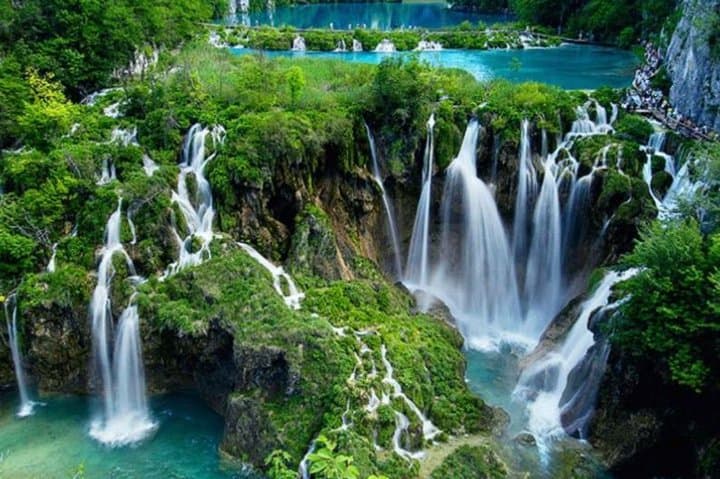

The morning bus leaves Zagreb before the city fully wakes: a ribbon of asphalt unspools through low karst hills and fir forests until the road pulls up against a landscape that seems to have been carved by water and patience. At the park entrance the air is cooler, mineral-scented, and the first of the wooden boardwalks creak underfoot as you step onto the shockingly blue tiers of the Upper Lakes. Water moves with intent here—over travertine ledges, through narrow gorges, and across mirror-smooth basins that reflect beech trunks and limestone cliffs.
The morning bus leaves Zagreb before the city fully wakes: a ribbon of asphalt unspools through low karst hills and fir forests until the road pulls up against a landscape that seems to have been carved by water and patience. At the park entrance the air is cooler, mineral-scented, and the first of the wooden boardwalks creak underfoot as you step onto the shockingly blue tiers of the Upper Lakes. Water moves with intent here—over travertine ledges, through narrow gorges, and across mirror-smooth basins that reflect beech trunks and limestone cliffs.
Plitvice Lakes National Park has been a UNESCO World Heritage site since 1979. Its signature geology is karst limestone and tufa (travertine): calcium-rich water builds natural dams that trap sediment and create the stepped lakes. Human settlement in the surrounding valleys tilts toward small villages with Austro-Hungarian and Ottoman-era traces—stone houses, simple churches, and traditions tied to forestry and grazing.
On a private full-day tour from Zagreb you get more than a look: you ride the park’s little electric train, cross Kozjak Lake on the passenger boat, and follow the same wooden paths that blend human movement into the water’s rhythm. The itinerary includes a brief stop in a nearby historic village where stone streets and a local café make a good pause before the longer walks. Guides explain the fragile balance that keeps tufa forming—how changes in water chemistry and foot traffic can halt a process that takes centuries.
Practically: this is a long day—expect about 10 hours from hotel pickup to return. The recommended park route (Entrance 1) visits both upper and lower lakes, includes a boat ride across Kozjak, and covers roughly 6–8 km of walking on boardwalks, paths, and occasional steps; elevation gain is modest but surfaces can be wet and uneven. Buy your park entrance tickets online at least three days ahead—the operator recommends an 11:00 entrance number 1 slot to sync with their schedule. Bring a waterproof layer, grippy shoes, at least 1–2 liters of water, and snacks: food options inside the park are limited and queues form in high season.
Timing matters: mornings are quieter and light on waterfalls looks best when the sun is behind you; late afternoon brings softer light and fewer tour groups. Respect marked trails—tufa is fragile and off-trail walking is both illegal and destructive. For travelers based in Zagreb this tour compresses a remote-seeming landscape into a seamless day trip, delivering big scenery, concise interpretation, and the kind of walking that leaves you clean-tired and ready for a quiet dinner back in the city.