THE ADVENTURE COLLECTIVE® · Independent discovery and booking for outdoor travel

A private transfer from Zagreb brings you to Plitvice Lakes National Park for several hours of self-guided exploration—boardwalks, turquoise basins, and a boat ride across Kozjak. Perfect for photographers and travelers who want logistics handled but freedom on the trails.
A private transfer from Zagreb brings you to Plitvice Lakes National Park for several hours of self-guided exploration—boardwalks, turquoise basins, and a boat ride across Kozjak. Perfect for photographers and travelers who want logistics handled but freedom on the trails.
The morning begins on the Mlaka road out of Zagreb, city traffic giving way to fir forests and limestone ridges. Your driver—professional, English-speaking, and driving a Mercedes-class vehicle—pulls into a parking area near the park gates and hands you a bottle of chilled water. You step from the car and the air changes: cooler, mineral-rich, threaded with the sound of water. Boardwalks thread through shallow turquoise basins; waterfalls drop in measured cadences that seem to be counting off the hours you have here.
Verified experiences and guided adventures in the surrounding area.
Operated by Driven experience · Plitvička Jezera, Lika-Senj County
The morning begins on the Mlaka road out of Zagreb, city traffic giving way to fir forests and limestone ridges. Your driver—professional, English-speaking, and driving a Mercedes-class vehicle—pulls into a parking area near the park gates and hands you a bottle of chilled water. You step from the car and the air changes: cooler, mineral-rich, threaded with the sound of water. Boardwalks thread through shallow turquoise basins; waterfalls drop in measured cadences that seem to be counting off the hours you have here.
Plitvice Lakes National Park, established in 1949 and a UNESCO World Heritage site since 1979, is a landscape shaped by travertine. Calcium-carbonate deposits build natural dams, lifting lakes and creating falls that rearrange the valley with each season’s pulse. Local communities in the Lika region long used the highlands for pastoralism; today the park is a cultural frontier between rugged mountain life and Croatia’s urban centers.
Walk the upper trails and the geology is obvious: terraces of travertine, bright algae and mosses snagging calcium like a slow plaster cast. The lakes personify moods—some stern and glassy, others playful with whitewater. Rivers dare you to follow their course from pool to pool; the electric boat across Kozjak Lake offers a brief, restful glide.
This experience is designed for independent exploration. The private transfer handles the logistics—pickup and drop-off in Zagreb—so you keep the time in the park flexible. Expect brisk walks on wooden boardwalks and stone paths, short stair sections and occasional slippery patches after rain. There’s no guided commentary to tether you; your itinerary is the park map and your curiosity.
Practical guidance: plan for roughly 4–6 hours inside the park if you want a solid overview—shorter if you select one route and longer if you loop widely and take the boat. Book your park entrance in advance during high season; the park manages numbers tightly. Wear supportive shoes with good grip, bring a lightweight rain shell, and carry reusable water since bottled options are limited on some trails. Restrooms and a few cafés exist near main entrances and at Kozjak, but pack snacks if you prefer to keep moving.
Timing matters. Early arrivals find quieter boardwalks and cleaner light for photos; late afternoons thin the crowds and warm the limestone with soft gold. Crucially, stay on marked trails—travertine is fragile and regenerates slowly. By the time your transfer returns to Zagreb in the evening, the roar of the Big Waterfall will have settled into a steady, enduring hum—a geological clock you can still feel in your bones.
moderate.
8 hours (including transfer).
Moderate fitness: expect several miles of walking on uneven boardwalks and short stair sections; suitable for most travelers who can walk steadily for 2–4 hours.
Drive time is about 2 to 2.5 hours each way, depending on traffic and exact pickup points—plan for an 8-hour round trip overall.
No—entrance tickets are not included; purchase park tickets separately and consider booking a timed entry during high season.
Many boardwalks are stroller-accessible, but some routes include stairs; infants and small children can be accommodated in strollers according to the operator notes.
No—swimming is prohibited to protect fragile travertine formations and water quality.
Yes, there are restrooms and a few cafes near main entrances and by Kozjak Lake, but options are limited on inner trails—pack snacks if needed.
The transfer offers free cancellation up to 24 hours before departure for a full refund—check the supplier policy when booking.
Plitvice Lakes was designated Croatia’s first national park in 1949 and joined UNESCO’s World Heritage list in 1979 for its unique travertine formation and ecological value.
The park limits visitor numbers, enforces stay-on-trail rules, and prohibits swimming to protect travertine growth and water clarity; choose reusable gear and pack out waste.
Driven experience operates guided outdoor trips and adventures with an emphasis on safety, stewardship, and memorable experiences.
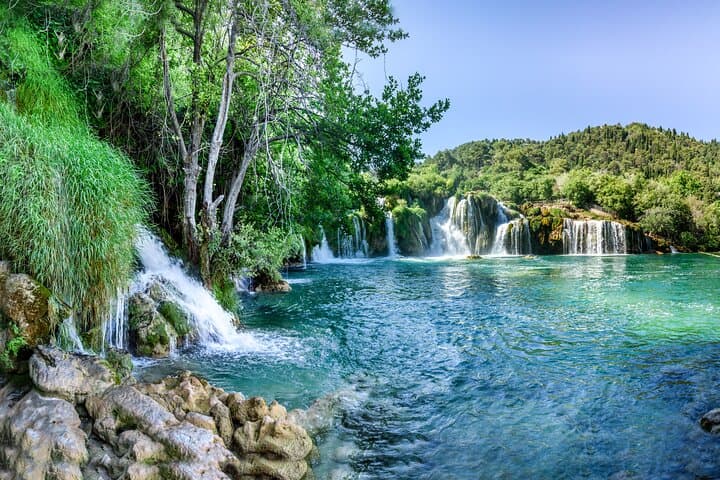
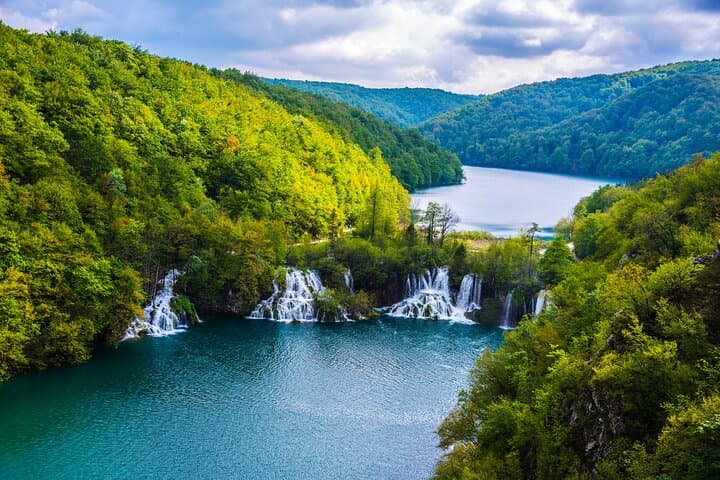


The morning begins on the Mlaka road out of Zagreb, city traffic giving way to fir forests and limestone ridges. Your driver—professional, English-speaking, and driving a Mercedes-class vehicle—pulls into a parking area near the park gates and hands you a bottle of chilled water. You step from the car and the air changes: cooler, mineral-rich, threaded with the sound of water. Boardwalks thread through shallow turquoise basins; waterfalls drop in measured cadences that seem to be counting off the hours you have here.
The morning begins on the Mlaka road out of Zagreb, city traffic giving way to fir forests and limestone ridges. Your driver—professional, English-speaking, and driving a Mercedes-class vehicle—pulls into a parking area near the park gates and hands you a bottle of chilled water. You step from the car and the air changes: cooler, mineral-rich, threaded with the sound of water. Boardwalks thread through shallow turquoise basins; waterfalls drop in measured cadences that seem to be counting off the hours you have here.
Plitvice Lakes National Park, established in 1949 and a UNESCO World Heritage site since 1979, is a landscape shaped by travertine. Calcium-carbonate deposits build natural dams, lifting lakes and creating falls that rearrange the valley with each season’s pulse. Local communities in the Lika region long used the highlands for pastoralism; today the park is a cultural frontier between rugged mountain life and Croatia’s urban centers.
Walk the upper trails and the geology is obvious: terraces of travertine, bright algae and mosses snagging calcium like a slow plaster cast. The lakes personify moods—some stern and glassy, others playful with whitewater. Rivers dare you to follow their course from pool to pool; the electric boat across Kozjak Lake offers a brief, restful glide.
This experience is designed for independent exploration. The private transfer handles the logistics—pickup and drop-off in Zagreb—so you keep the time in the park flexible. Expect brisk walks on wooden boardwalks and stone paths, short stair sections and occasional slippery patches after rain. There’s no guided commentary to tether you; your itinerary is the park map and your curiosity.
Practical guidance: plan for roughly 4–6 hours inside the park if you want a solid overview—shorter if you select one route and longer if you loop widely and take the boat. Book your park entrance in advance during high season; the park manages numbers tightly. Wear supportive shoes with good grip, bring a lightweight rain shell, and carry reusable water since bottled options are limited on some trails. Restrooms and a few cafés exist near main entrances and at Kozjak, but pack snacks if you prefer to keep moving.
Timing matters. Early arrivals find quieter boardwalks and cleaner light for photos; late afternoons thin the crowds and warm the limestone with soft gold. Crucially, stay on marked trails—travertine is fragile and regenerates slowly. By the time your transfer returns to Zagreb in the evening, the roar of the Big Waterfall will have settled into a steady, enduring hum—a geological clock you can still feel in your bones.