THE ADVENTURE COLLECTIVE® · Independent discovery and booking for outdoor travel

Escape the Dalmatian coast for a full-day guided tour to Plitvice Lakes National Park. This trip blends easy lakeside walks, a Kozjak boat crossing, and expert local commentary — a practical, inspiring way to see Croatia’s famous travertine cascades.
Escape the Dalmatian coast for a full-day guided tour to Plitvice Lakes National Park. This trip blends easy lakeside walks, a Kozjak boat crossing, and expert local commentary — a practical, inspiring way to see Croatia’s famous travertine cascades.
The bus slips away from Split’s sun-baked harbor before dawn and the coast gives up its tiled roofs to rolling karst plateaus. By the time the road bends into the fir-lined valley, the sound of engines is replaced by water: the constant, restless voice of Plitvice Lakes.
Verified experiences and guided adventures in the surrounding area.
Operated by Booker - travel agency · Plitvička Jezera, Lika-Senj County
The bus slips away from Split’s sun-baked harbor before dawn and the coast gives up its tiled roofs to rolling karst plateaus. By the time the road bends into the fir-lined valley, the sound of engines is replaced by water: the constant, restless voice of Plitvice Lakes.
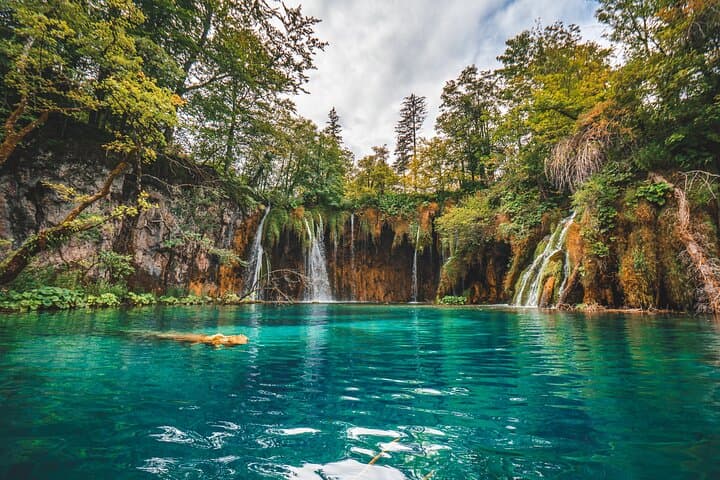
Visitors spill from the vehicle into a forest that feels older than the country itself. Trails thread through moss-draped trunks and step out onto boardwalks that hover over glassy pools. Water flows with intent here — carving travertine ridges, building new dams, and daring you to keep still long enough to watch the lake surfaces stitch cloud reflections into one another. The guided route takes in both the Upper and Lower Lakes, a panoramic boat across Kozjak, and a short electric train ride that eases the return.
Plitvice’s story is geological as much as visual. The lakes exist because calcium carbonate and microbial life combine to make travertine — a living rock that constantly reshapes cascades, curtains, and tiny caves. Archaeological finds in local caverns point to human presence long before the park was protected; modern conservation began in earnest in the 20th century, and UNESCO listed the park in 1979.
Culturally, the park sits at a crossroads of Lika rural life and Croatian tourism: shepherds still move flocks on adjacent slopes in summer, and small villages retain recipes built around smoked cheese and freshwater fish.
Practical guidance for the day: the full round-trip from Split runs about 11 hours, with roughly 5 km of walking on uneven, often wet boardwalks. Wear closed, grippy shoes and a lightweight rain jacket — weather shifts quickly and some sections are restricted in poor conditions. The guided format moves at a steady pace to hit the highlights: Veliki Slap (the Great Waterfall), the Kozjak boat crossing, and the quieter upper pools. Bring a refillable water bottle and snacks; while there are stalls near the entrances, picnic options inside the protected area are limited and rules against swimming are enforced.
Timing matters: arrive early in the park to find silence at viewpoints and to photograph the travertine without tour groups in frame. Respect the boardwalks and signs — the travertine is fragile and foot traffic shapes the landscape. For travelers coming from Split, the convenience of round-trip transport removes navigation stress, but expect a long day: plan light evenings afterward.
Plitvice remains one of those places that insists on being experienced slowly. Even with a schedule, the park rewards anyone willing to pause — to watch a cascade build, a heron lift, or sunlight turn a pool into a moving pane of glass.
moderate.
11 hours.
Moderately fit: comfortable walking 5 km on uneven, sometimes wet boardwalks and handling stairs.
The full excursion is approximately 11 hours round-trip, including transport and about 4 hours inside the park.
This guided option typically includes transport and guiding; check the booking page for current ticket inclusion—admission may be an additional fee in peak season.
Expect about 5 km on boardwalks and trails, with stairs; the route covers both Lower and Upper Lakes highlights.
Yes—children are welcome but must be accompanied by an adult. Infants should sit on laps during transport.
Some sections are wheelchair-friendly (lower boardwalks), but many parts have stairs or uneven paths—not recommended for those with significant mobility limitations.
Early morning and shoulder seasons (late spring or early fall) offer fewer crowds and softer light for photography.
Plitvice was a focus of conservation in the 20th century and became a UNESCO World Heritage Site in 1979; prehistoric human remains have been found in nearby caves.
Travertine is still forming and is vulnerable to erosion—stay on boardwalks and follow park rules to minimize impact.
Booker - travel agency operates guided outdoor trips and adventures with an emphasis on safety, stewardship, and memorable experiences.


The bus slips away from Split’s sun-baked harbor before dawn and the coast gives up its tiled roofs to rolling karst plateaus. By the time the road bends into the fir-lined valley, the sound of engines is replaced by water: the constant, restless voice of Plitvice Lakes.
The bus slips away from Split’s sun-baked harbor before dawn and the coast gives up its tiled roofs to rolling karst plateaus. By the time the road bends into the fir-lined valley, the sound of engines is replaced by water: the constant, restless voice of Plitvice Lakes.
Visitors spill from the vehicle into a forest that feels older than the country itself. Trails thread through moss-draped trunks and step out onto boardwalks that hover over glassy pools. Water flows with intent here — carving travertine ridges, building new dams, and daring you to keep still long enough to watch the lake surfaces stitch cloud reflections into one another. The guided route takes in both the Upper and Lower Lakes, a panoramic boat across Kozjak, and a short electric train ride that eases the return.
Plitvice’s story is geological as much as visual. The lakes exist because calcium carbonate and microbial life combine to make travertine — a living rock that constantly reshapes cascades, curtains, and tiny caves. Archaeological finds in local caverns point to human presence long before the park was protected; modern conservation began in earnest in the 20th century, and UNESCO listed the park in 1979.
Culturally, the park sits at a crossroads of Lika rural life and Croatian tourism: shepherds still move flocks on adjacent slopes in summer, and small villages retain recipes built around smoked cheese and freshwater fish.
Practical guidance for the day: the full round-trip from Split runs about 11 hours, with roughly 5 km of walking on uneven, often wet boardwalks. Wear closed, grippy shoes and a lightweight rain jacket — weather shifts quickly and some sections are restricted in poor conditions. The guided format moves at a steady pace to hit the highlights: Veliki Slap (the Great Waterfall), the Kozjak boat crossing, and the quieter upper pools. Bring a refillable water bottle and snacks; while there are stalls near the entrances, picnic options inside the protected area are limited and rules against swimming are enforced.
Timing matters: arrive early in the park to find silence at viewpoints and to photograph the travertine without tour groups in frame. Respect the boardwalks and signs — the travertine is fragile and foot traffic shapes the landscape. For travelers coming from Split, the convenience of round-trip transport removes navigation stress, but expect a long day: plan light evenings afterward.
Plitvice remains one of those places that insists on being experienced slowly. Even with a schedule, the park rewards anyone willing to pause — to watch a cascade build, a heron lift, or sunlight turn a pool into a moving pane of glass.