THE ADVENTURE COLLECTIVE® · Independent discovery and booking for outdoor travel

A private full-day transfer from Dubrovnik to Plitvice Lakes turns a long haul into a compact natural immersion. Walk across travertine boardwalks, ride a quiet lake ferry and stand beneath the 78‑meter Great Waterfall on a UNESCO-listed landscape shaped by karst and time.
A private full-day transfer from Dubrovnik to Plitvice Lakes turns a long haul into a compact natural immersion. Walk across travertine boardwalks, ride a quiet lake ferry and stand beneath the 78‑meter Great Waterfall on a UNESCO-listed landscape shaped by karst and time.
You step out of the minivan before dawn, the Dalmatian coast shrinking in the rearview as the road climbs toward the karst plateaus of Lika. By midmorning the forest takes over: beech and fir trees press close to the wooden boardwalks and a cool mist lifts off the lakes. The air smells faintly of limestone and moss; somewhere ahead the Great Waterfall is already announcing itself with a low, steady roar.
Verified experiences and guided adventures in the surrounding area.
Operated by AdriaExpert Group · Plitvička Jezera, Lika-Senj County
You step out of the minivan before dawn, the Dalmatian coast shrinking in the rearview as the road climbs toward the karst plateaus of Lika. By midmorning the forest takes over: beech and fir trees press close to the wooden boardwalks and a cool mist lifts off the lakes. The air smells faintly of limestone and moss; somewhere ahead the Great Waterfall is already announcing itself with a low, steady roar.
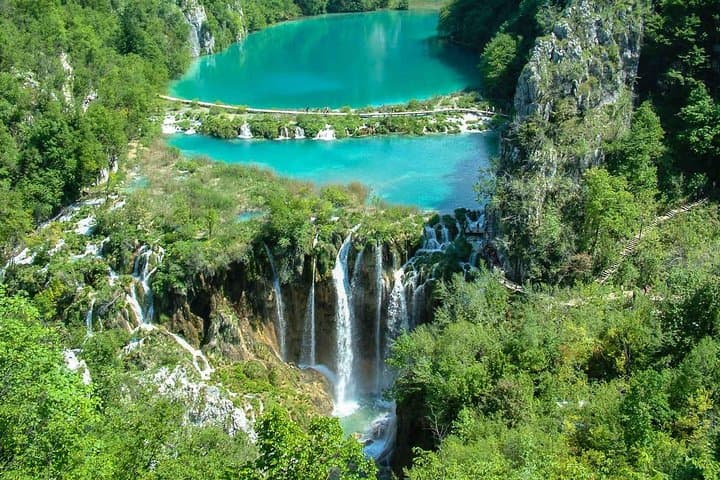
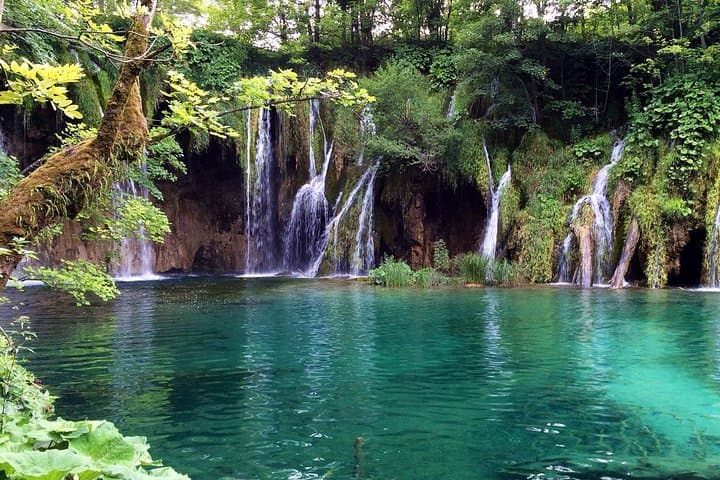
Plitvice Lakes National Park is a geometric, moving landscape—16 interconnected lakes stitched together by travertine dams that grow centimeter by centimeter as water deposits calcium carbonate. Walkways and footbridges trace the contours of upper and lower lakes, and the park stages scenes that shift with the seasons: emerald pools in spring, glassy blues in summer, bronze reflections in fall, and sculpted ice in winter.
This private day trip from the Dubrovnik area turns an arduous logistics puzzle into a single, door-to-door day. Expect long drives (roughly 4–5 hours each way depending on traffic), a guided or self-paced circuit of the park, and a short boat crossing that ferries visitors across the largest lake—an elemental pause between Gornja Jezera (Upper Lakes) and Donja Jezera (Lower Lakes). The route takes you to the Great Waterfall, a 78-meter drop where the water still chisels the travertine barriers that give the park its dramatic steps.
Historically the region sits in Lika, a frontier landscape shaped by shepherding and war; Plitvice was protected in the 20th century and earned UNESCO World Heritage status in 1979 for its geological and ecological importance. Geologically, you’re watching karst at work—rivers changing course, barriers forming and collapsing, a landscape literally writing itself in stone.
Practical notes: this tour typically does not include park admission, so bring your ticket confirmation or budget for entrance at the gate. Boardwalks are well-maintained but can be slippery; waterproof, grippy footwear and a lightweight rain layer are smart. If you want more photography time or to avoid the crowds, ask for an early pickup and aim for the first hours after opening.
A private transfer makes a long day possible—use the time on the road to read about regional dishes like lamb under the peka, and ask your driver for recommended local stops if you plan to overnight near the park. For travelers who crave a concentrated nature experience, Plitvice delivers: waterfalls that keep moving, lakes that seem to breathe, and a scale that reminds you how landscapes are crafted over millennia.
moderate.
11–13 hours.
Suitable for travelers with a moderate fitness level who can handle several hours of walking and some stairs; not suitable for those with severe mobility limits.
No—admission is typically not included; you’ll need to purchase entrance tickets separately or confirm with the operator before booking.
Expect roughly 4–5 hours each way, depending on traffic and exact pickup location—this tour usually runs 11–13 hours total.
No—swimming is prohibited to protect the travertine formations and water quality.
Some paths are level and suitable for limited mobility, but many areas include steps and uneven surfaces; check with the park for specific accessibility routes.
Yes—the short electric boat crossing between the upper and lower lakes is a standard part of the visitor circuit, but confirm whether it’s included in your ticket choice.
Insulated layers, waterproof boots with good traction, and crampon-style attachments for icy sections are recommended in winter months.
Plitvice’s protection grew in the 20th century as the travertine systems were recognized for their scientific and ecological value; it became a UNESCO World Heritage Site in 1979.
The park limits access on certain trails to protect fragile travertine formations and regulates visitor numbers seasonally—respect signs and stick to designated paths.
AdriaExpert Group operates guided outdoor trips and adventures with an emphasis on safety, stewardship, and memorable experiences.
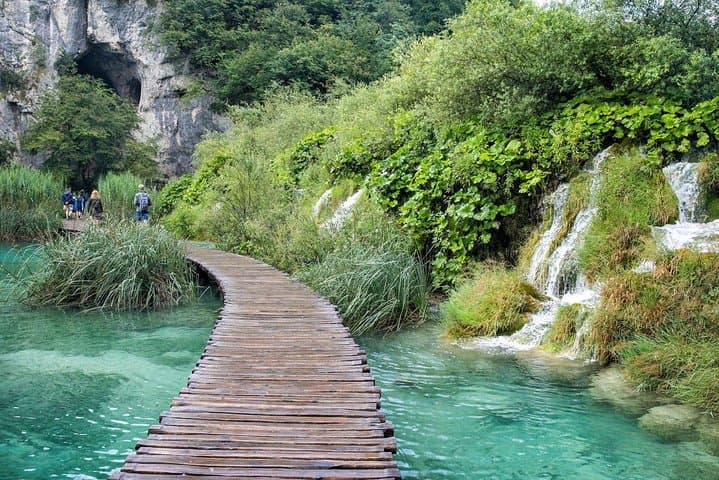
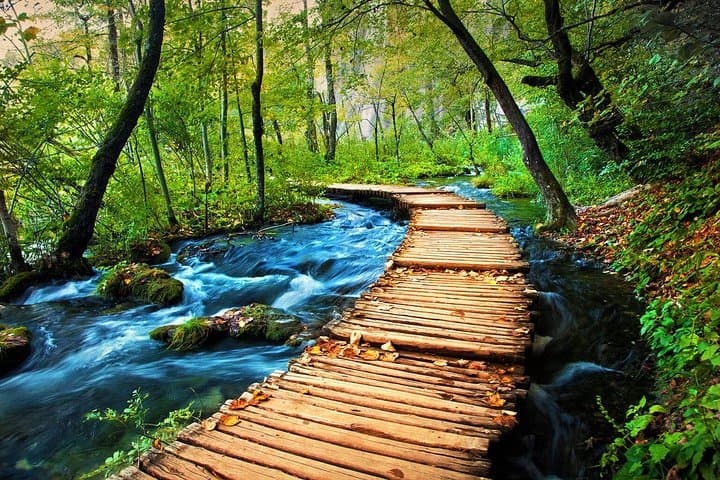
You step out of the minivan before dawn, the Dalmatian coast shrinking in the rearview as the road climbs toward the karst plateaus of Lika. By midmorning the forest takes over: beech and fir trees press close to the wooden boardwalks and a cool mist lifts off the lakes. The air smells faintly of limestone and moss; somewhere ahead the Great Waterfall is already announcing itself with a low, steady roar.
You step out of the minivan before dawn, the Dalmatian coast shrinking in the rearview as the road climbs toward the karst plateaus of Lika. By midmorning the forest takes over: beech and fir trees press close to the wooden boardwalks and a cool mist lifts off the lakes. The air smells faintly of limestone and moss; somewhere ahead the Great Waterfall is already announcing itself with a low, steady roar.
Plitvice Lakes National Park is a geometric, moving landscape—16 interconnected lakes stitched together by travertine dams that grow centimeter by centimeter as water deposits calcium carbonate. Walkways and footbridges trace the contours of upper and lower lakes, and the park stages scenes that shift with the seasons: emerald pools in spring, glassy blues in summer, bronze reflections in fall, and sculpted ice in winter.
This private day trip from the Dubrovnik area turns an arduous logistics puzzle into a single, door-to-door day. Expect long drives (roughly 4–5 hours each way depending on traffic), a guided or self-paced circuit of the park, and a short boat crossing that ferries visitors across the largest lake—an elemental pause between Gornja Jezera (Upper Lakes) and Donja Jezera (Lower Lakes). The route takes you to the Great Waterfall, a 78-meter drop where the water still chisels the travertine barriers that give the park its dramatic steps.
Historically the region sits in Lika, a frontier landscape shaped by shepherding and war; Plitvice was protected in the 20th century and earned UNESCO World Heritage status in 1979 for its geological and ecological importance. Geologically, you’re watching karst at work—rivers changing course, barriers forming and collapsing, a landscape literally writing itself in stone.
Practical notes: this tour typically does not include park admission, so bring your ticket confirmation or budget for entrance at the gate. Boardwalks are well-maintained but can be slippery; waterproof, grippy footwear and a lightweight rain layer are smart. If you want more photography time or to avoid the crowds, ask for an early pickup and aim for the first hours after opening.
A private transfer makes a long day possible—use the time on the road to read about regional dishes like lamb under the peka, and ask your driver for recommended local stops if you plan to overnight near the park. For travelers who crave a concentrated nature experience, Plitvice delivers: waterfalls that keep moving, lakes that seem to breathe, and a scale that reminds you how landscapes are crafted over millennia.