THE ADVENTURE COLLECTIVE® · Independent discovery and booking for outdoor travel

Take the fastest, most direct route to Table Mountain’s summit along Platteklip Gorge — a steep, historic stair of sandstone with sweeping views of Cape Town and Robben Island. This half-day guided hike blends geology, fynbos, and panorama with practical pacing and local insight.
Take the fastest, most direct route to Table Mountain’s summit along Platteklip Gorge — a steep, historic stair of sandstone with sweeping views of Cape Town and Robben Island. This half-day guided hike blends geology, fynbos, and panorama with practical pacing and local insight.
You start at a wooden hut on Tafelberg Road with the city at your back and a cleft in the cliff demanding your attention. Platteklip Gorge doesn’t flirt with you — it points, then goes vertical. The route climbs in a steady, zig-zag line carved through slabs and broken sandstone, punctuated by pockets of fynbos that perfume the air with a resinous, citrus note. As you gain height the skyline of Cape Town unspools: Table Bay, the pale dot of Robben Island, and the steepled downtown fading toward the harbor.
Verified experiences and guided adventures in the surrounding area.
Operated by Wild Things Africa · Cape Town, Western Cape
You start at a wooden hut on Tafelberg Road with the city at your back and a cleft in the cliff demanding your attention. Platteklip Gorge doesn’t flirt with you — it points, then goes vertical. The route climbs in a steady, zig-zag line carved through slabs and broken sandstone, punctuated by pockets of fynbos that perfume the air with a resinous, citrus note. As you gain height the skyline of Cape Town unspools: Table Bay, the pale dot of Robben Island, and the steepled downtown fading toward the harbor.
Platteklip is the oldest obvious route up Table Mountain and the same corridor people used long before the cable car appeared. Geologically the gorge is a cut through Table Mountain’s Table Mountain Sandstone, ancient quartzites that form the plateau’s hard cap and create the step-like, non-technical ascent you’ll use. Culturally this mountain has been a navigational marker for sailors, a site of botanical significance in the Cape Floristic Region, and today a public draw managed within Table Mountain National Park.
Expect roughly 3 km of trail and about 700 m of elevation gain from the trailhead to the summit — short but steep. The route is mainly exposed stone steps and slabs; there are no sustained cliffs or technical sections, but the gradient makes it a sustained workout. Guides on this half-day walk add value by pausing to point out endemic proteas, explain the mountain’s role in Cape Town’s maritime history, and lead you to less obvious photo angles. At the top you’ll find a plateau with multiple viewpoints, restroom facilities, and a café; many hikers choose the cable car back down when weather permits (note: cable car fee not included).
Plan to start early to avoid the midday sun and afternoon wind that can close the cable car. Wear sturdy hiking shoes with good grip — the stone can be slippery if wet — and carry at least 1.5–2 liters of water per person. Sunscreen, a hat, and a light warm layer are essential; conditions on the plateau can change quickly. If you have cardiovascular issues, are pregnant, or have spinal problems, this route is not recommended.
Logistics are straightforward: meet at the wooden hut on Tafelberg Road for a briefing, set a pace that matches your group, and expect about four hours total including summit time. The trail’s honesty is its strength: it rewards steady breathing and measured steps with some of the clearest, most cinematic views of Cape Town you’ll find. For a compact, visceral mountain experience in South Africa, Platteklip Gorge delivers — efficiently, directly, and with a sense of history underfoot.
moderate.
4 hours (including summit time).
Should be comfortable with sustained uphill hiking and stairs; moderate cardiovascular fitness required.
Expect about 3 km one way with roughly 700 m of elevation gain; the guided half-day lasts around four hours including summit time.
No — the cable car back down is an extra cost paid at the upper station and runs only in suitable weather.
Children aged 10 and older can join, but must be accompanied by an adult; the path is steep and requires supervision.
If the cable car is closed you can return on foot; the guide will advise and the tour depends on weather conditions.
Yes — the summit has bathrooms and a cafe where you can refresh and refuel before descending.
No technical experience is required, but you should be in moderate physical condition and able to manage steep, sustained uphill walking.
Platteklip Gorge has long been the direct corridor up Table Mountain and was used for centuries as a route between the plateau and the city; Table Mountain is also a historic maritime landmark for Cape sailors.
Table Mountain National Park protects unique fynbos habitat — stay on marked paths, carry out waste, and respect seasonal fire regulations to minimize impact.
Wild Things Africa operates guided outdoor trips and adventures with an emphasis on safety, stewardship, and memorable experiences.
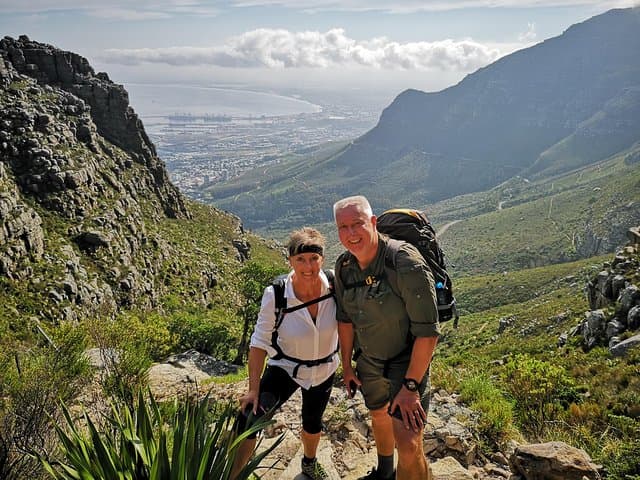
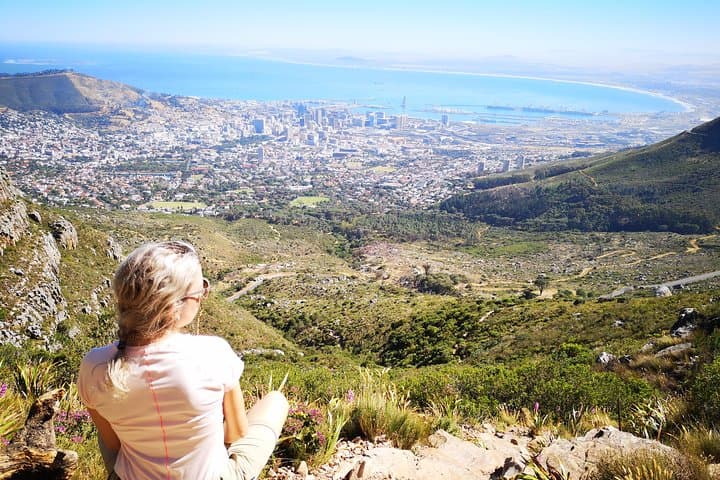
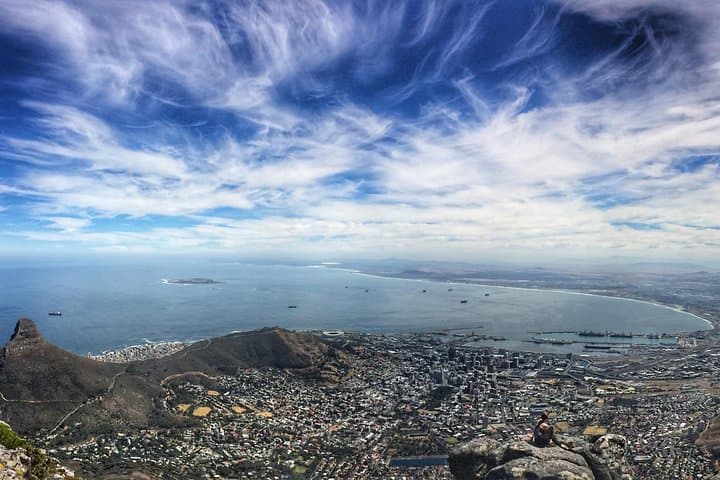
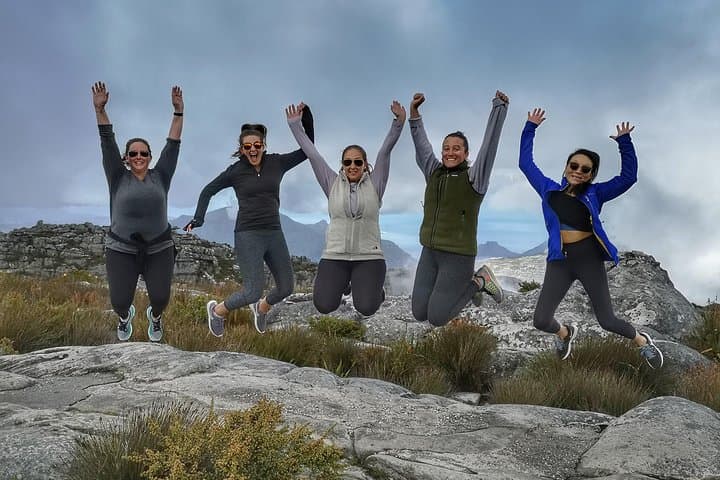
You start at a wooden hut on Tafelberg Road with the city at your back and a cleft in the cliff demanding your attention. Platteklip Gorge doesn’t flirt with you — it points, then goes vertical. The route climbs in a steady, zig-zag line carved through slabs and broken sandstone, punctuated by pockets of fynbos that perfume the air with a resinous, citrus note. As you gain height the skyline of Cape Town unspools: Table Bay, the pale dot of Robben Island, and the steepled downtown fading toward the harbor.
You start at a wooden hut on Tafelberg Road with the city at your back and a cleft in the cliff demanding your attention. Platteklip Gorge doesn’t flirt with you — it points, then goes vertical. The route climbs in a steady, zig-zag line carved through slabs and broken sandstone, punctuated by pockets of fynbos that perfume the air with a resinous, citrus note. As you gain height the skyline of Cape Town unspools: Table Bay, the pale dot of Robben Island, and the steepled downtown fading toward the harbor.
Platteklip is the oldest obvious route up Table Mountain and the same corridor people used long before the cable car appeared. Geologically the gorge is a cut through Table Mountain’s Table Mountain Sandstone, ancient quartzites that form the plateau’s hard cap and create the step-like, non-technical ascent you’ll use. Culturally this mountain has been a navigational marker for sailors, a site of botanical significance in the Cape Floristic Region, and today a public draw managed within Table Mountain National Park.
Expect roughly 3 km of trail and about 700 m of elevation gain from the trailhead to the summit — short but steep. The route is mainly exposed stone steps and slabs; there are no sustained cliffs or technical sections, but the gradient makes it a sustained workout. Guides on this half-day walk add value by pausing to point out endemic proteas, explain the mountain’s role in Cape Town’s maritime history, and lead you to less obvious photo angles. At the top you’ll find a plateau with multiple viewpoints, restroom facilities, and a café; many hikers choose the cable car back down when weather permits (note: cable car fee not included).
Plan to start early to avoid the midday sun and afternoon wind that can close the cable car. Wear sturdy hiking shoes with good grip — the stone can be slippery if wet — and carry at least 1.5–2 liters of water per person. Sunscreen, a hat, and a light warm layer are essential; conditions on the plateau can change quickly. If you have cardiovascular issues, are pregnant, or have spinal problems, this route is not recommended.
Logistics are straightforward: meet at the wooden hut on Tafelberg Road for a briefing, set a pace that matches your group, and expect about four hours total including summit time. The trail’s honesty is its strength: it rewards steady breathing and measured steps with some of the clearest, most cinematic views of Cape Town you’ll find. For a compact, visceral mountain experience in South Africa, Platteklip Gorge delivers — efficiently, directly, and with a sense of history underfoot.