THE ADVENTURE COLLECTIVE® · Independent discovery and booking for outdoor travel

A three-day private loop from Aqaba that stitches Petra’s rose-red façades, Wadi Rum’s sweeping desert, and Aqaba’s reef-lined coast into an adaptable, culturally rich adventure—ideal for travelers who want local context and off-road vistas with a private driver.
A three-day private loop from Aqaba that stitches Petra’s rose-red façades, Wadi Rum’s sweeping desert, and Aqaba’s reef-lined coast into an adaptable, culturally rich adventure—ideal for travelers who want local context and off-road vistas with a private driver.
The morning air in Aqaba tastes faintly of the Red Sea—salt and diesel—and the driver’s van hums awake as street vendors fold awnings. Within two hours the coastal town falls away and the road climbs into the ochre hills that give way to Petra’s rose-red cliffs. You enter Petra the way caravans did centuries ago: through the Siq, a 1.2-kilometer cleft that funnels light and sound toward Al-Khazneh, the Treasury, which appears like a carved mirage. The site pushes you to walk: flat colonnaded avenues, packed-pebble courtyards, and staircases carved into sandstone that lead to hilltop tombs and the Monastery—Ad Deir—reached after roughly 800 steps and a steady 2–2.5 km climb from the valley floor.
Verified experiences and guided adventures in the surrounding area.
Operated by Retaj Jordan Tours and transportation · Wadi Musa, Ma'an Governorate
The morning air in Aqaba tastes faintly of the Red Sea—salt and diesel—and the driver’s van hums awake as street vendors fold awnings. Within two hours the coastal town falls away and the road climbs into the ochre hills that give way to Petra’s rose-red cliffs. You enter Petra the way caravans did centuries ago: through the Siq, a 1.2-kilometer cleft that funnels light and sound toward Al-Khazneh, the Treasury, which appears like a carved mirage. The site pushes you to walk: flat colonnaded avenues, packed-pebble courtyards, and staircases carved into sandstone that lead to hilltop tombs and the Monastery—Ad Deir—reached after roughly 800 steps and a steady 2–2.5 km climb from the valley floor.
By day two the landscape reorders. Wadi Rum is an open page of wind-polished sandstone and granite, cliffs rising in abrupt, folded faces. Geologically it’s a lesson in erosion: softer layers stripped away to leave arches, bridges, and narrow canyons. Bedouin camps sit in pockets of shelter. Nights here are expansive—stars press close enough to read by—and the desert’s silence is an active thing, nudging conversation toward stories of caravan routes and Nabataean ingenuity.
Aqaba returns you to water: snorkeling reefs, small fishing boats, and a compact waterfront where the Red Sea’s emerald shifts to cobalt. The itinerary threads cultural notes—Nabataean rock-cut engineering, Roman columns, Ottoman-era markets—and contemporary Jordanian life: coffee rituals, Bedouin hospitality, and the practical economy of desert tourism.
Practical reality: this private three-day loop requires moderate fitness. Expect 2–3 hours of walking in Petra on day one with uneven stone, loose gravel, and stair climbs; wear grippy shoes and bring layers for early-morning chill. Driving time from Aqaba to Petra is roughly two hours; Petra to Wadi Rum can take 1.5–2.5 hours depending on route and stops; allow flexibility.
Logistics: entrance fees and accommodations are commonly paid on-site—confirm what your operator includes. Pack sun protection, at least 2–3 liters of water per day in desert seasons, a small daypack, and a headlamp if you plan sunrise or late-night desert photos. For Wadi Rum, a short 4x4 jeep tour unlocks dramatic vistas and short hikes; negotiate times and stops with your Bedouin guide.
Timing matters: aim for early-morning entry to Petra to avoid crowds and the midday heat, and reserve a sunset or pre-dawn window in Wadi Rum when light sculpts the rock. This private loop from Aqaba is less a checklist than a rhythm—stone, sand, and sea—that rewards curiosity and a willingness to walk a few extra steps off the beaten path.
moderate.
3 days.
Moderate: comfortable walking for 2–4 hours daily, capable of stair climbs and short desert hikes.
Not always—this tour notes entrance fees and accommodations are typically paid on-site; confirm with the operator before departure.
Expect roughly two hours on a standard route, but allow extra time for traffic and stops.
Yes, but note there are many steps and uneven surfaces in Petra; infants should have carriers and child seats must be pre-booked 24 hours in advance.
Yes—Aqaba offers snorkeling and diving, but water activities and equipment may be separate extras not included in this package.
A 4x4 is recommended for deeper desert exploration; transfers to some Wadi Rum camps are possible by standard vehicle but off-road loops require a jeep.
Tipping local guides, drivers, and Bedouin hosts is customary—small cash tips for good service are appreciated.
Petra was the Nabataeans’ capital from the 4th century BCE; their water-engineering and rock-carving skills turned an arid trade hub into an architectural center.
Visitors should stick to marked paths in Petra to protect fragile sandstone; in Aqaba support operators that follow reef-friendly practices and avoid anchoring on coral.
Retaj Jordan Tours and transportation operates guided outdoor trips and adventures with an emphasis on safety, stewardship, and memorable experiences.
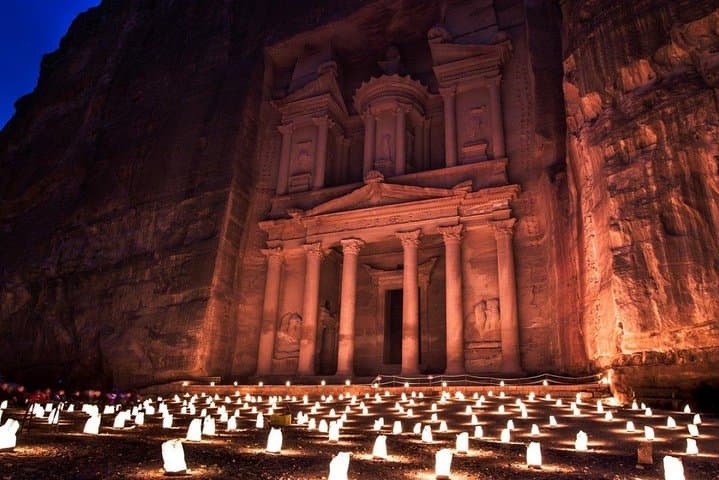

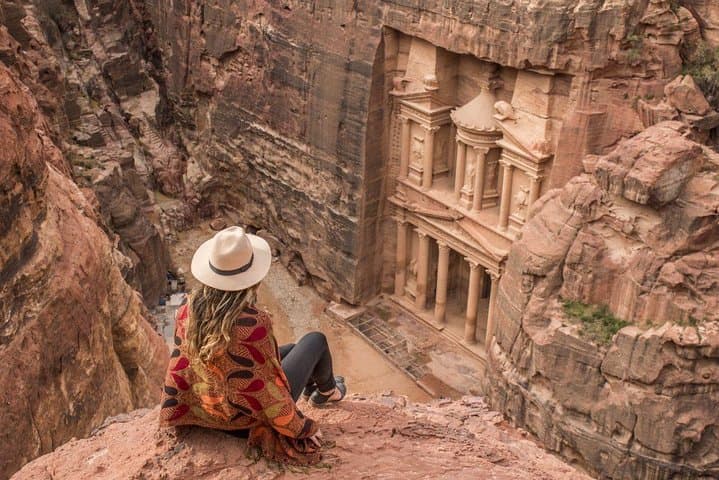

The morning air in Aqaba tastes faintly of the Red Sea—salt and diesel—and the driver’s van hums awake as street vendors fold awnings. Within two hours the coastal town falls away and the road climbs into the ochre hills that give way to Petra’s rose-red cliffs. You enter Petra the way caravans did centuries ago: through the Siq, a 1.2-kilometer cleft that funnels light and sound toward Al-Khazneh, the Treasury, which appears like a carved mirage. The site pushes you to walk: flat colonnaded avenues, packed-pebble courtyards, and staircases carved into sandstone that lead to hilltop tombs and the Monastery—Ad Deir—reached after roughly 800 steps and a steady 2–2.5 km climb from the valley floor.
The morning air in Aqaba tastes faintly of the Red Sea—salt and diesel—and the driver’s van hums awake as street vendors fold awnings. Within two hours the coastal town falls away and the road climbs into the ochre hills that give way to Petra’s rose-red cliffs. You enter Petra the way caravans did centuries ago: through the Siq, a 1.2-kilometer cleft that funnels light and sound toward Al-Khazneh, the Treasury, which appears like a carved mirage. The site pushes you to walk: flat colonnaded avenues, packed-pebble courtyards, and staircases carved into sandstone that lead to hilltop tombs and the Monastery—Ad Deir—reached after roughly 800 steps and a steady 2–2.5 km climb from the valley floor.
By day two the landscape reorders. Wadi Rum is an open page of wind-polished sandstone and granite, cliffs rising in abrupt, folded faces. Geologically it’s a lesson in erosion: softer layers stripped away to leave arches, bridges, and narrow canyons. Bedouin camps sit in pockets of shelter. Nights here are expansive—stars press close enough to read by—and the desert’s silence is an active thing, nudging conversation toward stories of caravan routes and Nabataean ingenuity.
Aqaba returns you to water: snorkeling reefs, small fishing boats, and a compact waterfront where the Red Sea’s emerald shifts to cobalt. The itinerary threads cultural notes—Nabataean rock-cut engineering, Roman columns, Ottoman-era markets—and contemporary Jordanian life: coffee rituals, Bedouin hospitality, and the practical economy of desert tourism.
Practical reality: this private three-day loop requires moderate fitness. Expect 2–3 hours of walking in Petra on day one with uneven stone, loose gravel, and stair climbs; wear grippy shoes and bring layers for early-morning chill. Driving time from Aqaba to Petra is roughly two hours; Petra to Wadi Rum can take 1.5–2.5 hours depending on route and stops; allow flexibility.
Logistics: entrance fees and accommodations are commonly paid on-site—confirm what your operator includes. Pack sun protection, at least 2–3 liters of water per day in desert seasons, a small daypack, and a headlamp if you plan sunrise or late-night desert photos. For Wadi Rum, a short 4x4 jeep tour unlocks dramatic vistas and short hikes; negotiate times and stops with your Bedouin guide.
Timing matters: aim for early-morning entry to Petra to avoid crowds and the midday heat, and reserve a sunset or pre-dawn window in Wadi Rum when light sculpts the rock. This private loop from Aqaba is less a checklist than a rhythm—stone, sand, and sea—that rewards curiosity and a willingness to walk a few extra steps off the beaten path.