THE ADVENTURE COLLECTIVE® · Independent discovery and booking for outdoor travel

See two of Jordan’s most unforgettable places in one long, well-paced day. This private tour pairs the canyon-locked grandeur of Petra with the open, wind-carved deserts of Wadi Rum — ideal for travelers short on time but hungry for dramatic landscapes.
See two of Jordan’s most unforgettable places in one long, well-paced day. This private tour pairs the canyon-locked grandeur of Petra with the open, wind-carved deserts of Wadi Rum — ideal for travelers short on time but hungry for dramatic landscapes.
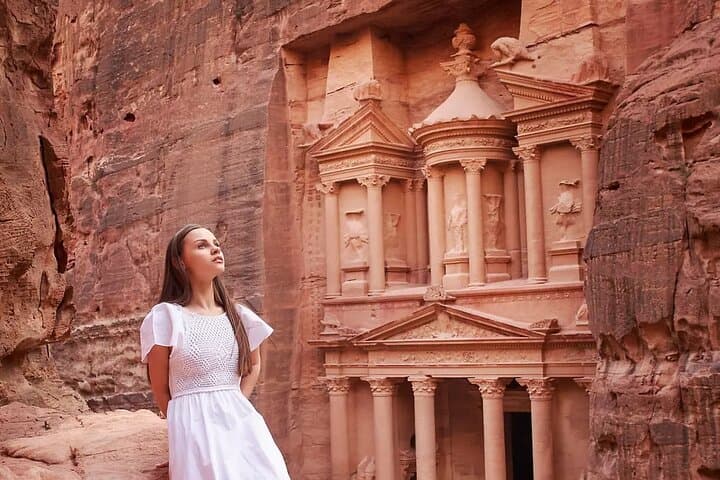
Dawn on the desert road feels intentional: headlights carve a ribbon through limestone hills while the driver keeps quiet watch. By mid-morning the car eases into Wadi Musa and the first reddish light slants into the Siq, the narrow cleft that funnels visitors into Petra. The canyon walls close, sandstone pressing like a corridor of stories, and when the Treasury appears it arrives with the blunt drama of an unveiled monument. Later, the truck will grind across Wadi Rum’s stony flats, and the desert will open its arms — wind tracing the faces of verre sandstone domes, dunes catching an orange that seems to hold on.
Verified experiences and guided adventures in the surrounding area.
Operated by Tour Experts · Wadi Musa, Ma'an Governorate
Dawn on the desert road feels intentional: headlights carve a ribbon through limestone hills while the driver keeps quiet watch. By mid-morning the car eases into Wadi Musa and the first reddish light slants into the Siq, the narrow cleft that funnels visitors into Petra. The canyon walls close, sandstone pressing like a corridor of stories, and when the Treasury appears it arrives with the blunt drama of an unveiled monument. Later, the truck will grind across Wadi Rum’s stony flats, and the desert will open its arms — wind tracing the faces of verre sandstone domes, dunes catching an orange that seems to hold on.
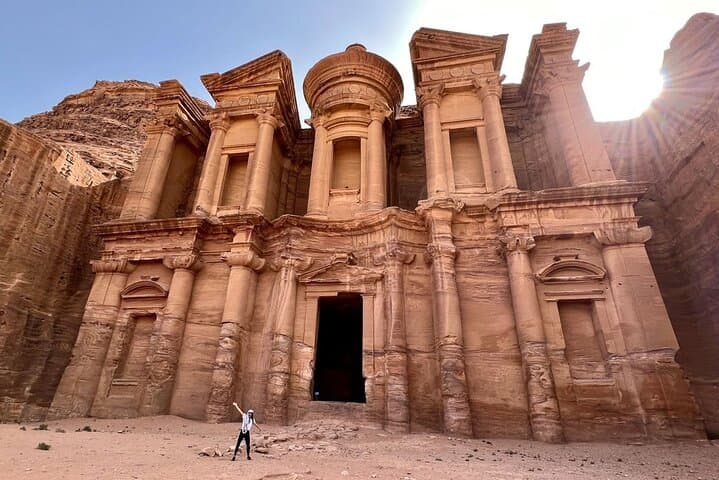
This private day tour stitches two very different landscapes into a single, high-contrast loop. Petra, the Nabataean capital, sits around 230–240 km south of Amman (roughly a 3‑hour drive). It occupies a rocky amphitheater at about 900 m elevation and asks for several kilometers of walking on uneven, sometimes steep paths: the Siq to the Treasury is about 1.2 km, and a fuller circuit to the Royal Tombs and Monastery adds up to 6–8 km on rough stone. Geologically, Petra is carved from Cambrian sandstone; wind and water over millions of years sculpted the fissures that became gateways for an empire built on trade.
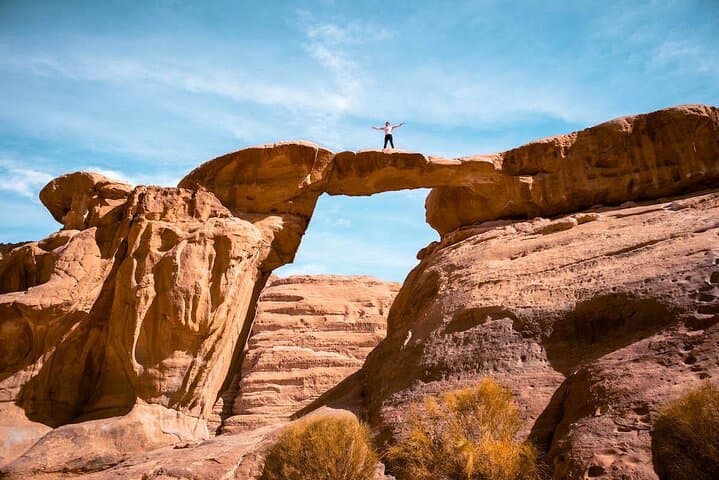
Wadi Rum, often called the Valley of the Moon, is a contrasting lesson in erosion — broad washes, towering inselbergs and rumpled sandstone escarpments that catch sunset like a slow-burning ember. The transfer from Petra to Wadi Rum is about 90 minutes; guides typically time the afternoon to arrive for late light that deepens shadows and defines rock faces.
Practical edge: this is a long day. Expect 10–14 hours from hotel pickup to return. Wear broken-in walking shoes with good tread, bring 2–3 liters of water, and layer for big temperature swings — desert afternoons heat up, nights and high canyon sections cool quickly. Entrance fees to Petra are not always included; check your booking. If time is tight, prioritize the Siq, Treasury, Street of Facades and Royal Tombs at Petra, and in Wadi Rum ask your driver to pause at a high viewpoint for sunset.
Local culture threads through both sites: Bedouin guides and drivers are common in Wadi Rum, offering short walks or jeep loops and sharing stories about routes, plants and stars. Conservation is active but delicate — stick to marked paths in Petra to help preserve carved facades and avoid leaving litter in Wadi Rum; water is scarce and should be conserved.
In short, this itinerary compresses two of Jordan’s most cinematic places into a single, efficient passage. It’s best for travelers who prioritize seeing both landscapes in one intensive, well-orchestrated day, and who arrive ready to walk, listen and keep pace with the shifting light.
moderate.
10–14 hours.
Moderate fitness — able to walk 4–8 km over uneven stone and handle several hours on foot.
The drive is roughly 230–240 km and usually takes about 3 hours depending on traffic and stops.
Not always — check your booking; many private tours exclude Petra’s entrance fee and optional horse or donkey rides inside the site.
Some sections near the Petra entrance and vehicle access points are accessible, but the Siq and many ruins require walking on uneven ground; Wadi Rum vehicle terrain is rough and less accessible.
Seeing the Treasury plus a short circuit is realistic; reaching the Monastery adds additional hiking (up to 800 steps) and may require more time than a single-day itinerary allows.
Yes — Bedouin-operated jeep tours and short camel rides are widely available; confirm timing and price with your guide to fit them into the schedule.
Light, modest clothing that covers shoulders and knees is appropriate at cultural sites; breathable layers work best for daytime heat and cooler mornings.
Petra was the Nabataean kingdom’s capital and an important incense and trade hub; it re-emerged to Western explorers in 1812 after centuries of local stewardship.
Both Petra and Wadi Rum manage visitor impact through site regulations and community-led initiatives — stick to paths, minimize plastic waste and respect Bedouin lands.
Tour Experts operates guided outdoor trips and adventures with an emphasis on safety, stewardship, and memorable experiences.

Dawn on the desert road feels intentional: headlights carve a ribbon through limestone hills while the driver keeps quiet watch. By mid-morning the car eases into Wadi Musa and the first reddish light slants into the Siq, the narrow cleft that funnels visitors into Petra. The canyon walls close, sandstone pressing like a corridor of stories, and when the Treasury appears it arrives with the blunt drama of an unveiled monument. Later, the truck will grind across Wadi Rum’s stony flats, and the desert will open its arms — wind tracing the faces of verre sandstone domes, dunes catching an orange that seems to hold on.
Dawn on the desert road feels intentional: headlights carve a ribbon through limestone hills while the driver keeps quiet watch. By mid-morning the car eases into Wadi Musa and the first reddish light slants into the Siq, the narrow cleft that funnels visitors into Petra. The canyon walls close, sandstone pressing like a corridor of stories, and when the Treasury appears it arrives with the blunt drama of an unveiled monument. Later, the truck will grind across Wadi Rum’s stony flats, and the desert will open its arms — wind tracing the faces of verre sandstone domes, dunes catching an orange that seems to hold on.
This private day tour stitches two very different landscapes into a single, high-contrast loop. Petra, the Nabataean capital, sits around 230–240 km south of Amman (roughly a 3‑hour drive). It occupies a rocky amphitheater at about 900 m elevation and asks for several kilometers of walking on uneven, sometimes steep paths: the Siq to the Treasury is about 1.2 km, and a fuller circuit to the Royal Tombs and Monastery adds up to 6–8 km on rough stone. Geologically, Petra is carved from Cambrian sandstone; wind and water over millions of years sculpted the fissures that became gateways for an empire built on trade.
Wadi Rum, often called the Valley of the Moon, is a contrasting lesson in erosion — broad washes, towering inselbergs and rumpled sandstone escarpments that catch sunset like a slow-burning ember. The transfer from Petra to Wadi Rum is about 90 minutes; guides typically time the afternoon to arrive for late light that deepens shadows and defines rock faces.
Practical edge: this is a long day. Expect 10–14 hours from hotel pickup to return. Wear broken-in walking shoes with good tread, bring 2–3 liters of water, and layer for big temperature swings — desert afternoons heat up, nights and high canyon sections cool quickly. Entrance fees to Petra are not always included; check your booking. If time is tight, prioritize the Siq, Treasury, Street of Facades and Royal Tombs at Petra, and in Wadi Rum ask your driver to pause at a high viewpoint for sunset.
Local culture threads through both sites: Bedouin guides and drivers are common in Wadi Rum, offering short walks or jeep loops and sharing stories about routes, plants and stars. Conservation is active but delicate — stick to marked paths in Petra to help preserve carved facades and avoid leaving litter in Wadi Rum; water is scarce and should be conserved.
In short, this itinerary compresses two of Jordan’s most cinematic places into a single, efficient passage. It’s best for travelers who prioritize seeing both landscapes in one intensive, well-orchestrated day, and who arrive ready to walk, listen and keep pace with the shifting light.