THE ADVENTURE COLLECTIVE® · Independent discovery and booking for outdoor travel

Spend a day tracing Pamphylia’s story from Perge’s colonnades to Aspendos’ perfect theater, finish in the pine-scented cool of Kursunlu Waterfall. This guided, skip-the-line tour from Antalya pairs archaeology with a refreshing natural finale.
Spend a day tracing Pamphylia’s story from Perge’s colonnades to Aspendos’ perfect theater, finish in the pine-scented cool of Kursunlu Waterfall. This guided, skip-the-line tour from Antalya pairs archaeology with a refreshing natural finale.
The guide's minivan eases away from Antalya just after dawn. Citrus groves and low hills blur past as the Mediterranean sun climbs and the day opens with stone—columns, steps and an amphitheater that still breathes sound. At Perge you step off the bus into a Roman street where carved thresholds and column drums keep their cool in the shade; at Aspendos the theatre's stones throw long, perfect shadows that show why music still fits inside these walls. Later, the forest hush of Kursunlu wraps visitors in pine-scented air and water that insists on moving, cascading over stepped ledges into pools the color of fresh coin.
Verified experiences and guided adventures in the surrounding area.
Operated by Tour Altinkum Travel · Antalya, Antalya Province
The guide's minivan eases away from Antalya just after dawn. Citrus groves and low hills blur past as the Mediterranean sun climbs and the day opens with stone—columns, steps and an amphitheater that still breathes sound. At Perge you step off the bus into a Roman street where carved thresholds and column drums keep their cool in the shade; at Aspendos the theatre's stones throw long, perfect shadows that show why music still fits inside these walls. Later, the forest hush of Kursunlu wraps visitors in pine-scented air and water that insists on moving, cascading over stepped ledges into pools the color of fresh coin.
These four stops stitch together layers of Anatolian history. Perge rose to prominence as the capital of Pamphylia and was rebuilt in Roman times with a colonnaded main street, baths and a stadium that once held thousands. Aspendos, reworked in the 2nd century CE, is among the best-preserved Roman theaters in the world; its acoustics and stage architecture reveal a confident imperial craft. Side, a coastal town with a Greek foundation and later a Roman port, keeps a compact archaeological core—temples and a theater facing the sea—while Kursunlu Waterfall sits on younger, softer geology where travertine and limestone channel streams into seven small pools.
This is a low-elevation day with mostly flat walking on ancient paving, a handful of stairs and short dirt paths around the waterfall; total on-foot distance across sites is roughly 2–4 km depending on how much you explore. Expect minimal elevation gain (<100 m) and uneven cobbles that reward careful shoes. Culture here is direct—guides point to inscriptions, urban planning and surviving mosaics while local restaurants serve Antalya-style mezze and grilled fish.
Practical edge: bring a passport (required), comfortable walking shoes with tread, and a lightweight daypack with water—Antalya sun can push midday temperatures high. The tour runs about eight hours with guided skip-the-line access at major sites; guides handle admissions and timing so you make the most of each stop. If you want cleaner photos of Aspendos' stage or Side's Temple of Apollo, plan to be at those sites early or late in the day when tour buses thin.
For planners: the tour is physically easy but historically dense—carry a small notebook or use your phone to record names and dates. Respect ropes and signage at archaeological areas; those old stones don’t recover from heavy boots or careless climbing. Between ruined colonnades and the hush of the waterfall, the day balances dry stone and moving water—an itinerary that lets history speak and nature answer back.
easy.
8 hours.
Light walking on mostly flat terrain; appropriate for most fitness levels with basic mobility.
Yes—your guide carries skip-the-line tickets and admission fees to the listed attractions are included in the tour price.
Yes—hotel pickup across central Antalya is provided; reconfirm pickup time with the local provider by WhatsApp or email as instructed.
Children under 8 enter free but bring passports for verification; Perge and Side have uneven surfaces—strollers may be difficult on cobblestones.
A current valid passport is required on the day of travel and must be shown at pickup or upon request.
Expect about 2–4 km on foot across sites with some stairs; walking is mostly easy but uneven surfaces demand steady shoes.
Yes—special dietary needs can be accommodated if you inform the operator at booking via the provided questions and pickup details.
Perge, Aspendos and Side were key urban centers in ancient Pamphylia and the Roman Empire; Aspendos' 2nd-century theatre remains a rare intact performance space.
Stay on marked paths and avoid touching exposed mosaics or carved surfaces; local agencies manage visitor numbers to reduce wear on fragile ruins.
Tour Altinkum Travel operates guided outdoor trips and adventures with an emphasis on safety, stewardship, and memorable experiences.
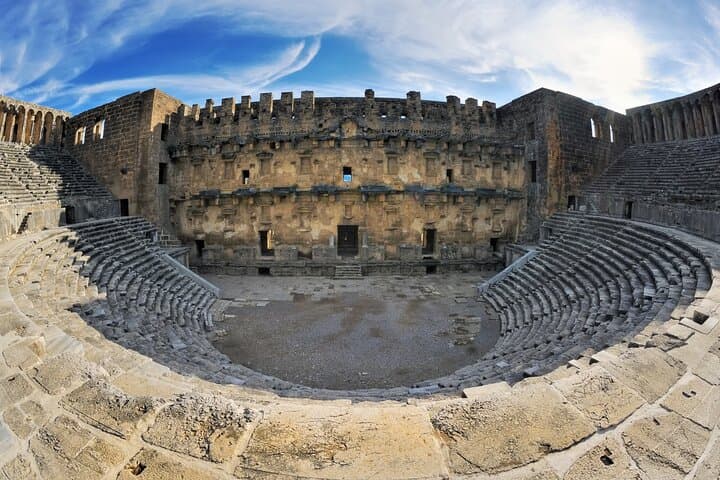
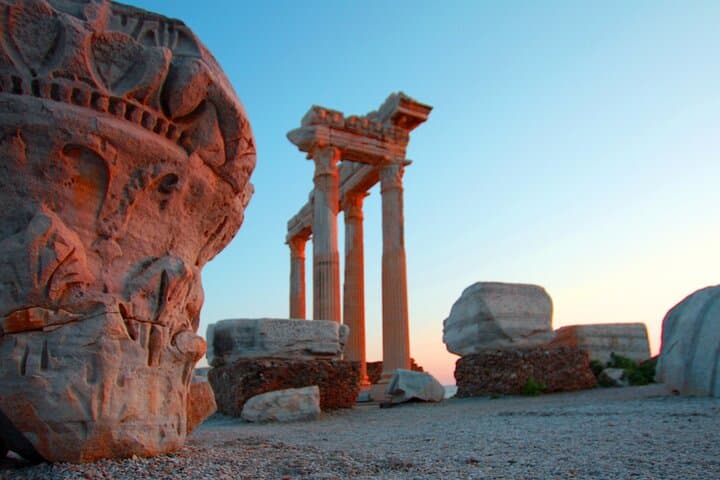
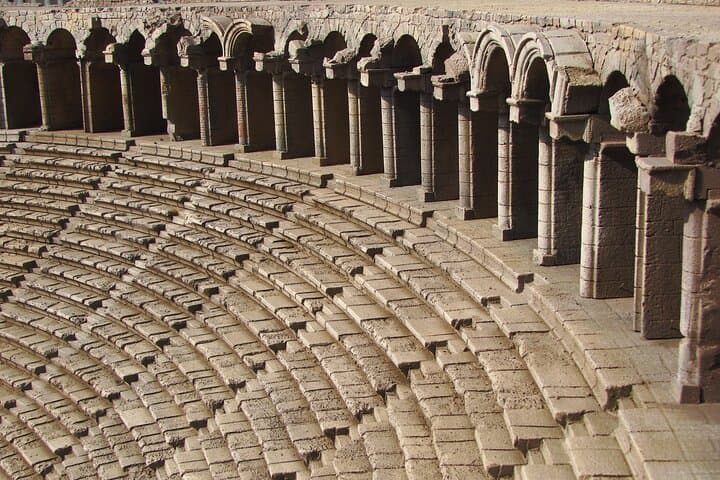
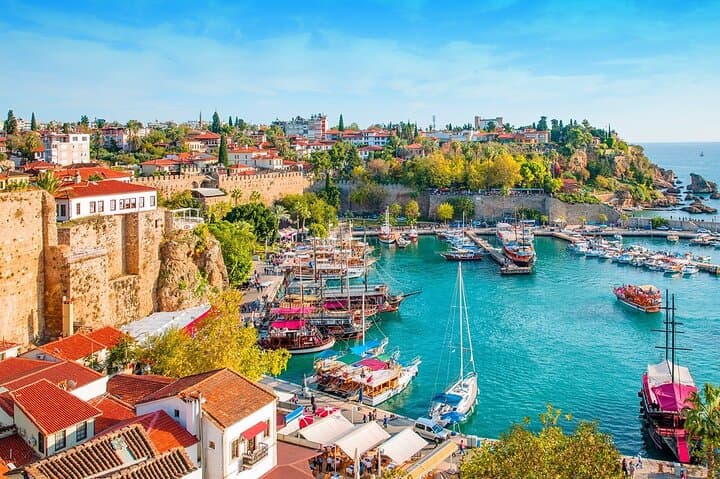
The guide's minivan eases away from Antalya just after dawn. Citrus groves and low hills blur past as the Mediterranean sun climbs and the day opens with stone—columns, steps and an amphitheater that still breathes sound. At Perge you step off the bus into a Roman street where carved thresholds and column drums keep their cool in the shade; at Aspendos the theatre's stones throw long, perfect shadows that show why music still fits inside these walls. Later, the forest hush of Kursunlu wraps visitors in pine-scented air and water that insists on moving, cascading over stepped ledges into pools the color of fresh coin.
The guide's minivan eases away from Antalya just after dawn. Citrus groves and low hills blur past as the Mediterranean sun climbs and the day opens with stone—columns, steps and an amphitheater that still breathes sound. At Perge you step off the bus into a Roman street where carved thresholds and column drums keep their cool in the shade; at Aspendos the theatre's stones throw long, perfect shadows that show why music still fits inside these walls. Later, the forest hush of Kursunlu wraps visitors in pine-scented air and water that insists on moving, cascading over stepped ledges into pools the color of fresh coin.
These four stops stitch together layers of Anatolian history. Perge rose to prominence as the capital of Pamphylia and was rebuilt in Roman times with a colonnaded main street, baths and a stadium that once held thousands. Aspendos, reworked in the 2nd century CE, is among the best-preserved Roman theaters in the world; its acoustics and stage architecture reveal a confident imperial craft. Side, a coastal town with a Greek foundation and later a Roman port, keeps a compact archaeological core—temples and a theater facing the sea—while Kursunlu Waterfall sits on younger, softer geology where travertine and limestone channel streams into seven small pools.
This is a low-elevation day with mostly flat walking on ancient paving, a handful of stairs and short dirt paths around the waterfall; total on-foot distance across sites is roughly 2–4 km depending on how much you explore. Expect minimal elevation gain (<100 m) and uneven cobbles that reward careful shoes. Culture here is direct—guides point to inscriptions, urban planning and surviving mosaics while local restaurants serve Antalya-style mezze and grilled fish.
Practical edge: bring a passport (required), comfortable walking shoes with tread, and a lightweight daypack with water—Antalya sun can push midday temperatures high. The tour runs about eight hours with guided skip-the-line access at major sites; guides handle admissions and timing so you make the most of each stop. If you want cleaner photos of Aspendos' stage or Side's Temple of Apollo, plan to be at those sites early or late in the day when tour buses thin.
For planners: the tour is physically easy but historically dense—carry a small notebook or use your phone to record names and dates. Respect ropes and signage at archaeological areas; those old stones don’t recover from heavy boots or careless climbing. Between ruined colonnades and the hush of the waterfall, the day balances dry stone and moving water—an itinerary that lets history speak and nature answer back.