THE ADVENTURE COLLECTIVE® · Independent discovery and booking for outdoor travel

Walk Roman streets, stand inside a nearly intact amphitheater, and cool off beneath a mountain-fed cascade all in one full-day tour from Side. This guided loop through Perge, Aspendos and Kurşunlu blends archaeology with a shady riverside finale.
Walk Roman streets, stand inside a nearly intact amphitheater, and cool off beneath a mountain-fed cascade all in one full-day tour from Side. This guided loop through Perge, Aspendos and Kurşunlu blends archaeology with a shady riverside finale.
You step onto the coach in Side before dawn and watch the Mediterranean gutters of light fall across low citrus orchards as the driver heads inland. By the time the guide's voice rises above the hum of the road you can already feel the arc of the day: stone, theater, water. Perge’s broad colonnaded avenues open like a map of ancient life — battered stones that still remember sandals and wheeled carts. Later, Aspendos’ theater sits quietly arrogant, its tiers of limestone folding around you; the stone seems to catch sound and pin it in place. The last stop is Kursunlu, where a cool, shaded gorge lets the waterfall dare you closer with mist and steady noise.
Verified experiences and guided adventures in the surrounding area.
Operated by Book From Locals · Side, Antalya Province
You step onto the coach in Side before dawn and watch the Mediterranean gutters of light fall across low citrus orchards as the driver heads inland. By the time the guide's voice rises above the hum of the road you can already feel the arc of the day: stone, theater, water. Perge’s broad colonnaded avenues open like a map of ancient life — battered stones that still remember sandals and wheeled carts. Later, Aspendos’ theater sits quietly arrogant, its tiers of limestone folding around you; the stone seems to catch sound and pin it in place. The last stop is Kursunlu, where a cool, shaded gorge lets the waterfall dare you closer with mist and steady noise.
This 5–7 hour loop threads three distinct pieces of Antalya’s past and present. Perge was a Pamphylian powerhouse later remodeled by Romans; its agora, baths and a two-kilometer main street show a city built for processions and commerce. Aspendos, often dated to the 2nd century A.D. and sometimes associated with the architect Zenon, is one of the best-preserved Roman theaters in the eastern Mediterranean — seating for roughly 15,000 and an acoustics system that still amazes performers. Kursunlu sits at the foot of the Taurus foothills; karst springs feed the falls and a wooden trail snakes through riparian forest where kingfishers flit and the river pushes on downstream.
Practical guideposts: expect mostly easy walking on compacted earth and stone floors; Perge’s site spans roughly 1–2 kilometers of ruins with uneven surfaces and some inclines, Aspendos includes steep stone steps (hundreds of seats to climb if you reach the top), and Kursunlu’s loop is an accessible 1–1.5 km boardwalk. Total coach time ties the sites together — plan for a full day away from your hotel.
Timing and gear matter. Summer heat can bake the open ruins; mornings and late afternoons are best for light and comfort. The included BBQ lunch replenishes energy mid‑day, but bring snacks if you prefer. Respect the sites: don’t climb on fragile masonry and follow your guide’s route. Cash for small purchases at local stalls is handy, and a lightweight rain shell is useful in shoulder seasons when mountain showers come through suddenly.
For photographers and curious travelers, this tour balances cultural depth and natural cool — you’ll leave with a sense of Roman engineering, Pamphylian history, and the surprising hush of a waterfall tucked into a populated tourist coast. It’s an easy day, but one that stitches together very different faces of Antalya: civic stone, public spectacle, and a river that keeps going.
easy.
5–7 hours.
Suitable for most fitness levels; involves moderate walking and climbing stone steps at Aspendos.
Yes — round-trip hotel transfer from Side/Manavgat hotels is provided and pickup time will be confirmed after booking.
Admission to Kurşunlu Waterfall is included per the itinerary; Perge and Aspendos entrance fees are often paid on-site by visitors — check with the operator before departure.
The tour is listed as suitable for all fitness levels; infants must sit on an adult’s lap during transport and parents should supervise near uneven ruins and the waterfall.
Swimming is generally not part of the visit — the site focuses on trails and viewpoints; water levels and access change seasonally.
Light breathable layers in summer, sturdy shoes, a sun hat, and a light jacket in spring/fall for sudden mountain breezes or shade in the gorge.
Basic restroom facilities and small cafés are available at the larger sites; the tour includes a BBQ lunch with rice and salad.
Perge and Aspendos were prominent cities of ancient Pamphylia and flourished under Roman rule; local traditions link Aspendos’ founding to legends tied to the aftermath of Troy.
Visitor impact is managed by site rules and local authorities; stay on paths, avoid touching mosaics, and support local guides to reduce wear on fragile ruins.
Book From Locals operates guided outdoor trips and adventures with an emphasis on safety, stewardship, and memorable experiences.
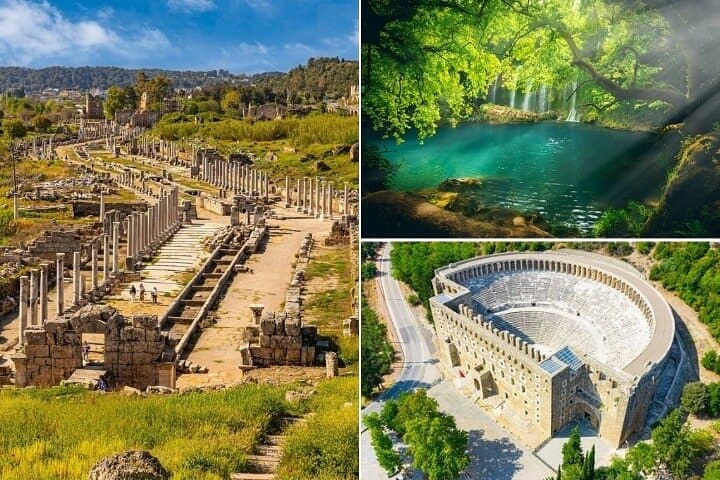
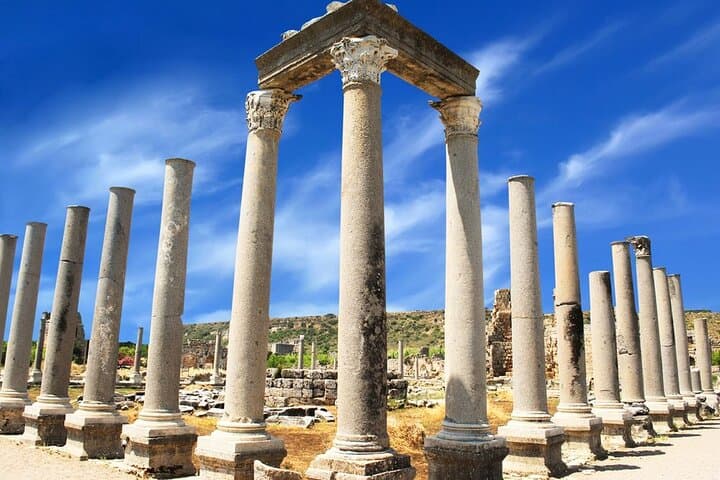
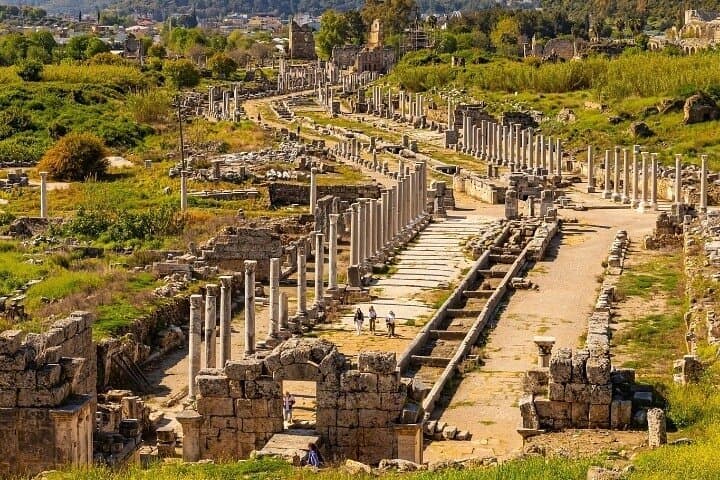
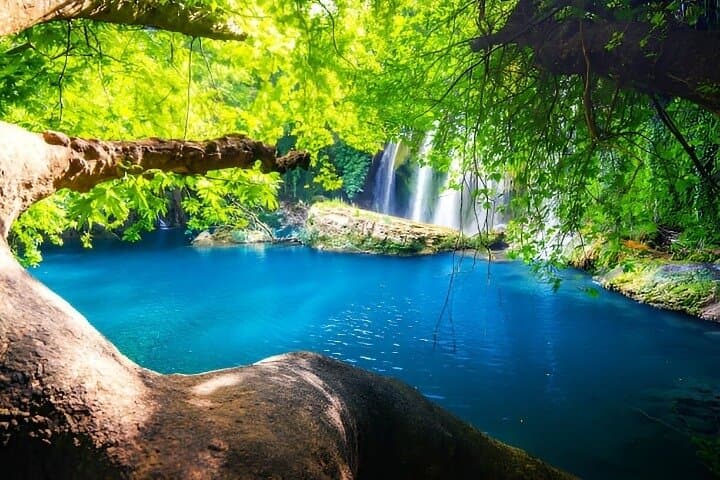
You step onto the coach in Side before dawn and watch the Mediterranean gutters of light fall across low citrus orchards as the driver heads inland. By the time the guide's voice rises above the hum of the road you can already feel the arc of the day: stone, theater, water. Perge’s broad colonnaded avenues open like a map of ancient life — battered stones that still remember sandals and wheeled carts. Later, Aspendos’ theater sits quietly arrogant, its tiers of limestone folding around you; the stone seems to catch sound and pin it in place. The last stop is Kursunlu, where a cool, shaded gorge lets the waterfall dare you closer with mist and steady noise.
You step onto the coach in Side before dawn and watch the Mediterranean gutters of light fall across low citrus orchards as the driver heads inland. By the time the guide's voice rises above the hum of the road you can already feel the arc of the day: stone, theater, water. Perge’s broad colonnaded avenues open like a map of ancient life — battered stones that still remember sandals and wheeled carts. Later, Aspendos’ theater sits quietly arrogant, its tiers of limestone folding around you; the stone seems to catch sound and pin it in place. The last stop is Kursunlu, where a cool, shaded gorge lets the waterfall dare you closer with mist and steady noise.
This 5–7 hour loop threads three distinct pieces of Antalya’s past and present. Perge was a Pamphylian powerhouse later remodeled by Romans; its agora, baths and a two-kilometer main street show a city built for processions and commerce. Aspendos, often dated to the 2nd century A.D. and sometimes associated with the architect Zenon, is one of the best-preserved Roman theaters in the eastern Mediterranean — seating for roughly 15,000 and an acoustics system that still amazes performers. Kursunlu sits at the foot of the Taurus foothills; karst springs feed the falls and a wooden trail snakes through riparian forest where kingfishers flit and the river pushes on downstream.
Practical guideposts: expect mostly easy walking on compacted earth and stone floors; Perge’s site spans roughly 1–2 kilometers of ruins with uneven surfaces and some inclines, Aspendos includes steep stone steps (hundreds of seats to climb if you reach the top), and Kursunlu’s loop is an accessible 1–1.5 km boardwalk. Total coach time ties the sites together — plan for a full day away from your hotel.
Timing and gear matter. Summer heat can bake the open ruins; mornings and late afternoons are best for light and comfort. The included BBQ lunch replenishes energy mid‑day, but bring snacks if you prefer. Respect the sites: don’t climb on fragile masonry and follow your guide’s route. Cash for small purchases at local stalls is handy, and a lightweight rain shell is useful in shoulder seasons when mountain showers come through suddenly.
For photographers and curious travelers, this tour balances cultural depth and natural cool — you’ll leave with a sense of Roman engineering, Pamphylian history, and the surprising hush of a waterfall tucked into a populated tourist coast. It’s an easy day, but one that stitches together very different faces of Antalya: civic stone, public spectacle, and a river that keeps going.